US Envoy’s tough message collides with Iraq’s new political reality


Shafaq News
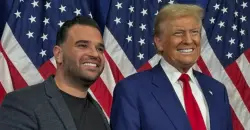
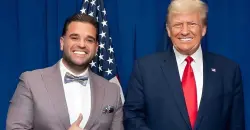
The arrival of Mark Savaya as US President Donald Trump’s envoy to Iraq has added a new and increasingly visible layer to the debate over the future of armed influence in the country. His near-daily remarks—often pointed, sometimes provocative—have opened a fresh conversation about sovereignty, political power, and the evolving landscape that emerged from Iraq’s 2025 parliamentary elections.
Savaya, an Iraqi Chaldean-born businessman appointed last October as the third formal US envoy after Paul Bremer and Brett McGurk, has centered his message on a single theme: Iraq must consolidate arms under state authority. His position gained sharper attention after the recent attack on the Khor Mor gas field in the Chamchamal district of Al-Sulaymaniyah.
Following that incident, he wrote on X: “Armed groups operating illegally and driven by hostile foreign agendas carried out an attack yesterday on the Khor Mor gas field.”
He continued, “The Government of Iraq must identify those responsible for this assault and bring them to justice. Let it be unequivocal: there is no place for such armed groups in a fully sovereign Iraq. The United States will fully support these efforts. Every illegal armed group and supporter will be tracked, confronted, and held accountable.”
No side has claimed responsibility for the attack, yet Savaya’s comments have amplified Washington’s concerns about Iraq’s political trajectory. The 2025 elections brought Shiite-led lists 187 seats, more than 60 of them won by factions with armed wings—an outcome that, for many observers, reshaped the balance of power inside parliament.
Within this context, Iraqi analysts offer diverging interpretations of Savaya’s mandate, his tone, and the possible implications for negotiations to form the next government.
A decisive weight for armed factions
Political analyst Imad al-Musafir, who is close to the Coordination Framework, believes Savaya’s mission stretches well beyond security. In his view, it reaches into economic domains connected to the Trump administration’s investment priorities in Iraq and the broader region.
He tells Shafaq News that the election results produced a new reality within the Shiite camp, one that “showed clear support for the resistance and the Popular Mobilization Forces (PMF) through the number of seats this component secured.”
For al-Musafir, Washington is grappling with an undeniable fact: these factions enjoy a large social base. He argues that Savaya’s remarks are unlikely to meaningfully influence the government-formation process because, as he puts it, Iraq’s democratic system “is what granted these factions their current representation.”
Subtle messages of pressure
Political analyst Saif al-Saadi offers a more confrontational reading, characterizing Savaya’s statements as “direct instructions from President Trump,” reflecting not just diplomatic messaging but an escalation in tone.
Al-Saadi notes that the new parliament includes an unprecedented number of lawmakers linked to armed factions—roughly 60 seats—marking what he describes as a shift toward “political resistance.”
He says Washington appears increasingly uneasy with this development, especially after the Khor Mor attack, which Savaya condemned and attributed to actors advancing external agendas. The analyst believes the envoy’s language has taken on shades of “warning and intimidation” ahead of his expected visit to Iraq in about two weeks, when he will meet political leaders. According to al-Saadi, this approach may trigger negative reactions because of “the threatening language embedded in his statements.”
No space for uncontrolled weapons
For political researcher Ahmed Youssef, Savaya’s comments reflect “the official US view of the next stage” rather than personal rhetoric. He frames Washington’s approach as an attempt to shape a political environment built on state exclusivity over weapons, separation of powers, and the restoration of institutional authority through the rule of law.
Youssef tells Shafaq News that the United States views stability as essential to making Iraq attractive for foreign investment. This aligns with Savaya’s consistent pledges of economic and security support, as well as his emphasis on unifying the armed forces under the government’s command.
He believes the next Iraqi government is expected to be “strong and capable of enforcing sovereignty,” while insisting that this must happen “without imposing external agendas.”
Between rhetoric and reality
Security expert Sarmad al-Bayati takes a more cautious view, arguing that Savaya’s remarks are “more media-focused than practical,” particularly since they are issued through near-daily posts ahead of his arrival in Baghdad.
Al-Bayati points to a “complex reality”: nearly 100 newly elected lawmakers have ties to armed factions. This composition, he says, raises essential questions about how Savaya intends to engage with legislators representing groups that maintain military wings.
For him, the decisive moment will come only after the envoy reaches Iraq and begins his direct work. Al-Bayati wonders what tools Savaya will rely on to bolster state authority, and whether the actions on the ground will match his rhetoric—or whether evolving political dynamics will ultimately reshape Washington’s approach.
Read more: Iraq's new political equation: Armed groups' gains put pressure on US
Written and edited by Shafaq News staff.