The shifting sands of hope: Iraqi migrants find new paths


Shafaq News – Erbil
Mustafa was 24 when his father sold a plot of family land to fund his journey to Europe. Armed with a Tunisian visa and a smuggler’s promise, he reached North Africa, only to be abandoned, detained, and deported. Now back in al-Sulaymaniyah, he’s saving to try again, this time through Libya.
His story reflects a growing trend across Iraq’s Kurdistan Region, where young men are turning to smuggling networks in a desperate bid to escape poverty and reach Europe, as legal pathways vanish and regional routes shift from Turkiye to Tunisia and Libya.
In Qaladze, a district in al-Sulaymaniyah province within Iraq’s semi-autonomous Kurdistan Region, a man involved in smuggling operations said he acts as an intermediary, holding $15,000 per migrant until they confirm arrival in Italy or the UK. “If they succeed, the money is released. If not, it’s returned,” he explained.
The shift began after Tunisia introduced short-term visa-on-arrival access for Iraqis, allowing entry for up to 15 days without prior approval. The policy, introduced as part of diplomatic outreach in recent years, was quickly exploited by smugglers, and throughout summer 2024, flights from Erbil to Tunis reached full capacity, with many passengers traveling directly to Sfax, a departure hub for sea crossings to Europe.
That route soon drew attention from Tunisian authorities. In August 2024, 16 young men from al-Sulaymaniyah were detained in Sfax while preparing to board a smuggling vessel. One of them, a 16-year-old, was later returned to Iraq dead, reportedly with missing organs.
The UN reported that hundreds of Iraqis apprehended off Tunisia’s coast were forcibly transferred to detention centers in Libya, where they faced forced labor, extortion, and torture.
Following international criticism, Tunisia suspended most visa privileges for Iraqis and imposed tighter border controls by the end of the year.
With Turkiye effectively closed off to most Iraqis since 2023 due to stricter visa rules and mass deportations, Libya has emerged as the most active irregular corridor. Migrants now enter Libya via Egypt through unofficial land routes, often under the control of armed groups. However, much of Libya remains fragmented among rival factions, with militias operating key smuggling corridors along the coast.
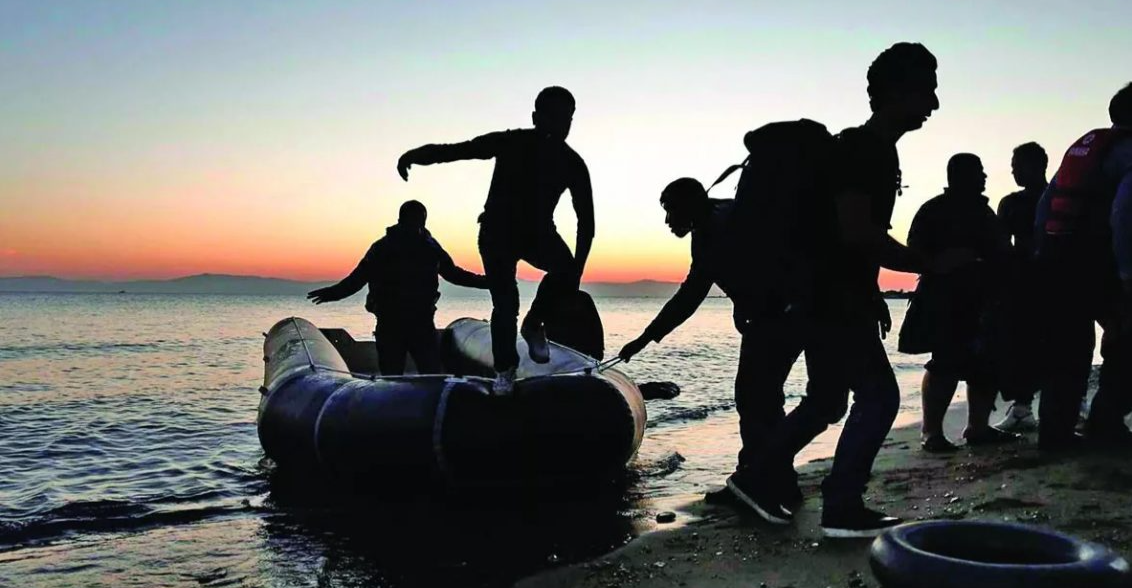
“Migrants are moved covertly between Libyan towns, sometimes under gunfire,” the Qaladze smuggler said. Once at the coast, they are loaded onto overcrowded fishing boats bound for Italy.
The Libya route is significantly more dangerous but remains in high demand. The journey typically costs $1,800 for overland travel and up to $15,000 for the sea crossing. In al-Sulaymaniyah’s Zarawa area, several known smugglers reportedly coordinate directly with Libyan militias to facilitate these transfers.
The central Mediterranean has become the world’s deadliest migration corridor. According to the International Organization for Migration, more than 31,700 migrants have died or gone missing along this route since 2014. In 2024 alone, over 3,150 were recorded.
In June 2024, a boat carrying migrants sank off Calabria, killing at least 34. Most were Kurds from Iraq and Iran, along with Afghan families. The following month, a vessel that departed Libya caught fire off Tunisia’s coast, with nearly 50 people presumed dead. In another case, more than 90 migrants were reported missing after a boat sank off western Libya.
In response, Human Rights Watch called on European and North African governments to improve coordination on maritime rescues and comply with international law by prioritizing life-saving operations.
Read more: A one-way ticket: Iraq's youth bet it all on a migration gamble
While many smuggling routes operate underground, some are tied to organized international networks. In January 2025, the UK’s National Crime Agency announced the arrest of three men from al-Sulaymaniyah as part of a coordinated crackdown on a trafficking ring linked to Amanj Hasan Zada, an Iranian national based in Preston, UK.
Hasan Zada, previously convicted of smuggling migrants from the Middle East to Europe, was sentenced to 17 years in 2024 for organizing illegal Channel crossings using small boats.
One of the arrested men oversaw yacht departures to Greece and Italy, another handled financial transfers, and the third was responsible for recruiting migrants locally. Investigators stated that each boat carried 60 to 70 individuals bound for northern Europe.
Analysts link the persistent flow of migrants to structural issues inside Iraq. The Schmitt International Center estimates that more than 750,000 Iraqis have left the country since 2015, driven by economic stagnation, weak governance, and lack of opportunity.
“These young people are caught in the middle of tightening borders and shifting international agreements,” a regional migration researcher observed. “For many, irregular migration is the only option left.”
Written and edited by Shafaq News staff.