Stable but not secure: The fragile reality of Iraq’s economy


Shafaq News
Iraq has entered a narrow and politically sensitive window for fiscal reform as the government transitions into caretaker status. Economists and policy advisers warn that the next administration inherits an economy that has reached its structural limits — one that remains stable on paper, yet acutely vulnerable to volatility.
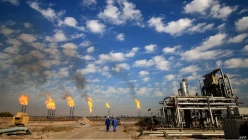
The country’s long-standing fault lines are converging at once: overdependence on oil, exposure to geopolitical tension along global energy routes, an oversized public sector that crowds out private investment, weak non-oil revenues, sluggish banking modernization, and intensifying pressure from the global shift toward cleaner energy.
Taken together, these forces leave Iraq’s macroeconomic position dependent on a single unpredictable variable: the price of crude.
A Long-Term Opportunity Shadowed by Short-Term Risk
Financial Advisor Mudhhir Mohammed Saleh believes Iraq retains the ingredients of long-term prosperity — but only if political leaders commit to the trajectory outlined in Iraq Vision 2050, which calls for economic diversification and a productive, export-oriented private sector.
Yet in his interview with Shafaq News, Saleh cautioned that the present moment is “structurally fragile,” shaped by exogenous pressures Iraq cannot control. Geopolitical friction along maritime energy corridors and global growth fluctuations directly influence crude demand, leaving government revenues exposed.
Because public spending powers most of Iraq’s economic activity, he explained, any external shock transmits immediately to households, markets, and fiscal stability. To break this cycle, “We need a rapid transition toward productive non-oil sectors and deeper state–private sector partnerships.”
Since 2003, more than 93% of annual revenue has come from oil, a share that has remained virtually unchanged despite multiple reform programs — a key indicator of how little diversification has occurred.
Read more: Without oil: Iraq's economic future hanging in the balance
Untapped Engines of Non-Oil Growth
Economist Mustafa al-Farraj approaches the crisis from a practical angle, pointing to three dormant sectors capable of generating fast, measurable income: religious tourism, agriculture, and small-to-medium enterprises (SMEs).
Religious tourism alone, according to estimates, could generate $8–10 billion annually if paired with streamlined services, modern infrastructure, and a unified visa framework — far above current levels.
Agriculture, weakened by climate challenges and inefficiencies in irrigation and land distribution, remains another vast but underperforming domain.
To unlock these engines, al-Farraj outlined four urgent priorities: Cutting non-essential government expenditures, restructuring the public wage system, improving tax collection outside the oil sector, and establishing a sovereign stabilization fund to cushion the next oil-price shock.
For him, these are not optional reforms but survival tools for the next government.
Fiscal Discipline as a National Shield
Economist Ahmed Abdrabo delivers a sharper warning: without strict fiscal discipline, Iraq will face its next financial crisis sooner than expected.
His roadmap begins with eliminating wasteful spending and adopting conservative oil-price benchmarks in the federal budget — a recommendation long supported by official data showing that Iraq typically builds budgets on optimistic price assumptions, increasing vulnerability when markets dip.
Abdrabo also urges modernization of the banking system. Cash-based transactions still dominate Iraq’s financial landscape, discouraging investment and limiting transparency. The expansion of digital payment systems, he said, would strengthen the business environment, widen the tax base, and improve economic monitoring.
But his long-term warning is deeper: Iraq cannot transition to a diversified economy without major investment in human capital. Education, vocational training, and workforce preparation must evolve to support productive sectors, not only government jobs.
The Countdown of the Rentier State
From a structural perspective, researcher Ahmed Eid situates Iraq’s current dilemma within a global transformation. As the world accelerates toward renewable energy, he told Shafaq News, Iraq’s rentier model — built almost entirely on crude exports — is approaching its limit.
For Eid, the danger lies not only in declining long-term demand but in the country’s inability to convert oil wealth into durable national assets. “Unless public expenditures are directly linked to development goals and backed by real tax, customs, and anti-corruption reform,” he said, “Iraq risks wasting its final opportunity to secure a post-oil economy.”
He urges policymakers to channel current financial surpluses toward infrastructure, agriculture, industry, and renewable energy — sectors that form the backbone of economic resilience in every successful post-rentier state.
Shafaq News' previous investigations support this assessment: in 2023 and 2024, Iraq spent over $120 billion annually, but the share directed toward long-term productive investment remained below 15%, with the majority consumed by salaries, subsidies, and operational costs.
A Decisive but Narrow Window
Across their differing methods, the experts agree on a single conclusion: Iraq’s economy is stable, but far from secure.
The country enjoys temporary fiscal comfort thanks to high oil prices and accumulated reserves, but these buffers mask deeper structural weaknesses. Delays in diversification, slow banking reform, and an oversized public sector leave the economy ill-equipped for global shifts already underway.
For many analysts, including those interviewed by Shafaq News, the next administration may be the last with both the political space and financial resources to anchor Iraq’s economic future. Once global energy demand begins its structural decline, the margin for error will evaporate.
Read more: Iraq’s post-election roadmap: From ballot to government formation
Written and edited by Shafaq News staff.