Southern Lebanon counts a second toll beyond the dead: LANDS


Shafaq News
While displaced residents watch Israel raze their land from afar, the Lebanese government warns that environmental damage in the South could take decades to reverse, if ever.
Abu Mahmoud Hijazi, 84, never went home. Forced from Aitaroun, a border village in southern Lebanon that Israeli strikes reduced almost entirely to rubble, he spent his final months in displacement following his land's destruction through his phone.
Images arrived daily from neighbors who remained or others passing through: olive trees he had planted in his youth now blackened, if they still stood at all, and fields he had once cultivated reduced to scorched earth. "Every day, I watch it disappear, piece by piece," he told Shafaq News, holding on to a single condition for return —that something, anything, remained. He died before that condition could be met.
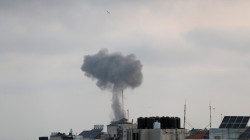
His death is one of the casualties that figures do not capture. Lebanon's Health Ministry reported that Israeli strikes since March 2, 2026, have killed at least 2,795 people and injured 8,586. But beyond the mounting human toll, another loss is taking shape across the South, less visible, but potentially more enduring.
Read more: Beirut’s southern suburb empties overnight: Stories of displacement under fire
Ecocide
On April 23, Lebanon's Environment Ministry, in a report prepared jointly with the National Council for Scientific Research, described the environmental impact of the strikes as "ecocide." The report documented the loss of around 5,000 hectares of forest and more than 2,100 hectares of orchards —among them the olive and citrus groves that have defined southern Lebanon's agricultural identity for generations— and warned that damage to soil, water, and air quality carries long-term consequences for public health, food security, and livelihoods.
In southern Lebanon, where agriculture underpins economic life, those risks are immediate. A United Nations Development Program (UNDP) assessment found that farming, a primary source of income in the region, has been severely disrupted by bombardment and displacement. Crops have been destroyed, livestock lost, and large areas of farmland rendered unsafe, while pollution from munitions and explosive remnants has reduced soil productivity and compromised water sources relied on for both irrigation and daily use.
Read more: How Lebanon's fragmented power blocks a peace with Israel
Contamination and Long-Term Soil Damage
A 2026 study conducted jointly by the American University of Beirut and the Lebanese University detected elevated levels of heavy metals, including cadmium and nickel, exceeding health safety thresholds in soil samples taken from bombed areas. Cadmium and nickel are toxic to humans at sustained exposure levels and can accumulate in crops grown in contaminated soil, entering the food chain over time.
The study also identified phosphorus residues consistent with the Israeli use of white phosphorus munitions, with concentrations in some locations reaching 1,858 parts per million, significantly above the threshold of 50 parts per million considered safe for agricultural soil under international environmental standards. Researchers warned that such substances can persist in soil for years, posing risks through prolonged environmental exposure.
Other contaminants have compounded the damage. In February, Lebanon's Environment and Agriculture Ministries reported the presence of glyphosate —a herbicide the World Health Organization's International Agency for Research on Cancer classifies as "probably carcinogenic to humans," meaning evidence of cancer risk exists in both animal studies and human exposure data— at concentrations 20 to 30 times higher than typical agricultural use levels. The ministries warned that such concentrations risk further degrading soil conditions, damaging vegetation, and threatening already strained water resources.
The ongoing bombardment and use of incendiary munitions have also degraded forests and rangelands, polluted water bodies, and reduced air quality across affected areas, the UNDP warned. Unexploded munitions and residual contamination continue to limit safe access to land, complicating any return to farming and requiring extensive rehabilitation and reforestation efforts.
A Question of Return
The cumulative effect is damage that outpaces recovery. Burned fields can be replanted, but degraded soil and polluted water operate on a different timescale entirely, one that Lebanon's Environment Ministry warns could stretch across decades, and in the most severely affected areas, may never reach full restoration.
For the displaced, this shifts the question of return. It is no longer only about when they can go back, but whether the land they depend on will still be able to sustain them.
Abu Mahmoud Hijazi died without an answer. The photographs he received each day in displacement —his blackened olive trees, his scorched fields, his village of Aitaroun in ruins— were the last record he kept of a place he never saw again.
Written and edited by Shafaq News staff.