Smothered capital: Tehran’s deadly smog brings life to a halt


Shafaq News
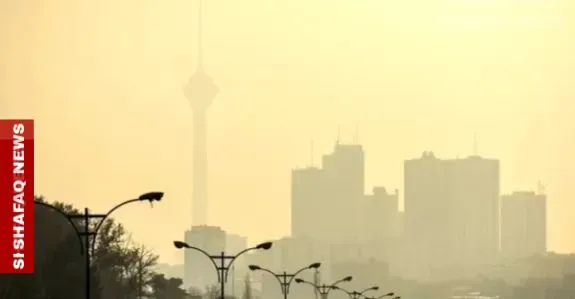
Tehran woke up again this week under a dense, gray ceiling of smog — a now-familiar scene that residents describe with a mix of resignation and quiet fear. The Iranian capital, home to more than eight million people, has slipped back into the list of the world’s most polluted cities, according to real-time data from IQAir. For many families, the sight of children walking to school in masks or elderly residents wheezing at bus stops has become an annual ritual.
The latest readings show PM2.5 concentrations reaching more than 17 times the World Health Organization’s recommended limit. On several days in late November, the Air Quality Index crossed 200, a level deemed “very unhealthy.” Authorities closed schools, halted the movement of heavy trucks, and temporarily shut down cement and sand factories. These measures slowed the city’s pace but did little to lift the thick haze clinging to its streets and rooftops.
Health officials warn that prolonged exposure to the current levels can trigger acute respiratory problems and aggravate chronic conditions. Iranian studies estimate that tens of thousands of premature deaths nationwide are linked to air pollution each year, with Tehran bearing a disproportionate share. Hospitals, already strained during the winter flu season, routinely see spikes in patients suffering from breathing difficulties when the smog settles.
The crisis, though rooted in technical causes, has a distinctly human dimension. Tehran’s traffic, described by residents as an “ocean of metal,” remains the largest source of pollutants. Millions of old cars and motorcycles emit exhaust that accumulates in the city’s basin-like geography. Winter temperature inversions trap the pollution in place while the Alborz Mountains block airflow from the north, allowing the smog to thicken day after day. Industrial zones surrounding the capital add further emissions, especially when power shortages force factories to burn heavy fuel oil during colder months.
Officials insist that environmental regulations exist, pointing to the Clean Air Law adopted in 2017. Yet enforcement remains inconsistent, and economic pressures often override environmental priorities. The city’s metro system has expanded in recent years, but public transport capacity still lags far behind demand. Fuel-quality standards remain uneven across provinces, and factories continue to exceed emissions limits with few consequences.
As the air darkens, an old national conversation has resurfaced with renewed urgency: whether Tehran should remain the political and administrative center of the country. The idea of relocating the capital dates back more than a decade, but a 2025 government proposal to shift core institutions to the Makran coast brought the debate back into public view. Supporters say Tehran has simply outgrown its natural limits — pointing to water shortages, overpopulation, seismic risks, and relentless pollution as evidence that the city can no longer sustain its national role. Critics counter that relocating the capital may ease administrative pressure but will not repair Tehran’s environmental decline, nor address the broader challenges of energy consumption, fuel standards, and industrial emissions.
For the moment, Tehran’s residents have little choice but to endure the seasonal smog until weather conditions change. The city’s skyline, usually framed by the snow-covered peaks of the Alborz Mountains, now fades into a uniform gray. People check air-quality apps before leaving their homes. Parents keep inhalers within reach. On some mornings, the sun rises but remains invisible behind a thick layer of pollutants.
Yet beneath the frustration is a widespread sense of vulnerability — that the city’s struggle with pollution is no longer a temporary inconvenience but a deep structural problem. Environmental experts say Tehran’s air can improve if the government fully enforces vehicle-emission standards, modernizes fuel production, expands clean public transport, and reduces reliance on heavy fuel oil. But they warn that half measures will no longer suffice, especially as population density and energy consumption continue to rise.
Tehran’s pollution crisis remains a scientific and political challenge, but for the millions who breathe its air every day, it is also an emotional burden that the city they love is becoming harder to live in, and that its future health depends on decisions long overdue.
Written and edited by Shafaq News staff.