Saudi pipeline attack deepens pressure on Al-Zaidi over armed factions


Shafaq News
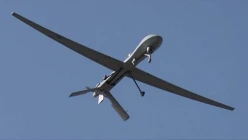
Drones launched from southern Iraq struck Saudi Arabia's main oil pipeline late last week, forcing Riyadh to shut the line and handing Prime Minister Ali al-Zaidi the hardest test so far of his promise to bring the country's Iran-aligned armed factions under state control. The strike turned a long-running debate over bringing faction weapons under state control, increasingly tied to the US-led coalition's September 30 departure, into an urgent problem for Iraq's relations with the Gulf.
Saudi Arabia's east-west pipeline runs about 1,200 kilometers from the oil fields of the east to the Red Sea port of Yanbu, and it has become the kingdom's main route for moving crude while Iran's pressure on the Strait of Hormuz keeps Gulf exports at risk. The drones caused casualties and damage in the Riyadh and Medina areas, and Riyadh closed the line as a precaution.
The timing sharpened the alarm: the attack came as Yemen's Houthis seized Mokha and advanced toward islands near the Bab al-Mandab strait, the Red Sea's southern gate, placing Iran-aligned forces near the two chokepoints that carry much of the region's oil. Brent crude has traded above $100 since the Yemeni offensive began.
Read more: Houthi advance raises stakes from Bab al-Mandeb to Iraq
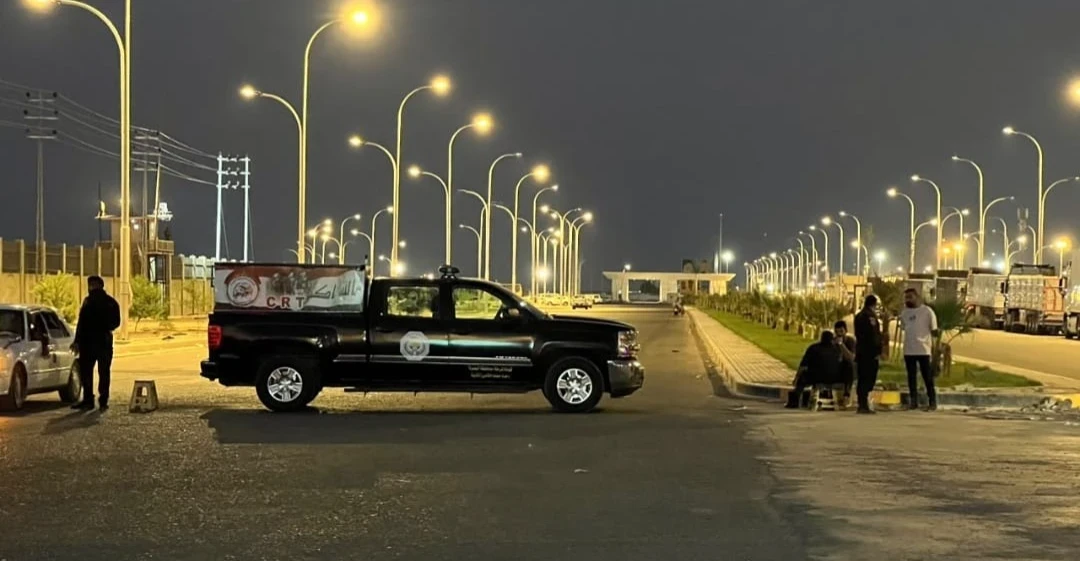
Al-Zaidi moved within hours. An Iraqi investigation found that the attacks had been launched from Maysan, prompting him to remove the commander of the province's Operations Command and later its police chief. Iraqi authorities also temporarily closed several border crossings with Iran, including Shalamcheh, al-Sheeb, and Mandali, as they investigated security breaches. A security source later said forces had found a launch platform suspected of involvement in the attacks, while Al-Zaidi approved an Iranian request for a joint investigation into launch sites near the border. Conceding that an attack on a neighbor began on Iraqi soil is the admission Baghdad has spent years avoiding.
No group claimed the strike, and the Islamic Resistance in Iraq, an umbrella of Iran-aligned factions, denied involvement and offered to cooperate with the government investigation. The attack nevertheless immediately intersected with the wider dispute over armed groups because it originated from Iraqi territory at a time when Baghdad is under pressure to bring all weapons under state control.
Read more: Iraq caught between US-Iran war and September 30 deadline
Baghdad's political leadership lined up behind the government's account. President Nizar Amedi, parliament speaker Haibet al-Halbousi, and the Kurdistan Region's presidency each rejected the use of Iraqi land or airspace against neighbors and repeated the demand to place all weapons under state authority.
Sakr al-Muhammadawi, a member of parliament's security and defense committee, told Shafaq News that a fact-finding team had reached Maysan and that its findings would set the course. He linked the country's stability to its economy and warned that the committee would stand against any foreign strike on Iraqi soil in response.
In July, the United States and Saudi Arabia struck Iran-backed fighters in Iraq after Riyadh accused the groups of launching drones at its oil facilities, killing at least 20 members of the Popular Mobilization Forces (PMF) and wounding 32, according to PMF figures —the same state-funded umbrella that houses the armed factions now at the center of the disarmament talks. A second cross-border attack raises the prospect of a repeat, this time against a government that has staked its standing on preventing exactly this.
Sami al-Murshid, a Saudi writer on international affairs, said Tehran “has spent years using allied armed groups in Iraq and Yemen to pressure Gulf states,” and that cooperation between the Houthis and the Iraqi factions has run through media, logistics, and intelligence channels.
Speaking to Shafaq News, he placed the responsibility on Baghdad to secure its borders and disarm groups outside state control, and called a state monopoly on weapons “the first step toward restoring Iraqi sovereignty.”
The Yemeni front is escalating on its own terms. Mohammed al-Bukhaiti, a member of the Houthis' supreme political council, said Yemen was fighting Saudi Arabia to restore its independence and had imposed a naval blockade on Saudi shipping, describing the moment as escalation answered with escalation.
Abed al-Thawr, a Houthi military spokesman, said coordination among what the movement calls the axis of resistance —linking Iraq, Iran, Lebanon, the Palestinians, and Yemen— was continuing. The Houthi advance toward Bab al-Mandab, which took the port of Mokha and extended fighting toward several Red Sea islands in a week-long offensive the UN says displaced tens of thousands, has put a second major oil corridor at risk.
Ahmed al-Sharifi, an Iraqi analyst, said the operation carried meaning beyond the damage it did. “Its timing alongside the Houthi push at Bab al-Mandab signals an ability to act across a span of territory from Yemen to Iraq within a wider contest with the United States.”
Al-Sharifi told Shafaq News that a strike of this range —the targets lie hundreds of kilometers inside Saudi Arabia— needs continuous guidance and a ground-control station, “which points to sustained command on Iraqi soil rather than a single launch.” He noted that the drones flew from Maysan, a province central to Iraq's oil output, which raises questions about who controls its production zones.
Al-Zaidi has built his months in office around economic opening such as foreign investment, energy deals, and warmer relations with Washington, and al-Sharifi said an attack staged from an Iraqi oil province cut against that case directly. The attack showed how armed activity beyond effective state control could threaten Al-Zaidi's economic agenda, strain ties with Gulf states and expose Iraq to retaliation even before responsibility for the strike was established.
Read more: Al-Zaidi at 100 days: Iraq's toughest tests still ahead
For now, Baghdad's response is containment. It has opened an investigation, tightened controls at several border crossings and approved an Iranian request to join a probe into launch sites near the frontier. Saudi Arabia, meanwhile, has agreed to refrain from responding for now while Baghdad investigates.
Those measures are meant to demonstrate the state control Al-Zaidi has promised to strengthen. But the attack has exposed the gap between that objective and conditions on the ground: Iraqi investigators say the drones were launched from Maysan, yet those responsible have not been publicly identified. A suspected launch platform has been found. The people behind the attack have not.
Written and edited by Shafaq News staff.