Replace or reshape: Can solar power alter Iraq’s reliance on oil?


Shafaq News
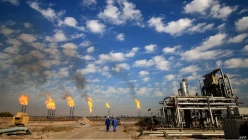
Iraq’s latest drive to allocate land for solar projects around the capital has sharpened a central question in its energy debate: can renewables meaningfully ease Iraq’s dependence on oil, or will they remain a secondary layer atop a fossil-fuel system?
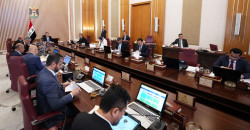
In a recent meeting in Baghdad, caretaker Prime Minister Mohammed Shia al-Sudani instructed ministries and local officials to secure sites for medium-capacity solar plants ahead of summer 2026.
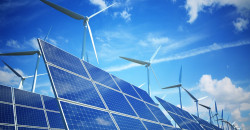
The move forms part of a wider national plan to add around 12 gigawatts of solar capacity (around 4,800 oil-driven megawatts) by 2030, a volume officials estimate could meet roughly one-fifth of projected electricity demand by the end of the decade.
Oil Powerhouse, Enduring Electricity Gaps
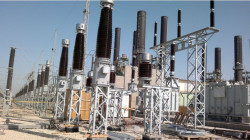
Iraq is one of the world’s largest oil producers, yet it continues to face persistent electricity shortages, particularly during the summer, when demand can reach 50,000–55,000 megawatts, far exceeding the current generation capacity of 27,000–28,000 megawatts. The shortfall has forced many households and businesses to rely on private diesel generators, which are costly and environmentally damaging.
Energy experts noted that Iraq’s reliance on Iranian gas remains a key obstacle to stable electricity. Imports from Tehran's fuel stations account for nearly one-third of national output and cover around 40% of Iraq’s gas supply — leaving Baghdad exposed to supply interruptions and payment delays tied to sanctions.
Economy and energy specialist Abbas al-Shatari explained that Iraq’s GE and Siemens power stations were built to operate on large volumes of gas, making Iran the most accessible supplier until domestic production rises. He also noted that Tehran has long delivered gas equivalent to roughly 7,000 megawatts under commercial arrangements maintained through limited US waivers.
Warning that securing at least 7,000 megawatts of additional reliable capacity is critical to stabilizing the national grid, Al-Shatari stressed that regional imports beyond Iran total only around 3,000 megawatts, and recent reductions in Iranian supplies under US “maximum pressure” measures have further exposed Iraq to “supply and sanctions-related risks.”
Read more: The end of a waiver: Iraq's struggle for energy independence
Baghdad as a Pilot Stage
The recent government meeting positioned Baghdad as a pilot for “new solutions” to meet rising demand. Officials reviewed several renewable-energy proposals and district-level investment plans, including a medium-capacity solar network on the capital’s outskirts.
Baghdad consumes roughly 30–35% of the power supplied within the province, making it a major strain on the national grid. The meeting examined a proposed 750-megawatt solar project and the steps needed to advance it, from securing land to connecting it to the grid and arranging billing. Discussions also explored ways to streamline these requirements to accelerate construction.
Speaking to Shafaq News, energy expert Dr. Kovend Sherwani welcomed the initiative, noting that Iraq’s demand is estimated at around 50,000 megawatts while available production covers only half of that. He explained that losses during generation, transmission, and distribution further widen the gap.
Sherwani stressed that the Ministry of Electricity must pursue multiple tracks simultaneously — relieving pressure on power stations and transmission lines while using falling technology costs to advance utility-scale solar projects.
“The price of a 1,000-megawatt solar facility has fallen to roughly $700 million to $800 million,” he noted, adding that lower costs create opportunities for at least one major plant each year.
“Over six or seven years, such projects could supply roughly a quarter of Iraq’s current shortfall,” Sherwani said, highlighting that solar plants require minimal assembly time, low maintenance, and operate without fuel.
Solar Growth: From Plans to Capacity
Baghdad’s solar projects are part of a broader effort to rebalance Iraq’s power mix and reduce oil and gas consumption for electricity. The Ministry of Electricity has already moved forward with contracts for solar plants totaling about 1,750 megawatts in Karbala, Muthanna, and Basra. These ventures involve international developers, including TotalEnergies, Masdar, and PowerChina.
In the south, the Southern Electricity Production Directorate and TotalEnergies are developing a 1,000-megawatt solar project at the Artawi oil field in Basra, one of the region’s largest planned clean-energy installations. If completed on schedule and connected to the grid, it would contribute significantly to the country’s 12-gigawatt renewable-energy target.
Electricity Minister Ziyad Ali Fadel also introduced a set of investment opportunities in solar, wind, and waste-to-energy projects last October. Speaking to Shafaq News, Fadel explained that the ministry plans to add 10,000 megawatts of renewable capacity, supported by roughly $6 billion in combined public and private investment.
“The initiative seeks to diversify Iraq’s energy mix, reduce dependence on conventional fuels, and strengthen long-term power supplies, a step toward what he described as electricity security.”
Alongside ministry efforts, the Central Bank of Iraq (CBI) is expanding its renewable-energy financing program, offering loans up to 30 million IQD (around $22,890) for residential units at low or zero interest through the Ministry of Electricity’s “Ur” digital platform.
The government and CBI programs have also introduced financing schemes for smaller systems. Low-interest loans are available for rooftop and farm-based solar units, and several companies have been authorized to install distributed systems for homes and businesses.
Energy and economy specialist Dr. Qasim al-Sittani suggested Iraq should also explore civilian nuclear power, as seen in Egypt and Iran, under full international oversight. “Iraq has vast land capable of hosting dozens of photovoltaic projects,” he remarked, urging rooftop installations to reduce land pressure and support environmental objectives.
Read more: Billions lost, power gone: Iraq's energy crisis explodes
A Shift in Oil Use, Not Abandoning
Despite ambitious projects, energy specialists generally agree that solar power will not replace oil in Iraq’s economy in the short or medium term. Instead, it is seen as a tool to reshape how the country consumes oil and gas.
If large projects and city-level networks progress on schedule, they could cover a meaningful share of daytime demand in key regions. This would allow the state to burn less crude and fuel oil in power plants, redirecting more barrels to export markets and creating fiscal space.
Such progress could also reduce Iraq’s reliance on Iranian gas, strengthening Baghdad’s position in discussions over sanctions waivers, arrears, and supply conditions.
The benefits extend further. Regionally, Iraq is entering a competitive landscape as Gulf States and neighboring countries expand large-scale solar deployment, pursue climate finance, and position themselves as energy-transition hubs.
Within this framework, partnerships with international firms such as Masdar and TotalEnergies can connect Iraq’s projects to broader financing structures and technology transfers supported by institutions promoting emissions reduction strategies.
Written and edited by Shafaq News staff.