Nineveh Council lifts building restrictions on Mosul outskirts amid demographic dispute


Shafaq News- Nineveh
Nineveh's Provincial Council voted on Tuesday to lift long-standing restrictions on construction on legally registered private land on the outskirts of Mosul, advancing a measure intended to resolve one of the Iraqi province's longest-running land disputes, which intensified after the defeat of ISIS, while exposing sharp divisions over property rights and demographic concerns.
Council Decision
The council approved, by majority vote, a package of measures requiring Mosul Municipality and all municipal directorates to immediately issue building permits to owners of officially registered freehold land without delay or obstruction, council member Mohammed Ahrees told Shafaq News. Any employee or official found responsible for impeding the process will face legal and administrative accountability, he added.
The resolution also requires municipalities to begin land-leveling work on privately owned plots immediately and submit a detailed implementation schedule within 30 days. During the same period, Mosul Municipality must remove an earthen security barrier erected by ISIS.
The council further determined that denying construction permits on the grounds of "demographic change" or similar justifications violates the Iraqi Constitution and existing laws. It instructed the Nineveh Police commander to establish a joint committee with municipal authorities to receive complaints, examine allegations of security-related interference, and refer violations to the judiciary.
Among the other measures adopted were a ban on the seizure of private property without a prior court order and a provision calling for the removal of any security force proven to have undermined social peace or obstructed enforcement of the council's decisions.
Supporters
Abdullah Al-Nujaifi, chairman of the council's Land Committee, hailed the vote as "a real victory" for thousands of citizens who had spent years waiting to exercise what he described as their legal property rights.
Speaking with Shafaq News, he portrayed the dispute as one of Nineveh's most difficult issues over the past two decades, saying it reflected accumulated grievances and suspended rights rather than a purely administrative matter. In his view, the council's recommendations reaffirm the right of registered landowners to build, oblige municipalities to accelerate permit issuance, reject interference outside the law, establish clear implementation deadlines, and hold accountable anyone obstructing citizens' rights.
"The period of studies and waiting has ended, and the time for implementation has begun," Al-Nujaifi said, pledging to continue following the file until the decisions are fully enforced.
Opponents
The vote was swiftly challenged by Mohammed Aref, the council's representative for the Shabak community —an ethnic and religious minority concentrated in the Nineveh Plains— who announced plans to appeal before Iraq's administrative and Federal courts.
During a press conference, he maintained that the decision overlooks constitutional protections afforded to minority areas and fails to safeguard the rights of all communities. Warning against moving forward with the measures, Aref argued that parts of the Nineveh Plains are protected under Article 23 (Third/B) of the Iraqi Constitution, which prohibits demographic change.
He added that Jliyokhan and Qaza Fakhra fall administratively under the town of Bartella in the Nineveh Plains and therefore remain subject to legal restrictions on construction and demographic change.
Aref also accused the authorities of overlooking the rights and sacrifices of local communities, noting that more than 1,750 people from minority groups had been killed, around 7,000 wounded, and approximately 17,000 public employees from the Nineveh Plains had yet to receive residential land allocations. He further cited a final administrative court ruling awarding residential plots to about 32 Bartella Municipality employees, saying it remains unenforced.
Arguing that the issue requires a comprehensive solution rather than “piecemeal measures,” the official urged political parties within the council to prioritize restoring areas outside the local government's administrative authority and voiced confidence that Iraq's judiciary would ensure equal application of the law.
About the Dispute
Located in northern Iraq, Nineveh was among the provinces hardest hit by the ISIS conflict between 2014 and 2017. The destruction of large parts of Mosul left thousands of families searching for new housing, while soaring property prices inside the city drove many residents to purchase land on the outskirts and across the Nineveh Plains.
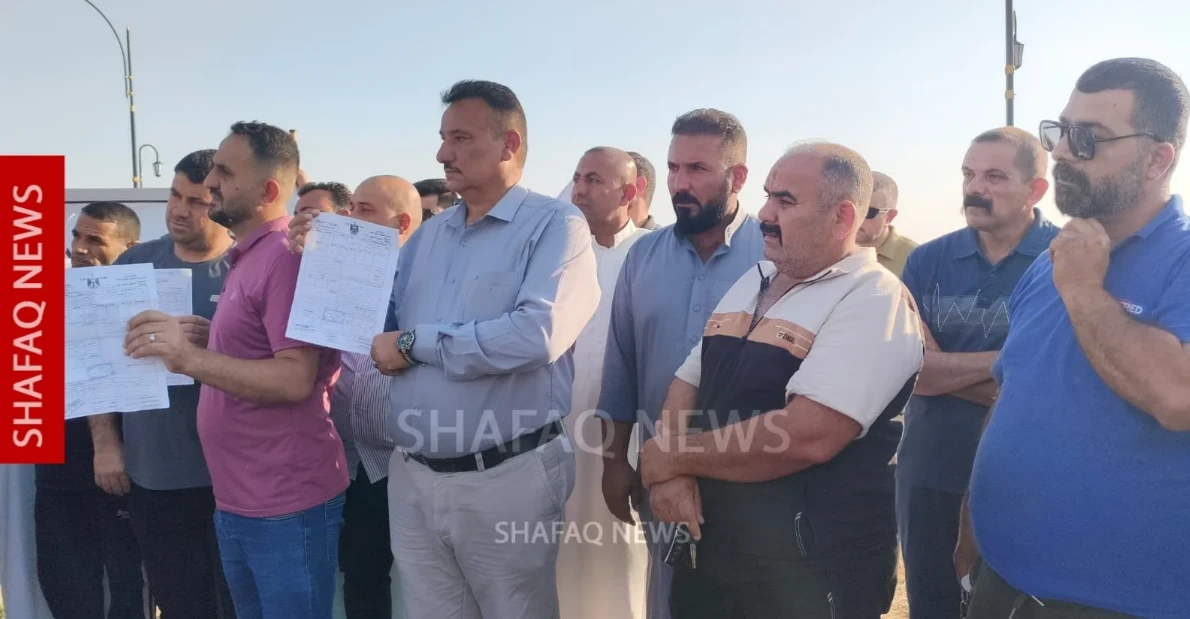
Although the war intensified the crisis, the dispute itself dates back nearly two decades. It affects an estimated 35,000 Iraqi families holding officially registered land deeds and ownership contracts issued by state institutions and municipalities. The affected owners include relatives of people killed or wounded in conflict, along with citizens who received residential plots through official government allocations but have remained unable to build homes or make use of their property.
Many buyers acquired officially registered freehold properties, known in Iraq as tabu titles, in areas including Bartella, Hamdaniya, Nimrud, Tall Kayf, Jliyokhan, and Qaza Fakhra after finding housing in central Mosul increasingly unaffordable.
At the heart of the dispute are competing views over property rights and demographic change. Supporters of the council's decision contend that legally registered ownership guarantees the right to build and argue that tens of thousands of landowners have been prevented from accessing or developing property despite possessing valid state-issued deeds. Opponents counter that large-scale settlement by newcomers, particularly Arab families relocating from central Mosul, could alter the demographic balance of historically minority-populated areas and threaten their communities' identity.
Accounts presented during the council's deliberations attribute control of the eastern and southeastern sectors to the Shabak 30th Brigade of the Popular Mobilization Forces (PMF), a state-recognized security force comprising multiple armed factions, while northern areas toward Tel Kaif and the Duhok road are linked to the Babylon Movement, a Christian political movement, led by Rayan al-Kildani, with an affiliated PMF formation, and its 50th Brigade. Supporters of the council's decision allege that these forces blocked construction in their respective areas, whereas opponents maintain that the restrictions were intended to preserve the demographic balance and historical identity of minority communities.
The same accounts contend that previous judicial decisions, including rulings by Iraq's Federal Supreme Court and administrative courts in favor of some landowners, have yet to be fully implemented.
Residents affected by the restrictions continued demonstrations and legal appeals through the Nineveh Provincial Council, which formed a committee that spent about a year and a half examining the dispute before presenting the recommendations approved on Tuesday.