New path to jobs: Iraq’s shift toward vocational education


Shafaq News - Baghdad
In Iraq, where uncertainty and economic pressures shape everyday life, students are quietly redefining education. Workshops are replacing traditional lecture halls, offering not just practical skills but independence, purpose, and new possibilities.
Once seen as a fallback, vocational education is now opening real opportunities, challenging long-held notions of success and ambition across the country.
Quantitative Shift
Out of more than 7.6 million students in pre-university education, around 280,000 are enrolled in vocational education across 320 vocational schools spread throughout the country, according to the Ministry of Education.
By comparison, Iraqi universities enroll over 1.3 million students in 35 public universities and 45 private universities and colleges, though enrollment has steadily declined over the past five years, while vocational school enrollment has surged by 37% over the same period.
The shift reflects a pragmatic choice in Iraq, where overall unemployment exceeds 15% and youth unemployment reaches 28%. Vocational education has emerged as a tangible pathway that directly connects schooling with the job market.
University degrees can take years to complete and cost millions of dinars in private institutions, while vocational education costs no more than 300,000 dinars (about $204) annually for most programs and offers hands-on training in workshops and factories.
Yet this rising demand encounters a harsh reality: outdated school buildings, limited practical workshops, weak infrastructure, and the absence of a comprehensive development plan for this vital sector under the Ministry of Education.
Baghdad alone hosts 70 vocational schools, compared with 35 in Basra and 30 in Nineveh, while provinces like Diyala and Muthanna face a shortage of vocational institutions and inadequate facilities.
In this context, Deputy Chair of the Parliamentary Education Committee, Nadia Mohammed Al-Aboudi, highlighted the need for a series of structural reforms in Iraq’s vocational education, some of which have already begun in Basra. The province has recorded notable improvements in several vocational schools after previous administrations, weak in oversight and performance, were replaced.
“Comprehensive vocational schools for both males and females should be built across all regions, with adequate classrooms and modern laboratories to support technical specialties,” she added, stressing the importance of updating vocational programs to better meet labor market demands.
Limited Capacity
Vocational education in Iraq is experiencing rising enrollment, with some schools now operating both morning and evening shifts to meet growing demand, according to Mohammed Qutaiba Al-Bayati, a member of the Parliamentary Higher Education Committee.
Technical institutes now provide more than 70 specializations across industrial, agricultural, commercial, and hospitality fields—from electronics and medical device maintenance to automotive technology and hotel management.
The surge in interest is driven by clear employment advantages. Graduates increasingly secure university placements, particularly in private colleges, in fields such as engineering, cybersecurity, oil refining, and automotive technology.
Families’ perceptions are evolving alongside these trends. In Baghdad, Basra, and Dhi Qar, parents are increasingly motivating children to pursue vocational education, viewing it as a faster and more direct path to employment. Students themselves recognize the benefits: workshops and practical training are now deliberate choices for shaping professional futures.
The demand extends beyond middle school graduates. Even those who do not complete preparatory education are joining vocational programs that provide direct access to the labor market. Ministry of Labor data reveals that over 45% of new private-sector jobs created between 2022 and 2025 were filled by vocational certificate holders or technical institute graduates, highlighting the sector’s expanding role in employment.
The World Assists
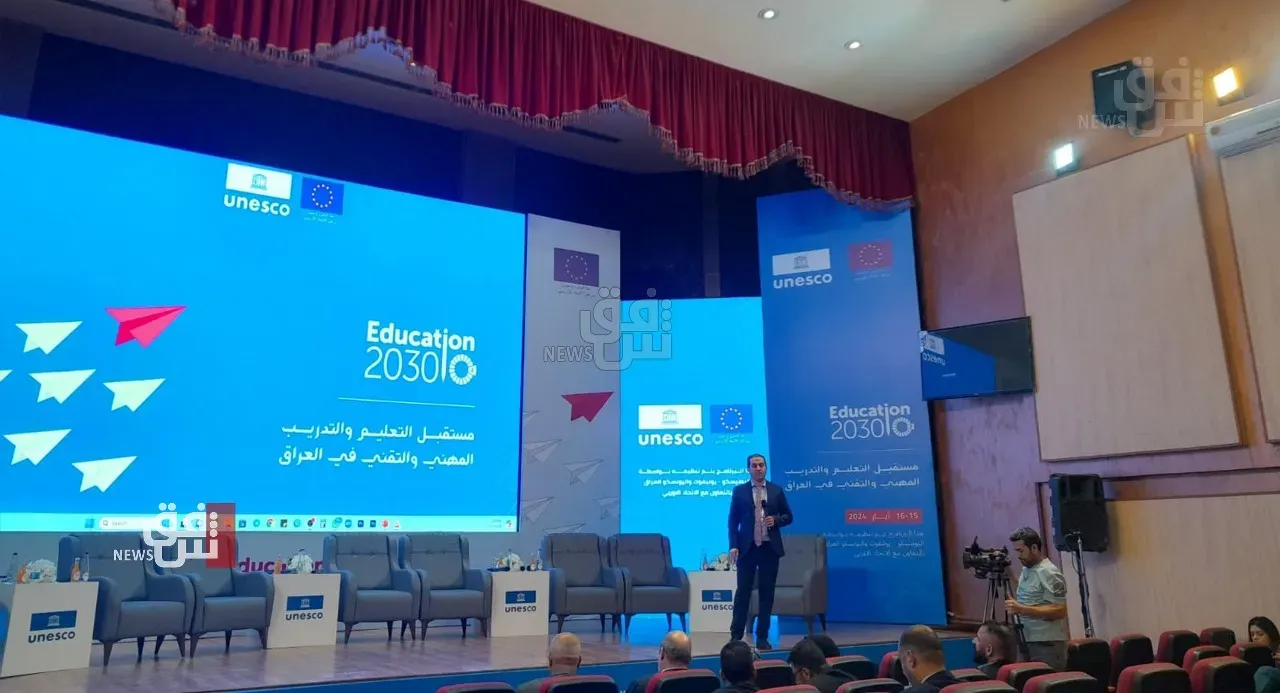
Amid ongoing challenges, Iraq is seeing a rise in efforts to strengthen vocational and technical education. On August 10, 2025, UNESCO and the European Union launched the Green and Digital Technical and Vocational Education and Training Project to boost employment, partnering with the Iraqi government to align vocational curricula with the country’s technological and digital transformation needs.
This builds on earlier initiatives. In May 2024, UNESCO, together with the EU and the Iraqi government, introduced the TVET 2 Reform Project to expand tangible job opportunities by linking technical and vocational education more closely with the labor market.
UNESCO-UNEVOC noted that this collaboration forms part of a long-term national strategy (2022–2031) to reform vocational education, enhance skills, and deliver real employment prospects for Iraqi youth.
At the national level, the Ministry of Education launched the Integrated Vocational Pathway initiative in 2024 alongside the Ministries of Labor and Industry, emphasizing curriculum development and practical factory training.
Complementing this, the Ministry of Higher Education implemented a program to train vocational school teachers through joint courses with technical universities, reaching over 800 instructors across provinces to modernize teaching approaches and strengthen practical skills instruction.
Private and regional support is also shaping the landscape. In Basra, oil companies supplied vocational schools with modern laboratories and equipment in cooperation with the local government. At the same time, Baghdad and Nineveh inaugurated five vocational training centers funded by the German Development Agency (GIZ) and the EU under the Education for Employment Project, serving up to 10,000 students annually.
Iraqi society now increasingly recognizes that practical skills create real opportunities for youth, and that technical and applied specializations are now considered essential pathways from education to employment, offering autonomy and tangible prospects in a rapidly evolving labor market.
Written and edited by Shafaq News staff.