March 10 Syria–SDF Pact tested as unwritten timeline nears end-2025


Shafaq News
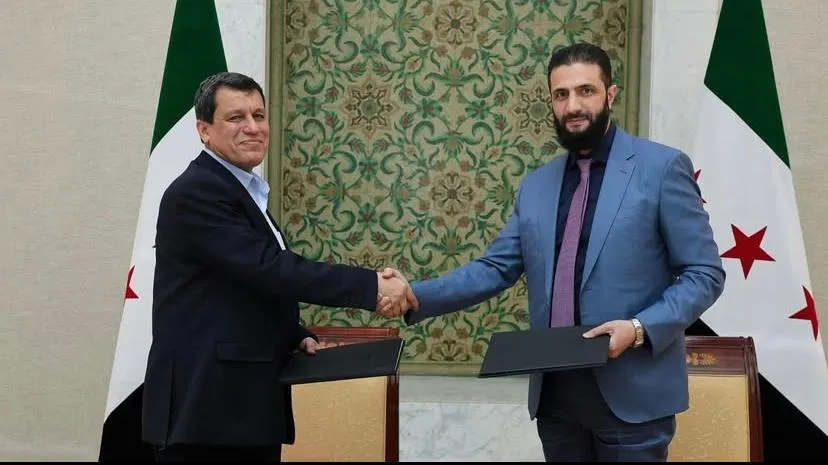
The understandings reached between the Syrian government and the Syrian Democratic Forces (SDF) are entering a critical phase as interpretations of the March 10, 2025, agreement collide, and implementation remains stalled. While the pact does not explicitly set a binding deadline, observers familiar with the negotiations say the working assumption among stakeholders is that the timeline for meaningful progress will be reached by the end of 2025.
Although Damascus and the SDF continue to describe the agreement as the only framework governing arrangements in northeastern Syria, political and military developments point to significant challenges in translating its provisions into practical measures. Disagreements over implementation mechanisms and conflicting interpretations of the text have produced what both sides acknowledge as a growing crisis of confidence.
Each party has accused the other of slowing the process and obstructing progress, while joint committees remain engaged in discussions on implementation, particularly regarding military integration and the future shape of the Syrian state. These efforts have yet to yield tangible results.
A direct military confrontation has not occurred so far. Officials from the Syrian Democratic Council, the political body associated with the SDF, have sought to downplay the significance of the deadline, arguing that the agreement does not impose a narrow or rigid timeframe. They have said that decades of accumulated crises require patience and sustained political will.
Nonetheless, with the end of the year approaching and no measurable progress on the ground, the agreement is increasingly seen as facing a decisive test.
Read more: Syria: deal struck on SDF integration, Kurdish rights in constitution
The political deadlock has coincided with rising security tensions, intensifying concerns that prolonged mistrust could push the situation toward a broader military confrontation. Recent security developments have weighed heavily on negotiations, particularly repeated incidents along contact lines near the Tishreen Dam and Deir Hafer, east of Aleppo.
The SDF reported that two of its fighters were wounded when a suicide drone detonated as they were assisting civilians. It accused factions linked to the Syrian government of carrying out the attack and described the targeting of rescue teams as a serious escalation and a violation of international law. The SDF said it holds Damascus responsible for the consequences while affirming its right to defend its forces.
Syrian officials, in turn, have said that what they describe as SDF procrastination and efforts to buy time are increasing risks on the ground. Turkiye has also accused unnamed states of encouraging the SDF to resist integration into the Syrian army, warning that such efforts would be futile.
These tensions are unfolding against a broader backdrop of instability, marked by increased activity by ISIS in desert regions and urban areas. US forces have redeployed and reinforced some of their positions in eastern Syria without announcing new withdrawals, adding further complexity to an already fragile security environment.
A recent attack in Palmyra, in which two US soldiers and a civilian were killed by an ISIS operative, underscored the persistent threat posed by the group.
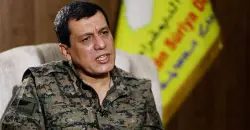
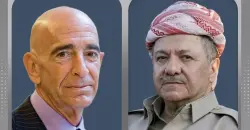
Unpublicized negotiation channels have failed to ease security tensions, while consistently optimistic statements by US envoy Tom Barrack have not aligned with developments on the ground. Despite Damascus sending a new formal proposal to SDF commander Mazloum Abdi, core disagreements remain unresolved.
Sources told Shafaq News that Damascus has agreed in principle to incorporate SDF forces into the Syrian army as organized divisions reporting directly to the defense minister, an approach intended to absorb the forces into the state military structure without immediately dismantling their internal organization.
In exchange, the Syrian government insists on what it describes as a non-negotiable requirement: allowing the Syrian army and internal security forces to deploy and operate throughout northeastern Syria under Syrian law, because the area falls within the country’s sovereign territory. Syrian officials regard Abdi’s rejection of this deployment as the primary obstacle to progress.
The SDF has said it submitted a comprehensive proposal outlining steps and mechanisms for integration into the army and state institutions, but has not yet received an official response.
In official statements, the Syrian government has reaffirmed its rejection of any arrangement that undermines the principle of “one Syria, one army, and one government,” firmly opposing federalism or any form of territorial division. It maintains that SDF fighters must join within established constitutional and legal frameworks, not as an independent entity.
The SDF, by contrast, is calling for a decentralized system of governance and an integration process that preserves its organizational structure and combat role. It argues that the March agreement carries political weight beyond security or technical arrangements and could form the basis of a new political and constitutional trajectory.
Damascus has outlined several concerns regarding the SDF, including what it views as separatist tendencies, control over oil resources, and attempts to maintain a cohesive military force within the national army—an arrangement Syrian officials have described as a “ticking time bomb.” It has also expressed unease over regional outreach, including a visit by an SDF delegation to Beirut and a meeting with Hezbollah, which the SDF said was introductory and part of broader engagement with Lebanese political and cultural actors.
The SDF, meanwhile, has voiced security and political concerns about the transitional government, citing what it describes as an overlap between ISIS elements and forces loyal to Damascus, the rise of extremist rhetoric, and fears that the government does not seek genuine power-sharing. It has also indicated confidence in the stance of the US-led international coalition backing it.
With the deadline drawing closer and security tensions showing no sign of easing, the March agreement remains suspended between signed commitments and a highly complex reality, as the coming weeks will determine whether dialogue can still prevail or confrontation will intensify.
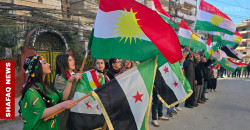
Anti-Kurdish and anti-SDF slogans raised during demonstrations marking the first anniversary of Bashar al-Assad’s regime fall have highlighted the challenges facing the agreement.
Written and Edited by Shafaq News Staff.