Lebanon: A nation unraveling tensions overshadow independence


Shafaq News - Beirut
Lebanon will hold no Independence Day celebrations this year, with the government citing intensified Israeli strikes, widening border violations, and a national climate too fragile for public ceremonies. The cancellation, announced quietly but felt deeply, sets the tone for a country entering its most anxious November 22 in years, caught between external aggression and internal fracture.
On the eve of what should have been a day of military parades and national affirmation, the state instead finds itself battling on multiple fronts. Israeli attacks have escalated, political divisions have sharpened, and a diplomatic crisis with Washington has shaken one of Lebanon’s most important security relationships.
The latest shock came from the Lebanese Army. Its commander, Gen. Rodolphe Haykal, abruptly cancelled a high-profile trip to Washington after US officials scrapped scheduled meetings in protest. The Americans were “angered” by a sharply worded army statement accusing the “Israeli enemy” of actions that “destabilize southern Lebanon” and obstruct the Lebanese Armed Forces from fully deploying near the Blue Line.
The cancellation reverberated through Beirut, triggering speculation about the durability of Lebanon’s partnership with the United States. It also intensified domestic debate, especially among anti-Hezbollah factions who have grown increasingly vocal about what they say is the army’s “lagging” performance at a moment of national crisis.
Yet as the diplomatic fallout deepened, the country’s leadership tried to project a unified tone. President Joseph Aoun stated that negotiations with Israel are Lebanon’s “only option” to avoid a broader assault on its territory, arguing that dialogue is essential to halt strikes and prevent further incursions.
Prime Minister Nawaf Salam expanded the message, telling reporters that Lebanon “will not miss the opportunity for regional change this time.” He pointed to the maritime border talks launched nearly two years ago as proof that Lebanon can engage Israel diplomatically when conditions allow. What puzzled him, he said, was the “contradictory messaging” from Israeli officials who call for negotiations publicly but “refuse to meet” when Lebanon signals readiness.
But Lebanon’s political arena is not united behind this approach.
Hezbollah, which positions itself as the backbone of Lebanon’s defense, has rejected calls for its disarmament. The group argues that any such move would expose the country to Israeli domination and violate its right to resist occupation. Secretary-General Naeem Qasem reiterated this line forcefully, saying Lebanon “will not offer further concessions to Israel” and that resistance weapons remain “a red line” until Israel ends its occupation and ceases violations.
This position resonates strongly across large segments of Lebanese society, where supporters argue that Hezbollah’s arsenal is the only credible deterrent against Israel’s overwhelming military power. Many fear that disarmament would leave Lebanon defenseless and return it to an era of unchecked Israeli incursions.
At the same time, other political groups, especially those aligned with the anti-Hezbollah camp, insist that Hezbollah’s weapons have placed Lebanon in the line of fire and constrained its diplomacy. For them, the army’s rift with Washington highlights deeper problems: a state losing strategic partners and unable to assert authority over all armed actors within its borders.
These competing visions—resistance versus sovereignty, deterrence versus state monopoly on force—have collided sharply in recent days, adding layers of tension to an already volatile environment.
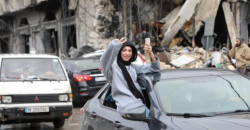
Meanwhile, the situation on the ground continues to deteriorate. Despite the November 27, 2024 truce, Israeli air and artillery strikes have rained down across southern Lebanon, the Beqaa Valley, and Beirut’s southern suburbs (Dahiye) for nearly a year. Lebanese authorities report more than 5,300 violations, including air incursions and ground breaches, leaving 337 people dead and 642 injured, among them women and children.
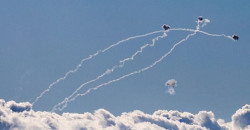
The sounds of conflict have become routine. Israeli surveillance drones circle for hours over southern towns, their mechanical hum blending into the daily soundtrack. Local officials say at least one or two people are being killed each day by Israeli fire, a rhythm of violence that has drained public morale and pushed families once again toward contemplating flight.
Read more: Israel warns Lebanon: Deterrence or descent into new war?
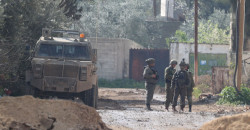
In the border village of Yaroun, a new dispute erupted when UN peacekeepers confirmed that an Israeli wall under construction crosses the Blue Line by several hundred meters, restricting access to more than 4,000 square meters of Lebanese farmland. Beirut has complained, accusing Israel of “changing the geography” and eroding ceasefire arrangements.
These pressures have amplified political anxiety. The rhetoric from factions opposed to Hezbollah has become more pointed, accusing the army of weakness or complicity. Hezbollah’s supporters push back just as forcefully, arguing that disarmament demands are designed to weaken Lebanon and serve Israel’s interests. The result is a national debate that feels less like a dialogue and more like two competing visions of survival.
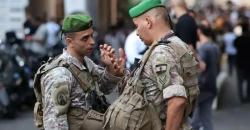
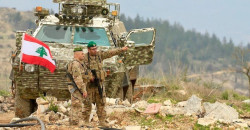
As Lebanon marks its Independence Day without parades, without ceremonies, and without the traditional show of military cohesion, the contradictions of the moment are stark. Soldiers stand guard under a sky thick with drones. The government calls for negotiations while receiving no reply. The army’s leadership confronts both foreign pressure and domestic skepticism. And a country once again finds itself holding its breath, unsure whether diplomacy can shield it from a conflict that grows more entrenched by the day.
Lebanon moves through this November 22 neither in celebration nor in unity, but in suspended uncertainty—its sovereignty contested, its institutions strained, and its people bracing for what may come next.
Written and edited by Shafaq News staff.