Khor Abdullah: A waterway entangled in sovereignty disputes and legacy of invasion


Shafaq News – Baghdad
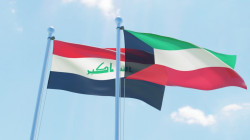
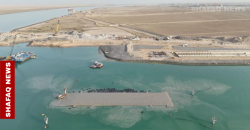
The maritime channel of Khor Abdullah, located at the southern edge of Iraq’s Basra province and separating Iraq’s al-Faw Peninsula from Kuwait’s Bubiyan Island, has once again returned to the forefront of political and legal controversy. Despite decades of international resolutions and bilateral agreements, the waterway remains a sensitive flashpoint involving sovereignty, economic competition, and unresolved historical grievances.
A Legacy of Invasion and Forced Demarcation
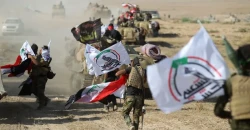
The roots of the current dispute trace back to August 2, 1990, when Iraqi forces invaded Kuwait, triggering a regional upheaval and prompting a US-led coalition military response under Operation Desert Storm. In the aftermath, Iraq faced severe international sanctions and territorial repercussions.
One of the key post-war measures was United Nations Security Council Resolution 833, adopted in 1993, which formally demarcated the land and sea borders between Iraq and Kuwait—cutting through the center of Khor Abdullah. Many Iraqi legal experts and politicians have long argued that this decision was imposed under duress, at a time when Iraq could not defend its national interests. It was enforced under Chapter VII of the UN Charter, which allows for coercive measures, further fueling Iraqi perceptions of injustice.
The 2012 Navigation Agreement and Its Fallout
Nearly two decades later, Iraq and Kuwait signed a bilateral agreement in 2012 to regulate maritime navigation in Khor Abdullah. The deal, which outlined traffic routes, joint security mechanisms, and trade facilitation protocols, aimed to manage the shared waterway more effectively.
However, the agreement quickly stirred backlash within Iraq. Critics described it as a de facto concession of sovereignty—especially concerning Iraq’s maritime access and fishing rights. Although Article 6 of the agreement explicitly states that it does not modify the borders established by Resolution 833, many Iraqis argued that its practical implementation further curtailed Iraq’s influence in the Gulf.
The agreement was ratified by Iraq’s Council of Ministers in 2012 and passed by Parliament the following year under Law No. 42 of 2013. It was subsequently published in the official Iraqi Gazette.
But in September 2023, the Iraqi Parliament voted to annul the agreement altogether, reigniting tensions with Kuwait. The Kuwaiti government responded by submitting a formal protest to the UN Security Council, warning that Iraq’s withdrawal "violates international agreements and undermines bilateral stability."
Several Iraqi political figures defended the revocation, asserting that the agreement had been concluded under pressure during a period when Iraq’s sovereignty was still compromised.
International law expert Fawzi Hameed told Shafaq News, “Resolution 833 was linked to the ceasefire, but Iraq was not in a position to advocate for its interests at the time. Agreements made under coercion can be revisited under international law.”
Strategic and Economic Stakes
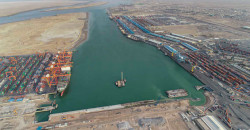
Khor Abdullah serves as Iraq’s only maritime gateway to the Gulf, making it essential for both commercial imports and oil exports. Several major Iraqi ports depend on this channel:
-Umm Qasr Port – Iraq’s main commercial seaport
-Khor al-Zubair – A hub for oil and petrochemical exports
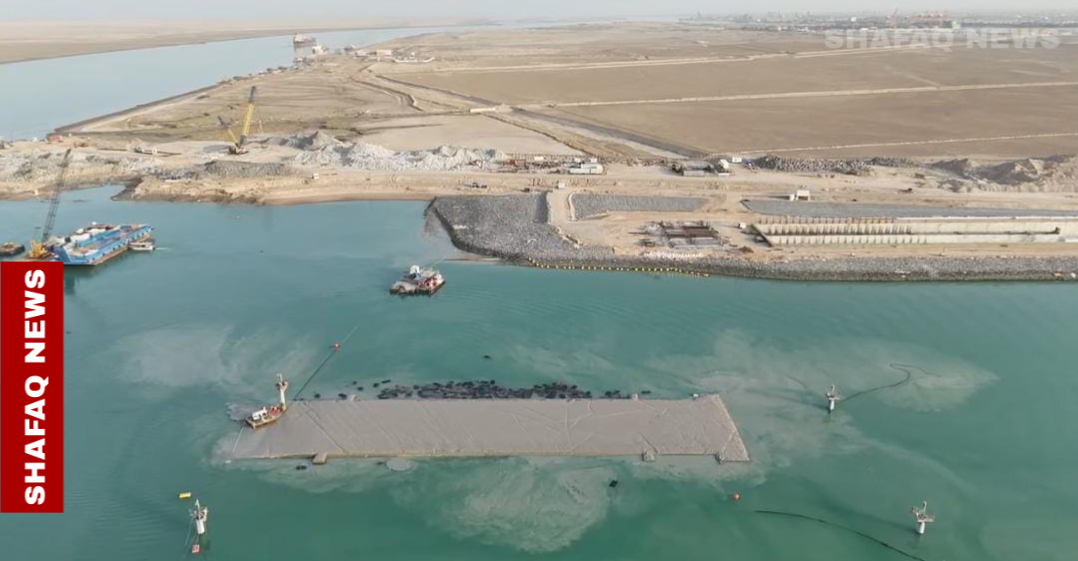
-Grand al-Faw Port – A strategic infrastructure project under construction, intended to transform Iraq into a regional logistics center
On the Kuwaiti side, heavy investment has gone into Mubarak al-Kabeer Port on Bubiyan Island. Positioned to become one of the largest ports in the region, it is widely viewed as a direct competitor to Iraqi and even Iranian maritime hubs.
This overlapping infrastructure has fostered both opportunities and rivalries. While both nations seek to enhance their trade standing, their shared geography and competing ambitions have added another layer of complexity to an already politically charged environment.
The channel’s shared location necessitates coordinated maritime security between Iraq and Kuwait. Preventing smuggling, ensuring navigational safety, and managing traffic flows require bilateral cooperation—especially amid broader regional tensions. Any escalation involving neighboring powers, particularly Iran, could compromise shipping routes through Khor Abdullah, with direct economic implications for both Baghdad and Kuwait City.
A Broader Sovereignty Debate
For many in Iraq, the dispute is not just about navigation—it is a symbol of national sovereignty.
Mohammad al-Basri, a researcher specializing in border affairs, argued that Khor Abdullah had historically been administered by Basra province. He warned that continuing the agreement would jeopardize Iraq’s maritime and economic security. “This is not a conflict with Kuwait,” he said. “It is a struggle over Iraq’s sovereign rights.”
Former Iraqi military officer Brigadier Mahmoud al-Jubouri echoed that sentiment, stating, “The post-1991 isolation allowed for the imposition of unbalanced agreements. Khor Abdullah is a strategic loss that should have been reviewed long ago.”
Observers warn that the ongoing dispute risks stalling critical joint infrastructure projects, including the Grand al-Faw Port and broader regional connectivity plans that could transform Iraq’s economic future.
Written and edited by Shafaq News staff.