Iraqi Armed factions' cross-border attacks draw legal warnings and Arab pressure


Shafaq News- Baghdad
Attacks launched by armed factions from Iraqi territory toward neighboring countries, particularly Syria and Kuwait, have prompted a joint statement from six Arab states urging Baghdad to halt the operations, according to official statements.
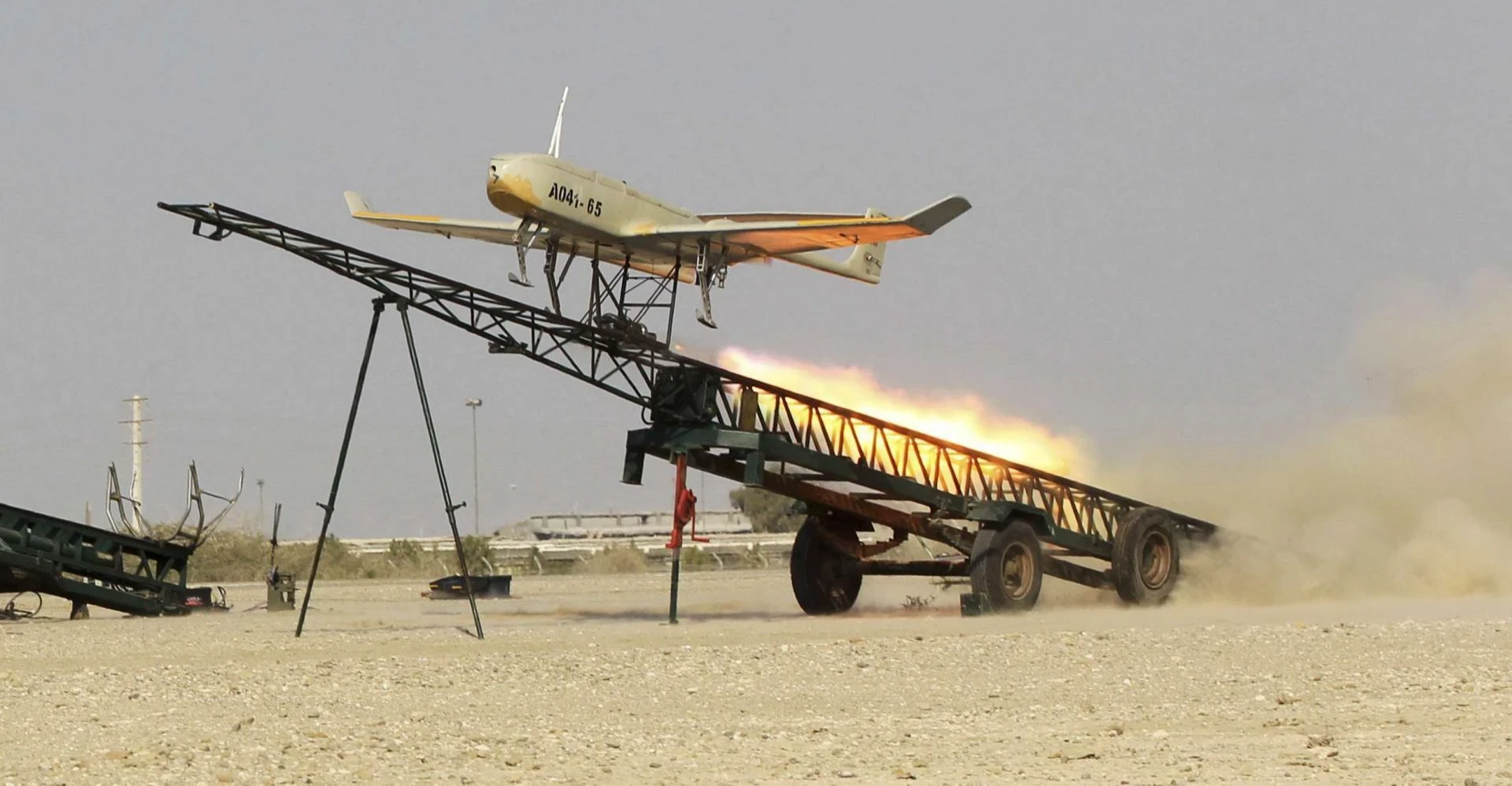
Recent developments show that these attacks have expanded beyond military targets to include civilian infrastructure, as reported by Kuwaiti authorities, despite claims by the factions that their operations are limited to US military facilities.
Saudi Arabia, Kuwait, the United Arab Emirates, Bahrain, Qatar, and Jordan urged the Iraqi government "to take immediate measures to halt attacks carried out by factions, militias, and armed groups from Iraqi soil toward neighboring states." They emphasized the need to safeguard fraternal ties and prevent further escalation. Baghdad responded by calling on any party with evidence to submit it.
Regional Escalation and Official Stance
Syrian political analyst Ahmed Kamel said the strikes primarily undermine Iraq, explaining that the missiles used are limited in scale and impact, often hitting non-critical locations, "but place Iraq at risk of being drawn into the conflict."
Researcher Ziad Al-Arrar stated that Iraq has moved beyond serving as a transit arena and has become "an active party" in the war. He anticipated that shelling launched from Iraqi territory toward a base in Syria would carry consequences for relations between Baghdad and Damascus, as well as for broader regional and international assessments of Iraq's position.
"The Iraqi government is striving to avoid direct involvement, describing the country as being in a sensitive position," Al-Arrar noted, adding that efforts by the government and political actors to distance Iraq from the conflict face significant challenges, given the ongoing confrontation between the United States and Israel on one side and Iran on the other, alongside the alignment of armed factions with Tehran and growing Arab criticism of attacks targeting neighboring countries from within Iraq.
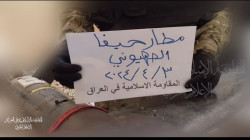
The escalation intensified following the outbreak of US-Israeli hostilities with Iran on February 28, when multiple Iraqi factions affiliated with the so-called "Islamic Resistance" entered the confrontation, carrying out dozens of operations against US positions inside Iraq and across several Gulf states, in addition to Jordan.
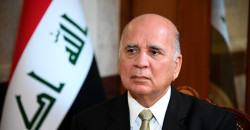
In a televised interview, Iraqi Foreign Minister Fuad Hussein reaffirmed the government's rejection of Iraq becoming a party to the conflict, while acknowledging that the country has turned into an open arena for multidirectional fire. He said Iraqi airspace has become a corridor for US and Israeli strikes against Iran, as well as for Iranian strikes toward other destinations, "placing Iraq amid a conflict it did not initiate."
Read more: Tehranvs. Baghdad: Iraq’s armed factions face a strategic recalculation
Armed Factions' Perspective
Figures close to the factions present a different account, asserting that Iraq is implementing measures to secure its borders. Moein Al-Kadhimi, a leader in the Badr Organization, stressed that the government has deployed security forces along the Syrian frontier, pointing to movements by ISIS within Syrian territory and the presence of foreign bases.
Speaking to Shafaq News, Al-Kadhimi described attacks targeting Popular Mobilization Forces (PMF) positions as unjustified, adding that some strikes originate from inside Syria. He called on the Syrian government to curb suspicious movements near the border and prevent their use in ways that threaten Iraq's security.
Legal Implications
Iraq's Supreme Judicial Council President Faiq Zaidan on Friday warned that unilateral decisions by armed factions on war and peace could produce what he called "serious consequences," describing such actions as a breach of the constitution.
Zaidan noted that Article 61 (Ninth) restricts the declaration of war to a formal process involving the Presidency, the prime minister, and a two-thirds parliamentary majority. Actions outside this framework, he said, undermine governance and weaken the rule of law.
"Attempts by armed groups to engage in combat decisions independently pose a threat to sovereignty and stability," Zaidan cautioned, highlighting the risks of fragmented authority and the potential to draw Iraq into conflict without national consensus. He also warned that "bypassing elected institutions could erode public trust and expose Iraq to international repercussions."
Political researcher Abdul Qader Al-Nayel highlighted a further legal dimension, stating that Iraq's constitution prohibits the use of its territory to launch attacks against neighboring states, while Article Nine bans the formation of armed groups outside the defense and interior ministries.
Al-Nayel noted that Iraqi law classifies such armed groups as terrorist entities, with penalties reaching capital punishment for using Iraqi territory to carry out attacks on neighboring countries. He warned that the continuation of these operations without decisive government deterrence places Iraq in a precarious international position, and cautioned that targeted countries retain the right under international law to pursue sources of fire.
Iraq as a Conflict Arena
Political analyst Ahmed Al-Hamdani told Shafaq News that the current situation reflects Iraq's longstanding role as a battleground for regional rivalries, describing it as a venue for settling scores. He noted that Iraqi forces deployed along the Syrian border have come under bombardment by US or Israeli forces, while instability across the border continues to threaten Iraq's security environment.
Zaidan concluded by calling for stronger state control over arms and reinforced constitutional institutions to safeguard stability and national sovereignty.
Read more: Iraq’s neutrality fades: Formal war involvement draws closer?