Iraq turns to bank borrowing to cover August salaries amid oil-revenue collapse


Shafaq News- Baghdad
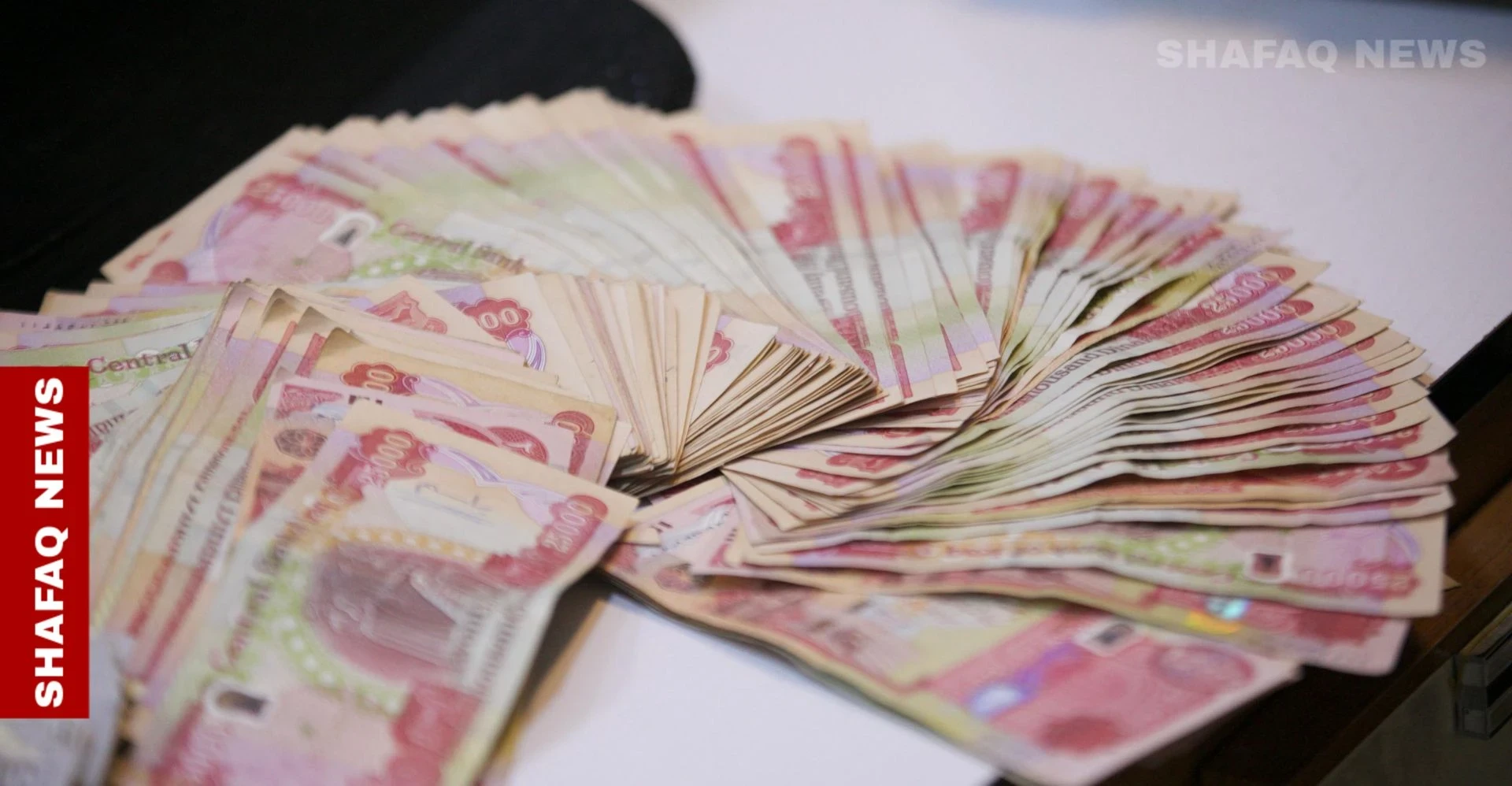
One of the world's major crude producers is running short of the cash it needs to pay its own workforce. Iraq's government may be unable to meet this month's public-sector salaries from the liquidity currently on hand, three senior Finance Ministry officials and a source close to Prime Minister Ali al-Zaidi told Shafaq News, and is moving to borrow more than three trillion dinars (around $2.3 billion) from local private banks to keep the payroll flowing.
That a country floating on oil should scramble to pay teachers and clerks says less about any single month's revenue than about how the Iraqi state is built to spend. Crude funds at least 85 percent of the federal budget, and one interruption to exports has been enough to push Baghdad toward the edge. Over the past five months, Iraq has forfeited some $30 billion as shipments through the Strait of Hormuz —the narrow Gulf passage carrying the bulk of its oil to overseas markets— were choked by regional military tension.
The numbers leave little room for comfort. Baghdad needs roughly 10.8 trillion dinars a month, close to $8.3 billion, to cover salaries and the ordinary cost of running the state, government spokesman Haidar al-Aboudi has conceded, against oil earnings that have slipped to about 2.5 trillion, under $2 billion. Payroll by itself, Finance Minister Faleh al-Sari puts near 7.8 trillion dinars, some $6 billion. What the state owes its employees each month now runs to more than triple what its wells bring in.
The strain is already surfacing where it hurts ordinary Iraqis most. Kimadia, the public company that buys the country's medicines, has drawn only 15 percent of its allocation, enough, by the health minister's own admission, to freeze fresh contracts and put drug supplies at risk. Salaries are simply the part the public notices first.
Read more: Liquidity shortage delays Iraqi salaries
Mudhher Muhammad Salih, economic adviser to the prime minister, casts the moment not as a sudden emergency but as the accumulated weight of imbalances long left unattended, surfacing the instant oil markets wobbled. Successive budgets leaned ever harder on current spending, wages, pensions, and social support, while non-oil sectors were never coaxed into carrying their share. Weak tax and customs collection, stalled reforms, and a swelling pile of fixed commitments left the treasury almost no room to maneuver once revenue dipped. Borrowing, Salih cautions, is a legitimate tool in a tight moment but a dangerous habit; lean on it to fund day-to-day operations and the debt itself becomes the next emergency.
Economist Ziad al-Hashimi says Iraq has now “officially” entered a state of fiscal distress, and that the shortfall was engineered long before any tanker slowed in the Gulf. In his telling, the country's oil money is spent before it ever reaches the treasury: the corrupt take their cut, party-run economic offices take theirs, armed factions take theirs, creditors and ghost employees take theirs, and the working civil servant is left at the back of the line. Iraq does not suffer from a shortage of resources, he argues, “but from the mishandling of them, and until the state curbs waste, dismantles the party offices feeding off public money, ends fictitious hiring, and builds income beyond oil, every rebound in crude prices will amount to nothing more than a pause before a sharper reckoning.”
For now, the government is buying time with debt. Samir al-Nusairi, adviser to the Iraqi Private Banks League, says salaries remain secured and will not stop, financed through treasury instruments that the Finance Ministry issues, and the central bank then rediscounts, replenishing the banks' balances and freeing liquidity for the state. The process, he stresses, leaves depositors' savings untouched.
Domestic bond interest sits at 5.25 percent a year, and the internal debt already on the government's books now falls somewhere between 106 and 125 trillion dinars ($82 to $96 billion). That source, al-Nusairi believes, can carry the state through year's end if conditions hold, though he concedes Baghdad may soon need to trim spending, pass long-delayed borrowing legislation, and open export routes that skirt Hormuz altogether.
Read more: Delayed 2026 budget pushes Iraq toward 2027 plan
Economist Ahmed Eid warns that Iraq's private lenders were never meant to serve as the state's financier of last resort: years of thin public confidence have kept deposits low and left much of the country's cash sitting outside the banking system entirely. Push government borrowing much further, he says, and it risks draining what liquidity the banks do hold, starving private business of credit and cooling an already sluggish economy. The healthier course, in his view, runs the other way, “rebuilding trust, drawing savings back into formal channels, and turning bank resources toward investment rather than covering a government deficit.”
Beneath the domestic argument lies a weakness that is geographic as much as financial. Nawar al-Saadi, a professor of international economics, says the episode has laid bare the fragility of Iraq's economic model as never before: a treasury dependent on oil, and oil dependent on a single waterway. With Gulf flows running at roughly half their pre-conflict levels, a fall of at least 10 million barrels a day across the region, Iraq stands among the most exposed of any producer. The Echo Iraq observatory estimates the country pumped about 440.3 million barrels in the first half of 2026 while losing some 302.8 million to the disruption. Al-Saadi presses for three moves at once: protecting salaries by reordering spending priorities, accelerating alternative export outlets through Turkiye, Syria, and beyond, and meeting the immediate need with domestic debt and carefully managed reserves, without reaching for the kind of financing that would ignite inflation and erode what Iraqis can still afford to buy.
Al-Aboudi has signaled that the Finance Ministry intends to stay with local remedies —treasury bonds and internal loans— rather than turn to foreign lenders and the obligations that trail them. It is a defensible instinct, but it postpones rather than settles. Al-Zaidi, sworn in only in May as the youngest prime minister in Iraq's history and elected on a pledge to wean the economy off crude, now meets the dilemma every reformer before him has met and deferred. The oil price will eventually recover; the tension over Hormuz will eventually ease. Whether Baghdad spends that reprieve remaking how it earns and spends, or merely catching its breath before the next blow, is what will define his government, and, as al-Hashimi warns, reserves and civil servants can absorb the cost of that choice only so many times.
Read more: 2026 budget: Iraq confronts unprecedented fiscal strain
Written and edited by Shafaq News staff.