Iraq sets merit criteria for senior state posts after corruption Dawn Crackdown


Shafaq News
Iraq's government has published merit-based criteria for appointing officials to the senior state positions known as special grades, the layer of sub-cabinet posts that political parties have carved among themselves since 2003. The announcement, days after security forces detained dozens of officials in a sweep known as the Dawn Crackdown in Baghdad and other provinces, tests whether Prime Minister Ali al-Zaidi can pull state appointments loose from the quota system that installed his own government.
Special grades (al-darajat al-khassa in Arabic) sit below ministerial rank but run the working state: directors-general, deputy ministers, heads of independent commissions, ambassadors, and senior advisers. Whoever holds them controls budgets, contracts, hiring, and the daily operation of ministries. For more than two decades they have been distributed through the muhasasa system, the post-2003 arrangement that apportions government office among Iraq's sectarian and party blocs rather than on professional grounds. Estimates of their number are unofficial and vary widely; figures obtained by Shafaq News revealed that the number runs above 6,000, other counts are lower, and no government tally has been published.
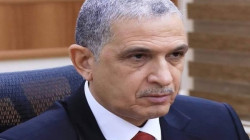
The Federal Public Service Council, the body charged with overseeing state employment, now says appointments should turn on qualification rather than allegiance. Its spokesperson, Fadhl al-Gharawi, told Shafaq News the government is committed to selecting special-grade officials "according to professional and national criteria, away from political quota-sharing." He set out standards that weigh professional competence, integrity, administrative experience, independence, and a readiness to place the public interest above political or personal calculation.
Whether that language binds anyone is the real matter at hand.
Read more: Ali al-Zaidi named Iraq's prime minister: Easy nomination, harder road ahead
The pattern al-Gharawi describes reforming is older than any single government. Muhannad al-Rawi, a political affairs researcher, traces it to the Governing Council assembled after the 2003 US-led invasion, which seated Iraq's factions by sect rather than by competence. "Control over the mechanisms for selecting state employees and sensitive posts was not born with this government," he told Shafaq News; the constitution and the settlements that followed, he argues, hardened the formula into something close to permanent. More than twenty years on, its features remain intact.
That inheritance is visible inside al-Zaidi's own cabinet. Parliament confirmed him in May with only a partial lineup, unable to agree on portfolios that included the interior and defense ministries —the same bargaining over spoils the new appointment criteria are meant to displace. Al-Zaidi himself reached office as a compromise: a businessman with no party base, chosen by the Coordination Framework, the alliance of mainly Iran-aligned Shia parties that dominates parliament, after Washington's opposition sank the candidacy of former premier Nouri al-Maliki.
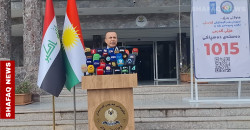
What gives the reform announcement more weight than earlier iterations is the enforcement action behind it. On June 28, al-Zaidi ordered special forces into the Green Zone, the government quarter in central Baghdad, in an operation local media called Sawlat al-Fajr, or the Dawn Crackdown. At least 67 serving and former officials were detained on corruption grounds. The most prominent, deputy oil minister Ali Maarij, had been sanctioned by the United States in May over accusations that he diverted Iraqi oil to Iran-aligned networks.
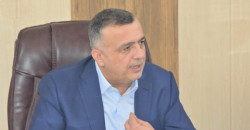
The raid disturbed the informal understandings that shield senior officeholders, and analysts read it as more than a single episode. Sami Salam, also a political affairs researcher, argues the campaign shifted the terms of Iraqi politics. The arrests, he told Shafaq News, "disrupted the influence networks tied to the top posts" and marked "the beginning of resetting the relationship between the state and the parties." He points to something without precedent since 2003: ministries where appointments remain frozen because the blocs cannot agree on candidates, a paralysis he reads as evidence that the old distribution no longer runs smoothly. In his account, the special-grades standards and the corruption sweep are “two halves of a single effort to reclaim appointments from the parties.”
Al-Rawi is less persuaded that intent will translate into control. Al-Zaidi faces continuous political pressure even as he works to narrow the parties' reach, he says, and reform will hold only if administrative decisions can be severed from the bargaining that sustains the blocs. “The moment carries unusual potential, as the prime minister has international backing, and a public increasingly impatient with corruption, but staying the present course without structural change would leave the state circling the same institutional failure it has never escaped.”
Al-Maarij case is where Iraq's domestic contest meets a wider one. His US designation folds the appointments fight into the sustained American pressure campaign against Iran's economic reach in Iraq, a campaign that intruded directly on this government's formation through Washington's veto of al-Maliki and its subsequent squeeze on cash transfers and security cooperation. A merit standard applied to senior posts is also, in effect, a standard that sanctioned or militia-linked figures would find harder to meet, which is why the reform reads differently in Washington than in a purely administrative frame.
Precedent argues for caution. Iraq has moved through anti-corruption drives and appointment reforms before, and the blocs have generally absorbed them, waiting out the enforcement and restoring their people once attention moved on. The criteria announced now carry no published enforcement mechanism and no timeline for converting the thousands of posts held "by proxy", filled in an acting capacity, without formal confirmation, into permanent, vetted appointments. The real test, analysts note, will arrive with the first contested ministry, when a qualified outsider and a bloc's preferred candidate reach for the same chair.
For now the standards exist, and the raids have unsettled the networks that appointments have always served. Whether the criteria bind the same parties that wrote them, and that placed al-Zaidi where he sits, will be revealed post by post, in who ends up holding Iraq's senior offices when the next round of appointments is made.
Read more: Iraq detains top officials in anti-corruption sweep: What we know so far
Written and edited by Shafaq News staff.