Iraq’s population surges past 46M: Burden or opportunity?


Shafaq News
Iraq’s population is expanding at one of the fastest rates in the Middle East, adding more than a million people annually at a growth rate of 2.5%. The 2024 census recorded 46 million citizens, and international forecasts suggest the figure could reach 75 million by mid-century.
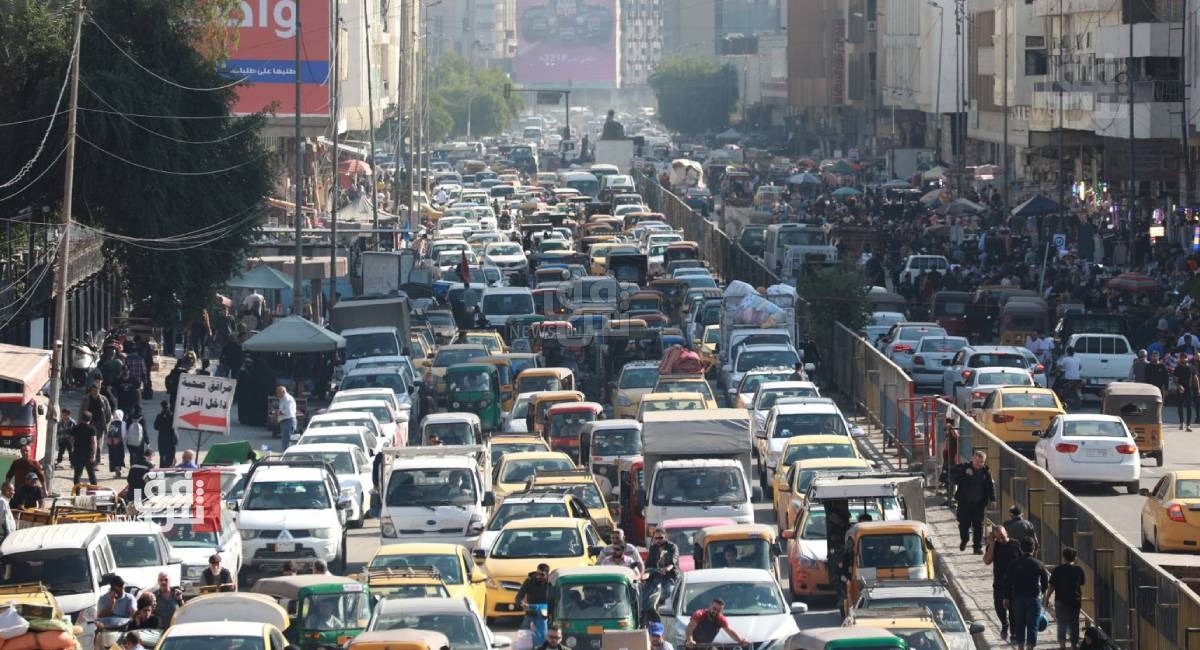
The pace rivals the annual population growth of entire countries such as Spain or Australia, but without equivalent infrastructure or services. For Iraq, this demographic wave represents both a risk and an opportunity: it could overwhelm schools, hospitals, and water supplies, or it could fuel renewal if paired with investment in human capital and economic diversification.
Economist Mustafa al-Faraj told Shafaq News that unchecked growth is already stretching basic services. “The surge has lifted overall unemployment to about 15% and youth unemployment to 32%,” he said. “If left without policy, this will become a mounting burden. But if managed wisely, it could transform into a demographic dividend that boosts growth and creates sustainable jobs.”
Researcher Hawraa al-Yasseri agreed that Iraq’s young labor force can be an asset. “Youth are a source of innovation, especially in technology and renewable energy,” she said, noting that rising demand also stimulates non-oil sectors such as trade and tourism, providing new avenues for growth.
Al-Yasseri warned that per-capita water supply is projected to fall to critical levels under climate stress, while overcrowded schools and underfunded clinics risk undermining human development. “Greater demand without matching production risks fueling inflation,” she added.
Al-Faraj highlighted a deeper structural gap. “What we have lacked since 2000 is a parallel leap in planning. The streets, networks, and utilities are almost the same, while the population keeps climbing. With two-thirds of Iraqis now in cities, the imbalance between people and state capacity explains today’s bottlenecks.”
To respond, the Ministry of Planning unveiled a National Population Policy in 2024, covering 11 areas from childhood to old age. Ministry spokesman Abdul-Zahra al-Hindawi told Shafaq News the framework has been folded into the 2024–2028 five-year plan. It seeks to balance growth with services, empower youth and women, support vulnerable groups, and address climate impacts.
“These measures are designed to align demographic realities with development goals, targeting health, education, housing, and climate adaptation,” al-Hindawi pointed out.
The census also reflected wider social trends. Poverty has declined modestly, from 21.5% in 2022 to 17.6% in 2024, but fertility remains relatively high at 3.3 children per woman, 3.2 in the Kurdistan Region. “Without rapid investment, the gap between demographic pressures and service capacity could reopen a cycle of poverty,” Al-Farraj warned.
Despite the policy framework, lawmakers warn that implementation lags population realities. Mahdiya al-Lami, a member of parliament’s Services and Reconstruction Committee, described many districts as severely underserved, calling some effectively “disaster zones” for services. She urged targeted government plans prioritizing housing, water, and infrastructure in the fastest-growing areas.
Experts argue that Iraq must act decisively to turn its demographic curve into an economic asset. Al-Faraj recommended scaling up vocational and technical education linked to local value chains in agriculture, light industry, and digital services. He also urged reforms that lower barriers to women’s participation in the economy, such as childcare provision, safe transport, and flexible labor laws.
Equally important, he said, are infrastructure programs designed to generate jobs. “A program of roads, water, electricity, and urban housing—linked to local suppliers and labor—can both modernize Iraq and absorb the growing workforce,” he noted.
For al-Yasseri, “Iraq must expand non-oil industries to create new jobs and invest in human capital through health and education spending,” she said. She also called for targeted investment in water and energy systems, awareness campaigns on population policies, and stronger governance to curb corruption.
Written and edited by Shafaq News staff.