Iraq’s parliament creates two ministries, reopening the quota-sharing debate


Shafaq News- Baghdad
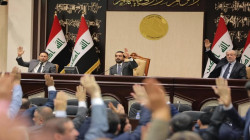
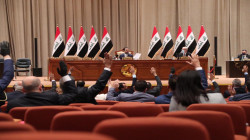
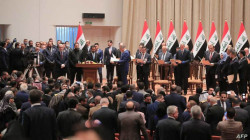
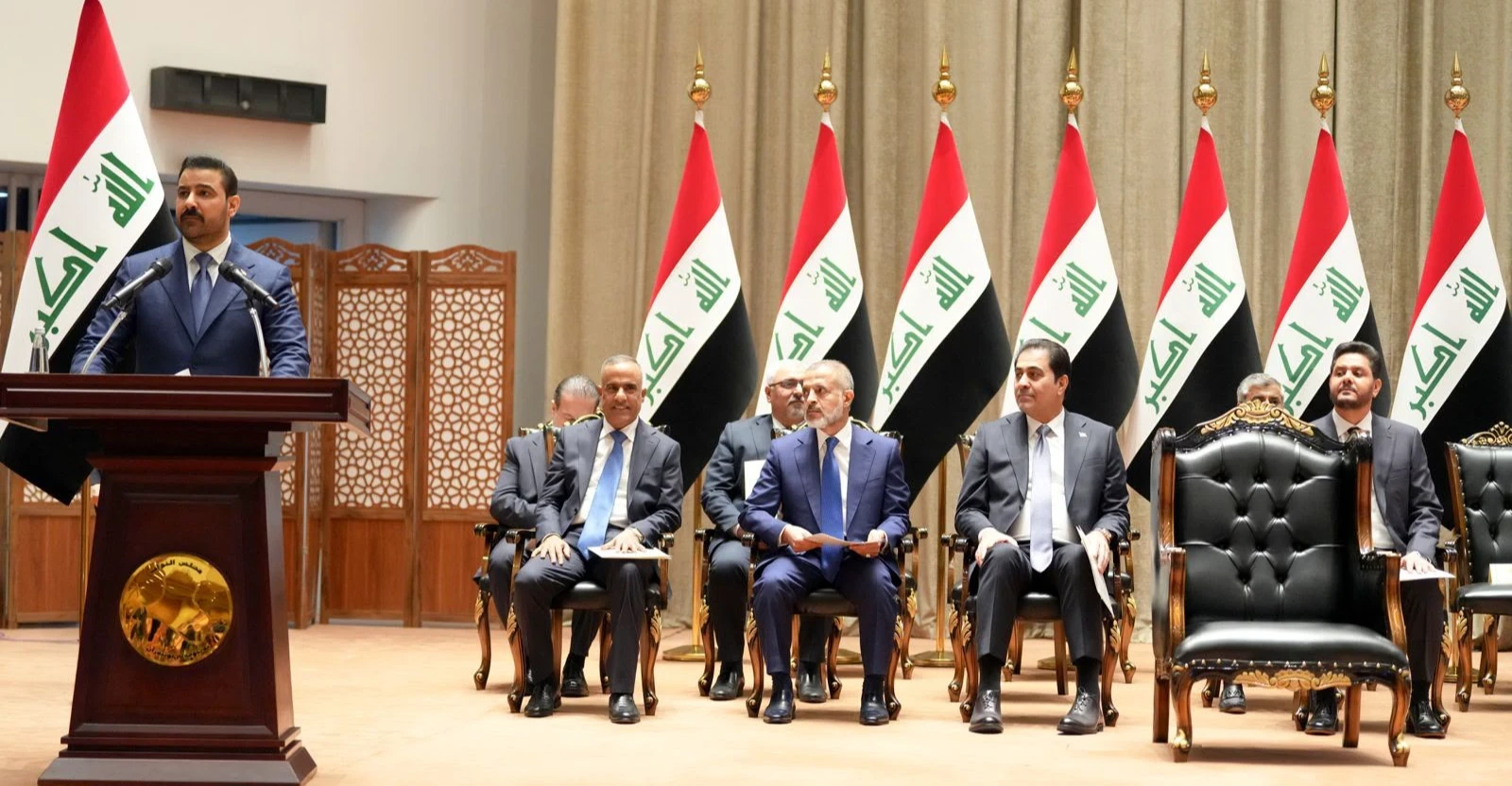
Iraq’s parliament voted on October 15 to create a Ministry of Digital Economy, Governance, Science and Technology and give tourism its own cabinet seat, reversing part of a 2015 drive to shrink the size of the federal government. The expansion revives a debate that has followed every Iraqi cabinet since 2003: does the state’s executive structure reflect administrative need, or the bargaining that holds coalition governments together?
The same session approved three deputy prime ministers, out of four nominated, and filled most of the portfolios left vacant since May. Mohammed Sahib al-Daraji took the new digital economy ministry, Ali Abdul Hadi al-Dakhili became tourism minister, and Mohammed Samaan was named minister of state. Hours before the vote, a group of lawmakers rejected the new posts, as “products of partisan quota-sharing” at a time when the state should be cutting spending. Shafaq News learned that leaders of the Coordination Framework, the alliance of parties that forms parliament's largest bloc, had agreed to create a tourism ministry as part of a compromise over disputed cabinet seats.
Qassim al-Rubaie, a professor of political science at Dhi Qar University, sees the pattern as structural rather than new. "The political factor was, in many cases, more influential than long-term institutional planning," he told Shafaq News. As a result, he said, some changes looked more like responses to the demands of government formation than parts of an integrated reform of the executive.
The modern Iraqi cabinet took shape in the first months after the US-led invasion. In November 2003, the Coalition Provisional Authority, the American-run administration that governed Iraq until mid-2004, created a Ministry of Environment by decree. When Ayad Allawi's interim government took office in June 2004, its lineup included portfolios with no precedent under Saddam Hussein, among them human rights and displacement and migration. Others were carried over from older institutions under new names, a distinction that matters when judging how much the state actually changed.
Political analyst Ali Habib told Shafaq News that the state-building phase did require new institutions for files that had emerged or grown in importance, from human rights to displacement. The difficulty came from the political system those institutions were built into.
Post-2003 Iraq runs on muhasasa, an informal arrangement that distributes senior posts among Shiite, Sunni and Kurdish parties according to their electoral weight. Under it, Rubaie said, ministries became "part of the negotiations over the distribution of positions and political influence." The 2005 constitution added a second layer. It made Iraq a federal state, which forced Baghdad to redefine its relationship with the provinces and with the Kurdistan Region, the autonomous area in the north governed from Erbil.
In August 2015, with oil prices collapsing, the war against ISIS draining the treasury, and protesters demanding electricity and an end to corruption, then Prime Minister Haider al-Abadi announced a package of administrative reforms. He abolished the ministries of human rights, state for women's affairs, and state for provincial and parliamentary affairs, along with several minister-of-state posts. He also merged science and technology into higher education, environment into health, and municipalities into construction and housing, and folded tourism and antiquities into the culture ministry.
Political analyst Riyadh al-Wuhaili, who argues that the post-2003 cabinet was assembled without a coherent plan and shaped by ethnic, sectarian, partisan and even personal considerations, called the consolidation "correct in principle." Accumulated costs, he told Shafaq News, had exposed how oversized the early cabinets were.
This month's vote undoes two of those mergers. Science and technology now has a named portfolio again, bundled with the digital economy, and tourism once more stands alone.
Al-Wuhaili argues that separating tourism and antiquities from culture could pay off, given Iraq's religious, archaeological and natural attractions, which he said could create jobs and bring new revenue into a federal budget almost entirely dependent on oil. That outcome depends on plans and investment that do not yet exist. The tourism industry itself pressed for the split in May: the Association of Travel and Tourism Agents in Iraq called for an independent tourism body led by a specialist, and asked that the portfolio go to a professional rather than through the quota system. The ministry was created through exactly that system.
Al-Wuhaili is less optimistic about the governance portfolio. New ministries, he warned, can add financial and administrative burdens when they lack a clear mandate, particularly given the country's current financial position.
Habib frames the issue as one of criteria rather than numbers. “A decision to create or merge a ministry is reformist when it rests on a clear study of actual need, cost and workload, and when no existing body already performs the same function.” When changes stem from political understandings instead, "they may lead to inflated spending and overlapping mandates rather than better state efficiency."
The deputy prime minister posts raise a separate legal question. Political analyst Talib al-Faili noted that Article 139 of the constitution provides for two deputy prime ministers in the first electoral term. Because it is a transitional provision, he said, it requires careful constitutional reading before anyone rules on the legality of later arrangements.
Shafaq News learned during the May negotiations that some deputy posts were designed as consolation prizes for factions that lost out on larger portfolios. Al-Faili argued that multiple deputies become a problem when they produce overlapping powers, administrative cost, or blurred executive responsibility.
Al-Faili also offered the most practical test of the debate. Iraq has the data to judge these changes, he argued: administrative spending before and after restructuring, budget execution rates, the speed of public services, and reports from the Federal Board of Supreme Audit and the Integrity Commission, the state's anti-corruption body, on violations, recovered funds, and stalled projects. Appointment and promotion records could show whether merit governs hiring, and public opinion surveys could gauge trust in the state.
He cautioned that any improvement or decline must be read in context, since security and economic conditions affect performance regardless of how the cabinet is organized. He also drew a line that much of the Iraqi debate ignores: what can be proven with data, and what is offered as a political explanation for why ministries are created or posts distributed.
The 2015 cuts came under protest pressure and a fiscal emergency, and the portfolios they eliminated have now partly returned through coalition negotiation, not through any published assessment of need. No government since 2003 has released the kind of before-and-after evaluation Al-Faili describes.
Iraq now has a minister whose title includes the word governance. His ministry will be among the first institutions the new government must justify against the standards of need, cost and performance that its critics say were missing from the public debate.
Read more: Iraq floats an AI ministry; its institutions are not ready to use it
Written and edited by Shafaq News staff.