Iraq's oil lifeline is blocked: Here is why the crisis runs deeper than Hormuz


Shafaq News
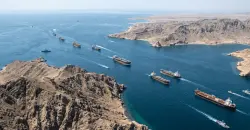
When Iran effectively closed the Strait of Hormuz in late February, Iraq became one of the most exposed economies on the planet. The country routes roughly 95 percent of its oil exports through the waterway, and unlike its Gulf neighbors, it has no meaningful alternative such as a Mediterranean pipeline, Red Sea outlet, or an overland corridor capable of absorbing industrial volumes.
Seaborne exports fell to 131,000 barrels per day in April, a 96 percent collapse compared with April 2025. At the port of Basra, which under normal conditions handles up to 80 tankers per month, Bloomberg vessel-tracking data showed only two vessels loaded cargo in April, down from 12 in March. Since the latest escalation began, just three Iraqi crude tankers have managed to exit the strait, according to Hellenic Shipping News, leaving 43 million barrels of Iraqi crude stranded on vessels west of the waterway —part of a broader Gulf-wide stockpile of 163 million barrels with nowhere to go.
What those figures do not immediately reveal is why the disruption has proven so total. The blockade is the starting point, not the full explanation. Several interlocking failures have compounded the original closure into something closer to a complete export shutdown.
Read more: Iraq’s oil bottleneck: Abundance trapped by dependency
The Insurance Barrier
Global marine insurers have effectively ceased covering vessels transiting the Strait of Hormuz since active conflict between Iran, the United States, and Israel made the waterway uninsurable under standard war-risk terms. Without coverage, cargo owners cannot move product regardless of whether a physical passage exists, rendering the question of military access largely academic.
Iran has reportedly exempted Iraqi crude from its navigation restrictions, but that exemption is operationally irrelevant if no insurer will underwrite the voyage. The discount, not the exemption, has become Iraq's primary instrument for attracting buyers willing to self-insure or operate under flags with alternative coverage arrangements, and even that has limits.
A SOMO notice dated May 3, reviewed by Bloomberg, shows the scale of those concessions: Basrah Medium crude is offered at $33.40 below official prices for loadings between May 1 and 10 —the highest-risk window of the month— narrowing to $26 per barrel for the remainder of May, while Basrah Heavy is offered at $30 below official prices throughout the period.
The tiered structure reflects SOMO's own assessment of risk, with the steepest discount attached to the earliest and most dangerous loading window. The notice specifies that force majeure provisions do not apply to these offers, given that the exceptional circumstances are known to all parties, placing the risk calculation squarely on the buyer.
Read more: Iraq's energy vulnerability: When a petro-state has no buffer
The Force Majeure Cascade
The shipping paralysis did not stop at the terminals. When exports stopped moving, storage at southern terminal facilities filled rapidly, and with no outlet for produced crude and no room to store additional volumes, international oil companies operating fields across southern Iraq began declaring force majeure, a legal mechanism suspending contractual obligations under circumstances beyond a party's control.
Field shutdowns followed, and production volumes fell sharply as a direct consequence of export infrastructure failure, not of any problem with the fields themselves. This distinction matters: the damage is logistical and contractual, not geological, which means recovery is theoretically faster once the waterway reopens, but the fiscal damage accumulates daily regardless.
The Turkey Pipeline and Its Ceiling
Iraq does have one functioning export outlet outside the Gulf: the Iraq-Turkiye Pipeline, which carries crude from Kirkuk in northern Iraq to the port of Ceyhan on the Mediterranean, and which has operated at reduced but functional capacity through the crisis. Its ceiling, however, is structurally limited. The pipeline handles a fraction of the volumes that southern sea terminals process at full capacity, and years of underinvestment and periodic disputes between Baghdad and Erbil over revenue sharing have kept throughput well below its technical maximum. It is a pressure valve, not a substitute.
The Fiscal Exposure
Iraq funds approximately 90 percent of its federal budget through oil revenues, a dependency long identified by the International Monetary Fund and the World Bank as the country's primary structural vulnerability. That vulnerability has now translated into an acute fiscal crisis, with a government already managing subsidy obligations, public sector wage commitments, and reconstruction costs across multiple provinces now operating on a fraction of its normal revenue base. The 2025 federal budget was built around oil price and volume assumptions that the current crisis has rendered obsolete.
The diplomatic path out —a deal between Washington and Tehran that reopens the strait— would not produce an immediate recovery even if it materializes. Tanker queues would take weeks to clear, insurance terms would need to be renegotiated, and field production suspended under force majeure declarations would require time to restore. The damage already absorbed by Iraq's export sector in April alone represents a loss that no discount schedule can recover.
Written and edited by Shafaq News staff.