Iraq's new parliament: Defining the next decade


Shafaq News
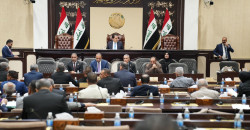
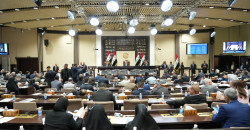
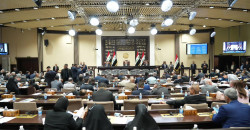
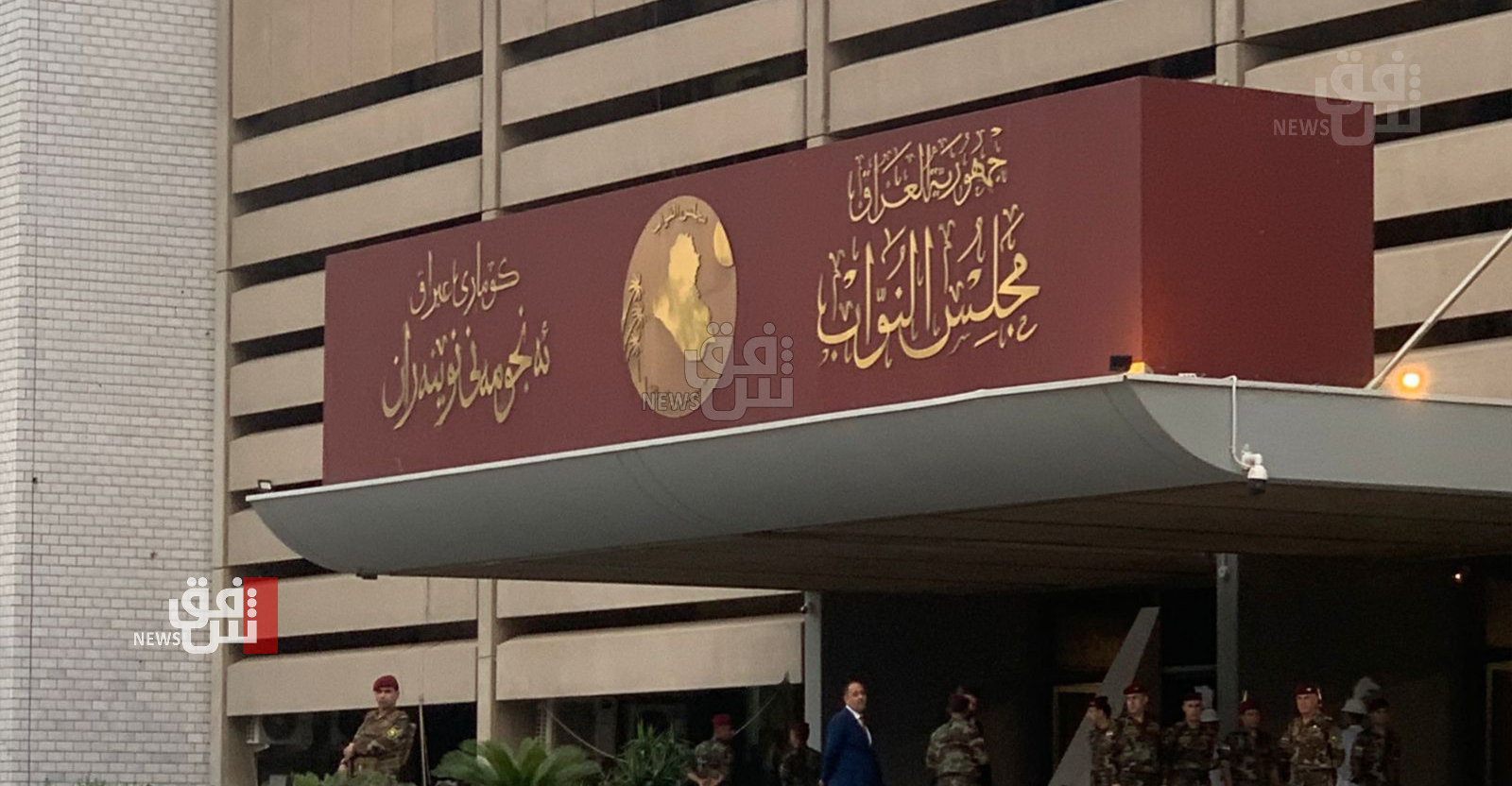
After settling all 853 election appeals, Iraq entered a decisive political phase, with winning blocs preparing for a new legislature facing extensive challenges. The next parliament will convene under a legislative vacuum created by a November 17, 2025, ruling from the Federal Supreme Court—the country’s highest judicial authority—terminating the mandates of both the government and parliament.
Government formation—expected to take three to four months—places the incoming legislature before a double test: how to fill a critical institutional gap, and how to prevent foreign or domestic actors from exploiting it.
Another central question also emerges: will Iraq tilt closer to Iran, align with the US, or maintain a posture of relative neutrality? Analysts argue that the answer will be shaped largely by the handling of two key legislative files—the Popular Mobilization Forces (PMF) Authority Law and the Federal Oil and Gas Law. Each serves as a strategic indicator of Iraq’s foreign and domestic alignment, with consequences that stretch far beyond parliament.
Axis Politics
Political analyst Wael Hazem views the next parliament as inseparable from Iraq’s unresolved geopolitical posture. Speaking to Shafaq News, he noted that the chamber’s performance will hinge on the strategic direction Iraq chooses regarding its regional alignments. He further outlined three potential scenarios—each carrying distinct legislative, economic, and security outcomes.
The first is joining the “Axis Of Resistance,” a step he warned would bring political, security, and economic pressures far beyond current expectations. “Such alignment would translate into laws and security arrangements empowering armed factions with resources and authority, potentially constraining Iraq’s international partnerships and risking sanctions should Western states perceive a threat to their interests.”
The second scenario is maintaining Iraq’s current posture of “relative neutrality.” Challenges would continue, but at a more manageable level compared to a realignment toward Tehran. “This approach requires institutional discipline, legal clarity, and a strict separation of powers—expectations that place substantial weight on parliament’s ability to craft rules that prevent overlapping jurisdictions and reduce parallel loyalties.”
The third scenario—“moving closer to the US axis”—would ease several pressures, largely because a significant share of Iraq’s foreign reserves is held in the United States, and Washington can assist in sensitive files, including the water dispute with Turkiye.
While economically attractive—especially in terms of encouraging US and Western investment—this path carries domestic political costs and regional sensitivities.
“Any clear tilt toward Washington would be interpreted internally as a realignment that could reorder parliamentary alliances and shift legislative priorities,” Hazem added.
The Integration Test
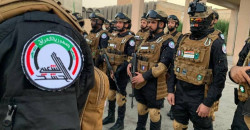
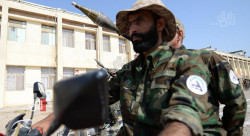
The proposed PMF Authority Law, backed by major Shiite factions, is officially framed as part of Iraq’s security reform agenda. It aims to integrate the PMF—a force originally established to confront ISIS—into the military chain of command. Supporters argue the Law is needed to standardize ranks, regulate funding, and clarify the PMF’s position within state institutions.
Opponents—foreign and domestic—view the draft differently, warning it would legitimize powerful Iran-aligned factions and institutionalize a parallel command structure shielded from civilian oversight.
The PMF was created in mid-2014 by government order in response to Grand Ayatollah Ali al-Sistani’s fatwa (Al-Jihad Al-Kafa’i) after the fall of Mosul. It attracted tens of thousands of fighters, including members of pre-existing armed factions. In 2016, Iraq’s parliament passed the first PMF law, formally recognizing the force but leaving its internal structure and regulatory framework ambiguous.
While the Coordination Framework—Iraq’s current largest parliamentary bloc with about 148 out of 329 MPs—retains significant influence, consensus on the PMF Law remains elusive. Internal divisions, including among Shiite parties, revolve around leadership appointments and control over PMF deployments in Sunni-majority areas.
Kurdish and Sunni lawmakers, though less vocal publicly, have played a pivotal behind-the-scenes role in obstructing or supporting the bill. During a July 2025 session, both blocs withdrew in protest after the bill was added to the parliamentary agenda, citing procedural violations under Article 37 of parliamentary rules. The walkout also served as a tool to increase pressure in broader negotiations.
Some Kurdish factions, according to Shafaq News political sources, have linked their support for the PMF Law to concessions on unresolved Federal-Regional disputes, including budget allocations, oil revenues, and control of border crossings. Messages were reportedly delivered through intermediaries outlining these conditions for cooperation on “controversial legislation.”
Sunni parties remain divided. Most oppose passage of the bill, including former Speaker Mohammed Al-Halbousi’s Progress (Taqaddum) Party, which recently emerged as the largest Sunni parliamentary bloc with 27 seats. He voiced reservations tied to influence distribution and executive authority.
Observers note that both Kurdish and Sunni leaders fear the Law might consolidate what they view as a “Shiite army” with disproportionate influence, while also recognizing the opportunity to secure political concessions in exchange for their votes.
Meanwhile, the United States has repeatedly expressed firm opposition to the PMF Law, with the Pentagon viewing the draft as a direct expansion of Iran’s influence in Iraq. The US Embassy in Baghdad reinforced this stance, warning that the legislation risks legitimizing groups the US classifies as terrorist organizations.
Secretary of State Marco Rubio, in a call with caretaker PM Mohammed Shia al-Sudani, warned that the Law would institutionalize Iranian-backed armed groups and weaken Iraqi sovereignty.
Despite these objections, the Iraqi government has maintained its position. An earlier statement from Al-Sudani’s office framed the bill as a sovereign initiative consistent with legislation governing other agencies, including the Intelligence and National Security Services. The PMF, it noted, is a “formal military institution operating under the Commander-in-Chief, which is the PM.”
Speaking to Shafaq News, independent politician Abu Methaq Al-Massari expected the next parliament to encounter a different structural environment from previous terms. But he underlined that the large Shiite parliamentary majority gives the chamber the numerical strength to pass long-delayed legislation. “
Still, a fast vote does not guarantee quality,” he added, stressing that laws pushed through without strong accountability mechanisms can deepen crises.
He argued that the PMF Law will “pass easily” this time, noting that its delay in the previous term stemmed from “mobilizational complications” and election-season manoeuvring—factors no longer influencing the process.
Describing its passage as “a matter of time” reflects the political momentum behind the bill, yet it also prompts a broader question: What shape will the final legislation take? Will it embed strong oversight and accountability? Or will it formalize influence structures that remain outside meaningful state control?
Read more: Iraq’s PMF Law: A battle for state control
Resource Control Rift
The second central file is the Federal Oil and Gas Law, intended to define resource management between Baghdad and the Kurdistan Region, including rules for licensing, revenue sharing, and environmental and technical governance.
Pending since 2005, the Law stipulates that Iraq’s oilfields should be managed by a national oil company under the supervision of a Federal Council. However, disagreements over fields in the Kurdistan Region have persisted since 2003.
Baghdad accuses Erbil of failing to provide accurate revenue figures and withholding proceeds from the Federal Treasury. The Kurdistan Regional Government (KRG), in contrast, insists on full control over its oilfields, including licensing, production, exports, and contracts.
The KRG’s Oil Law grants it authority over oil operations, marketing, and contract negotiations, while allowing Federal participation only in pre-2005 fields.
Read more: The Kurdistan Gambit: New gas deals ignite the Baghdad-Erbil divide
Iraq exports an average of 3.3 million barrels of crude oil daily, with oil revenue making up more than 90% of national income. Discrepancies in production costs and revenue structures between Baghdad’s licensing rounds and the KRG’s operations have deepened friction.
In May 2023, Iraq’s Oil Ministry accused the KRG of “legal and procedural violations” in oil sales, resulting in financial losses. It noted that Federal licensing rounds yield higher returns (up to 96.5% of revenue) compared to KRG operations (around 80%).
In August 2023, the Iraqi government formed a committee—including Federal and Regional oil officials, as well as representatives from oil-producing provinces—to finalize the draft law. The initiative aligns with caretaker PM Mohammed Shia Al-Sudani’s recent arrangement with the KRG to resolve contentious issues, including implementing Article 140 on disputed territories.
Passing the Oil and Gas Law is viewed as a tilt toward the US because a clear, investment-friendly licensing system attracts major American and European companies—an outcome Baghdad seeks to modernize production, import technology, and upgrade infrastructure.
Moreover, a legal framework that guarantees property rights, cost recovery, and international arbitration mechanisms increases Iraq’s attractiveness to companies such as Chevron, ExxonMobil, and Western drilling firms.
Yet political and public concerns persist, reflecting fears that new contracts could undermine transparency or the national interest. Many Iraqis worry that restructuring the energy sector could grant excessive leverage to foreign companies at the expense of national oversight. Politically, the file has long served as a bargaining tool in broader negotiations, keeping the Law suspended amid unresolved compromises.
Read more: No end in sight: Iraq's Parliament drowns in delays and disagreements
More Domestic Crises
The new parliament will also face a series of sensitive laws: legislation on the Federal Court, decentralization, and administrative quotas. These “smaller” files can reshape power balances if leveraged to secure posts, resources, or regional authority.
Newly elected MP Mahma Khalil—aligned with the Kurdistan Democratic Party (KDP)—argues that Iraq’s parliamentary system makes the legislature the core of political life, responsible for both lawmaking and oversight of the executive. This places a dual burden on MPs: they are legislators and a constitutional safeguard against foreign influence or opaque internal pressure.
Speaking to Shafaq News, Khalil described the incoming term as “filled with complications,” pointing to economic strain, drought, and political volatility. These “major problems,” he noted, demand a stronger legislative and oversight role.
That assessment carries practical implications: a strained budget, fluctuating revenues tied to global markets, and environmental pressures linked to diplomatic standoffs will directly affect provincial stability.
“The newly elected parliament must move beyond emergency legislation toward building frameworks resilient enough to absorb shocks and streamline governance,” he added, noting that previous parliaments witnessed a clear decline in legislative performance.
Read more: Iraq’s Parliament: High pay, low productivity
Must Master Balance
The real test for Iraq’s political class does not lie in rushing through laws shaped by external loyalties, nor in indefinitely postponing legislation that could strengthen governance. It rests on drafting laws that secure institutional accountability, economic transparency, and clear rights protections.
If parliament aims to prevent Iraq from becoming an arena for competing pressures, it must adopt legislation that weakens parallel loyalties and reinforces institutions resilient to outside influence. This will require difficult decisions—choices that will define Iraq’s direction for the next decade.
Written and edited by Shafaq News staff.