Iraq’s media and the price of false credentials


Shafaq News
By Ali Hussein Feyli
Amid blurred boundaries around professional journalism and the organized rise of “shadow media,” journalism in Iraq is facing a deep structural crisis that affects both its independence and its role in shaping public awareness.
The problem has intensified with the retreat from democratic promises and the continued weakness of professional protections. Even the Iraqi Journalists’ Rights Law No. 21 of 2011 has failed to provide sufficient safeguards, while provisions of the Penal Code, enacted during the Baath era, continue to be used against journalists.
Iraqi journalists have neither gained the professional freedom to report independently nor faced the total suppression of earlier authoritarian eras, instead finding themselves caught between partisan media and political money on one side and disinformation and the loss of facts on the other.
Under these conditions, many qualified journalists continue to work outside formal employment structures, without contracts or adequate professional guarantees. This places an additional burden on journalists, who must confront the influence of various powerful actors while also trying to make a living under the threat of legal action and without adequate professional safeguards.
Alongside weak protections for professional journalists, another problem concerns the criteria for granting journalistic status. Loose standards have allowed hundreds of people without adequate qualifications to obtain press identification, while pages and platforms have emerged that use microphones and media logos without adhering to professional journalistic standards.
Official figures indicate that Iraq, including the Kurdistan Region, has more than 20,000 journalists, though the figure alone does not show how many are actively practicing or the level of their professional experience. Iraq also has more than 100 television channels and hundreds of news websites and digital platforms. Some pursue programs and objectives that do not align with the public interest, while the sources of financing for others remain unclear.
This proliferation has not produced greater journalistic independence, leaving Iraq’s media environment deeply divided and heavily polarized.
Granting press credentials to people with no grounding in journalism, writing, professional values or media ethics is not merely an administrative error, but can contribute to a broader decline in the standing of the profession. When journalistic work is placed in the hands of unqualified individuals, the consequences extend beyond the media sector by undermining public confidence in the information people receive.
Such disorder opens the door to misinformation and media extortion, undermining society’s psychological well-being and intellectual integrity while exposing weaknesses in professional standards and the mechanisms meant to protect the profession.
Read more: Iraq’s CMC: Between regulation and freedom of expression
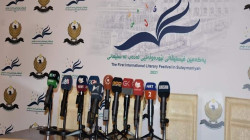
Inviting people who lack professional and ethical standards to government press conferences as journalists, and paying them, also exposes shortcomings in the media policies of some state institutions.
Rather than applying professional and ethical standards, some government media departments focus on numbers and appearances, granting access and journalistic status to individuals and outlets with no professional record or that rely on fabricated news for promotion and extortion.
The problem is not limited to politics or security. Political financing in the media sector, combined with easier access for unqualified individuals, has distorted independent journalism. The emphasis on images, online presence, and social media visibility is also no longer confined to parts of the younger generation. A considerable number of officials appear to have adopted the same approach, allowing digital visibility to outweigh professional competence.
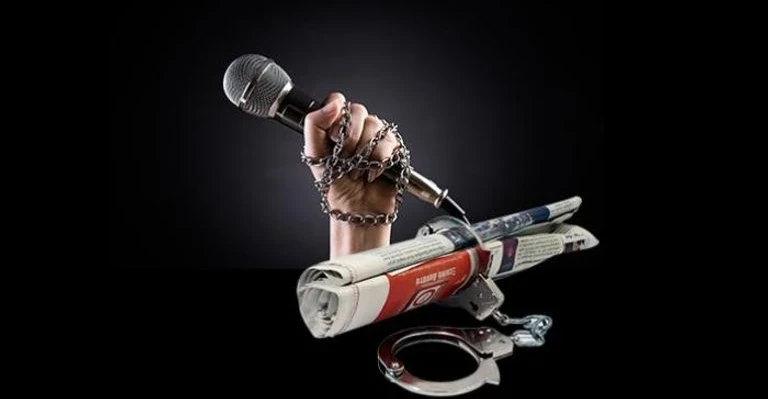
Any serious attempt at reform requires updated legislation protecting professional rights and ensuring those protections are enforced. Clear criteria are also needed for issuing press identification to prevent abuse and prevent journalistic status from becoming a cover for people whose media presence rests largely on cheap microphones and logos, while the damage caused by their practices can be severe.
In practical terms, the Iraqi Journalists Syndicate and government media departments should act as safeguards against extortion, misinformation, and misuse of journalistic status, while upholding professional ethics and protecting independent journalists’ right to work and criticize.
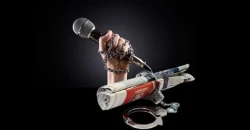
In Iraq today, the appearance of being a journalist can sometimes be created within hours: a microphone can be purchased, an identification card printed, and a digital page launched, allowing a person with little experience or commitment to journalistic standards to establish a public presence. Years of education, professional work, and credibility can consequently be overshadowed by tools and branding that provide immediate visibility without producing journalism worthy of public trust.
Read more: Iraq's press freedom falls amid record violations
This disorder is no longer confined to television screens or the online sphere, but has moved into the streets through microphones and media logos unsupported by genuine professional practice. When such disorder receives funding and institutional access, it can become organized chaos that damages society’s collective conscience.
Professional journalists carry the heaviest burden in this environment, as the fading distinction between those committed to the profession and those who practice extortion forces them to defend both their credibility and the meaning of journalism itself. A microphone and a logo may cost little, but the loss of public trust in the media carries a far greater price for society.
This article was originally written in Arabic.