Iraq’s balance policy: When neutrality becomes a forced compromise


Shafaq News
Rising tensions between Washington and Tehran are once again testing Iraq’s fragile foreign-policy equilibrium, following US President Donald Trump’s decision to impose a 25% tariff on any country conducting trade with Iran. The move, designed to tighten economic pressure on Tehran and its partners, comes amid one of the largest anti-government protests inside Iran in years and renewed debate in Washington over how to respond to internal instability in the Islamic Republic.
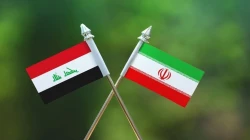
For Iraq, the announcement highlights a familiar dilemma, but under increasingly rigid conditions. Baghdad has long promoted a policy of “balance” between the United States and Iran. Yet Iraqi analysts, speaking to Shafaq News, warn that this posture is no longer a matter of diplomatic finesse, but a constrained reality shaped by domestic power structures, economic dependence, and limited strategic autonomy.
Read more: Iraq between two fires: Tehran and Washington eye Baghdad’s post-election phase
According to Ihsan al-Shammari, head of the Political Thinking Center, Iraq’s challenge lies less in external maneuvering than in internal political arithmetic. He argues that Baghdad “does not enjoy the freedom of choice often assumed by foreign policymakers,” noting that Iran-aligned forces dominate Iraq’s political landscape and hold roughly 165 seats in parliament.
This reality, al-Shammari explains, sharply reduces the government’s ability to adopt a genuinely neutral stance between Washington and Tehran. Economic ties reinforce these constraints. Annual trade between Iraq and Iran exceeded $13 billion in 2025, while Iranian companies maintain a strong presence across the Iraqi market. More critically, Iraq relies on Iranian gas and electricity imports to meet around 40% of its national power needs.
Under these conditions, Washington’s latest decision forces Baghdad to confront an increasingly narrow set of options: continue deep economic and security engagement with Iran, or align more closely with the US “maximum pressure” strategy, at the risk of domestic political backlash and internal instability.
Ahmed al-Yasseri, head of the Arab-Australian Center for Strategic Studies, links Iraq’s room for maneuver to the nature of political leadership emerging from the Coordination Framework, the umbrella grouping of Iran-aligned Shiite ruling forces.
If Iraq’s governing elite adopts an escalatory posture, al-Yasseri warns, “maintaining balance will become nearly impossible, potentially drawing the country into direct confrontation. By contrast, a more pragmatic leadership —modeled on figures such as caretaker Prime Minister Mohammed Shia al-Sudani or former premier Haider al-Abadi— could preserve a narrow margin of neutrality and keep Iraq outside the immediate circle of targeting.”
“Iraq is not currently within the circle of direct targeting,” al-Yasseri said, “but any clear economic or security alignment with Iran could alter that equation.”
This assessment suggests that Iraq’s relative insulation from US punitive measures is conditional rather than permanent, hinging as much on political signaling as on policy substance.
Read more: US strategy 2026: Containment or military strike for Iraqi armed factions
Within Iran-aligned political circles, a similar acknowledgment emerges, albeit framed differently. Aref al-Hammami of the State of Law Coalition, led by Nouri al-Maliki, argues that recent US decisions have triggered global discontent, even among Washington’s allies, describing them as impulsive and detached from political realities.
Despite this criticism, al-Hammami concedes that Iraq cannot sever ties with the United States, calling engagement with Washington a “given reality.” At the same time, he insists that disengagement from Iran is neither realistic nor feasible. “Geographic proximity, intertwined markets, and deep political connections make any political or economic rupture with Tehran impossible.”
With a significant segment of Iraq’s political class viewing relations with Iran as non-negotiable, Washington sees this as complicating sanction-based strategies that assume Baghdad can recalibrate its alliances without internal cost.
Imad al-Musafir, a political analyst close to the Coordination Framework, frames Iraq’s balancing act not as submission to external pressure but as a long-term strategic posture rooted in resistance to foreign dominance. He argues that Iraq is not a marginal actor reacting to regional dynamics, but an integral part of a broader axis opposing political and economic coercion.
“Resistance is not an emotional reaction or improvised rhetoric,” al-Musafir told Shafaq News. “It is a calculated strategic choice managed through state institutions and guided by considerations of public stability and national interest.” From this perspective, Iraqi sovereignty cannot be exchanged for sanctions relief or temporary incentives, regardless of changing US administrations.
Beyond politics, Iraq’s vulnerability is most visible in the energy sector. The country imports Iranian gas to generate roughly 8,000 megawatts of electricity, accounting for about 40% of national demand. Recent supply disruptions —driven by declining Iranian reserves and rising winter consumption— have already exposed the fragility of this dependence.
In response, Baghdad has moved to diversify its energy sources, signing agreements with Qatar and Turkmenistan and investing in domestic renewable projects expected to add around 3,000 megawatts over the next three years. France’s TotalEnergies has also committed to building a 1,000-megawatt solar power plant in Basra at a cost of $820 million.
These initiatives signal intent but offer no immediate relief, leaving Iraq exposed in the short term to both Iranian supply decisions and shifting US policy.
The impact of Washington’s tariffs extends beyond Iraq. Countries such as the United Arab Emirates and Oman —both major trade partners of Iran— also face indirect pressure. Iraq’s position, however, remains uniquely precarious due to the scale of its economic ties to Tehran and the internal political forces shaping its decision-making.
Ultimately, Iraq’s so-called balance policy appears less a deliberate strategy than a forced compromise imposed by domestic power structures, ideological boundaries, and material dependence. For now, Baghdad remains outside the immediate line of fire. Whether it can stay there will depend not only on pressure from abroad, but on choices —and constraints— at home.
Read more: Surprise operations lead key scenarios for Iraq and the region amid US escalation
Written and edited by Shafaq News staff.