Iraq's September 30 weapons deadline leaves terms of disarmament unresolved


Shafaq News
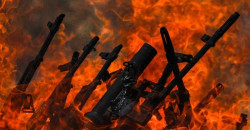
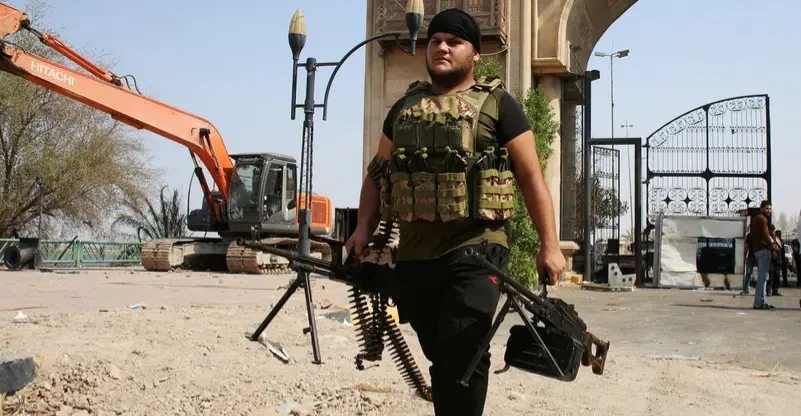
Iraq has set September 30 as the final date for surrendering weapons held “outside state institutions” and a committee now exists to fold the armed factions into the security forces and move their arms to state custody. Whose weapons move, under whose command, and what becomes of those who refuse remain unsettled.
Read more: Iraq to place armed factions' weapons under state control: What we know so far
September 30 also closes the US-led coalition against ISIS, and the overlap is deliberate. Government spokesman Haider al-Aboudi has bound the two events together, warning that any weapon outside the state framework after that date “becomes unregulated” and open to legal treatment. The alignment aims at the argument that has kept some factional weapons in place for two decades: that they answer a foreign military presence on Iraqi soil. End the presence, and the rationale is supposed to end with it.
Read more: Iraq after the Global Coalition: Between sovereignty and strategic risk
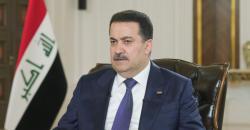
Prime Minister Ali al-Zaidi has built his program around that logic. A businessman and banker from Dhi Qar with no prior senior office, he took power in May 2026 as the compromise candidate of the Coordination Framework, the Shia bloc that dominates parliament, and did so with Washington's open backing. The Framework has since authorized him to pursue a state monopoly on arms and to sever the Popular Mobilization Forces from party and political attachments. That umbrella, state-funded and formally part of the security apparatus, absorbed most of the Shia armed groups after ISIS overran northern Iraq in 2014, yet its Iran-aligned components have kept operating on their own terms.
Read more: EXPLAINER: From the fight against ISIS to US withdrawal talks
Muqtada al-Sadr, the head of the Patriotic Shiite Movement, opened the current phase when he detached the Saraya al-Salam from his movement in late May and placed it under state command. Asaib Ahl al-Haq and Kataib Imam Ali followed with steps to hand parts of their PMF-registered formations to the government, and the Commander-in-Chief's spokesman, Sabah al-Numan, announced a committee ordered by al-Zaidi to build the integration mechanisms and transfer weapons, equipment, and bases to the competent authorities. Al-Zaidi has said the bulk of factional arms already sits under state custody, with a small remainder awaiting a transfer mechanism.
Read more: What does Iraq's new government promise? A guide to Ali Al-Zaidi's ministerial program
The compliance is uneven, and the resistance is concentrated among the groups closest to Tehran. Kataib Hezbollah, Harakat al-Nujaba, and Kataib Sayyid al-Shuhada have refused to enter the process, holding to what they call resistance weapons and pinning any move on external conditions, chief among them the presence of foreign forces.
Mustafa Ajeel, a security researcher, reads the September 30 date as engineered against the withdrawal schedule, “which makes the coming weeks pivotal for ending the justification for arms outside the state.” That justification does not dissolve on its own, and the factions weighing it disagree sharply on what the deadline requires of them.
Ahmed Adnan, a member of the Sadiqoon Movement, the political wing of Asaib Ahl al-Haq under Qais al-Khazali, rejects the framing of surrender outright. What is underway, he told Shafaq News, is confining the decision to use force to the state rather than stripping the factions of their weapons, which remain inside the PMF.
He casts the effort as “a national, religious, and political undertaking that must reach every faction without exemption” and treats the coalition's departure as the opening for a broader reckoning over the future of these arms rather than its conclusion.
Adnan al-Kinani, a security and political expert, draws the opposite line. The end of “the occupation” means armed resistance has run its course, leaving factions to choose full integration into the state or a shift into politics. He also locates the fault line inside the factional camp itself, between those who accept the government's course and those who reject it, “an internal division he argues must be resolved at the root rather than managed at the surface.”
That internal split is where the deadline meets its hardest test. Moain al-Kadhimi, a leader in the Badr Organization under Hadi al-Amiri, a close ally of Iran, ties the holdouts' compliance to "a complete and actual US withdrawal, along with guarantees against any return of American military action." Groups such as Kataib Hezbollah and Kataib Sayyid al-Shuhada, he told Shafaq News, want firm assurances on that point before moving, and while the government can manage the security file, it needs a decisive political choice to carry it.
Any final settlement, in his reading, rests on a balance of commitments between Baghdad and Washington and on full Iraqi sovereignty over its territory and airspace.
Read more: Iraq’s armed factions and the disarmament debate: Why unity masks deep divisions
The 2024 agreement between Baghdad and Washington sets that timeline. Its first phase closed in January 2026 with the end of combat missions, a partial pullback, and a shift toward bilateral security cooperation. The second phase runs to this September and ends the use of Iraqi bases to support operations in Syria, narrowing the relationship to limited advisory coordination. The framework gives the factions a fixed date to measure against, and it gives the holdouts a condition they can claim has not yet been met.
Enforcement is the gap the declared mechanism has not closed. A committee to integrate fighters and move weapons addresses the factions already inclined to cooperate. It says nothing about the ones refusing, and no announced procedure yet establishes who takes physical custody of their arms, how the PMF is restructured around “their resistance groups,” or what legal treatment means in practice for a group with parliamentary weight and armed capacity. Al-Kinani's warning about roots over surfaces lands here: “the deadline can be declared enforceable without being enforceable against the parties that matter most.”
Written and edited by Shafaq News staff.