Iraq lawmakers push tax reform after public complaints


Shafaq News- Baghdad
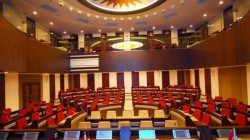
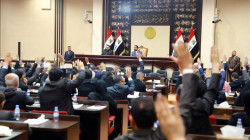
Iraq's parliament has placed reform of the national tax system among the priorities of its new legislative term, a member of the Services Committee, Mohammed al-Hasnawi, told Shafaq News, as complaints from citizens mount that a widening array of government taxes and fees far outweighs the public services they receive in return.
Lawmakers intend to pass a new law built around tax fairness and the protection of low- and middle-income families, said al-Hasnawi, who described the current system as shifting the cost of the state's fiscal deficit onto ordinary taxpayers. Several members have submitted proposals calling for a comprehensive overhaul of tax policy, aimed at curbing the concentration of capital and distributing the financial load more evenly.
The deductions are already visible on payslips. Among them is a monthly charge of 25,000 Iraqi dinars ($19) tied to the health sector, alongside further fees attached to a range of government services.
Residents interviewed by Shafaq News say they pay more and get less. In the health sector, families are pushed toward private hospitals whenever someone falls ill, said Abbas Kadhim, because what citizens pay "should be matched by a proper level of service."
A second front is electricity: collection charges reach about 200,000 dinars ($153) a month in some homes, even though the national grid supplies only four to five hours of power a day.
"Everything has become subject to fees, from food and medicine to the simplest government transactions," said Azhar al-Saadi. A single piece of paperwork can require as much as 100,000 dinars loaded onto a bank card, and so many charges stack up that an employee's salary, in her words, "returns to the state the same day" it arrives.
For vehicle owners, the squeeze starts at registration: from about 30,000 dinars for a small car to 300,000 dinars for a larger one, on top of road and bridge tolls levied while the roads themselves are left "full of potholes and bumps," said Aqeel, a driver. Volunteer groups have begun patching some routes after a rise in accidents, a sign, to him, of how far "the fees collected have drifted from the services provided."
Students carry their own version of the burden. Public universities levy charges under "various labels" and require them to pay for electronic applications just to see their exam results. Reham al-Abboudi, a university student, revealed that many now obtain their grades informally through contacts on campus, "instead of subscribing to the paid applications."
The Iraqi constitution guarantees social security, health care, and education as basic rights under articles 30, 31, and 34. Residents invoke those provisions most often when they argue that the fees they pay should track the quality of what the state delivers.
To Khalid al-Jabri, a member of the Higher Committee for Tax Reform, a body tasked with modernizing Iraq's fiscal system, taxes and customs duties are not revenue tools but instruments for steering the economy, encouraging investment, and protecting domestic production. Iraq still runs them through a dated approach that makes them feel punitive, and shifting to digital administration and modern oversight is essential to build non-oil revenue. "A successful economy is not built on higher taxes, but on smart management that produces growth before revenue," he said.
Al-Hasnawi stressed that the Council of Representatives has placed the tax system on the priorities of its new legislative term, and is moving toward enacting a new law aimed at achieving tax fairness and protecting low- and middle-income groups.
Read more: Delayed reform or fiscal shock? Iraq’s tax measures test state capacity