Iraq between music, traditions, and law: Who sets the rhythm of public life?


Shafaq News
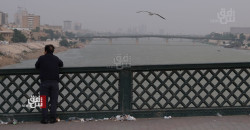
On Basra’s waterfront, the billboards for singer Mohammed Abdel-Jabbar’s cancelled concert still hung over a space where a stage was meant to rise. The organizing company withdrew after receiving threats, saying “songs can return, but lives do not,” a line that captured the anxiety shaping cultural life in southern Iraq.
The dispute over a single performance reflects a broader concern about who defines sacredness, who draws the limits of joy, and whether Iraq’s public sphere is governed by constitutional law or by the weight of tradition and social veto.
The Basra controversy followed a similar scene in Nasiriyah days earlier, where Abdel-Jabbar performed as part of a promotional event near the new airport. Families attended in large numbers, seeking a reprieve from water shortages, unemployment, and protest fatigue. Yet a small unidentified group tied to religious and tribal networks denounced the event as incompatible with the city’s sanctity. Within days, a provincial council member formally requested a ban on major concerts, turning a cultural dispute into an administrative issue and pushing it from social media into institutions of local governance.
Such reactions cannot be understood in isolation from the broader character of Iraq’s south, a region long shaped by strong religious authority, cohesive tribal structures, and conservative social norms. Cities like Najaf and Karbala host the most influential Shiite seminaries in the world, giving clerical voices significant influence over political, social, and personal life.
Tribal systems also play a central role in defining social conduct, resolving disputes, and preserving cohesion, often reinforcing traditional norms. Family-centered values, strict expectations for public behavior, and conservative attitudes toward music, dress, and gender interaction remain more pronounced here than in other regions. This does not erase the area’s cultural diversity, but religious and traditional values still form the general framework within which public life operates.
This dynamic differs sharply from cities like Erbil or Al-Sulaymaniyah, where musical performances and nightlife are woven into the mainstream cultural economy.
Nowhere is this convergence of tradition and authority more institutionalized than in Karbala, where the city’s “Sanctity Law” represents the most formal attempt to regulate public behavior in Iraq. Proposed in 2012 and implemented in 2017 without federal parliamentary approval, the regulation bans musical celebrations, restricts clothing, and prohibits women without headscarves from entering the city.
Legal experts have consistently argued that the law lacks constitutional legitimacy; Article 61 grants legislative authority exclusively to Parliament. Nonetheless, the law remains powerful because it is backed by tribal leaders, religious institutions, and a social environment that accepts the principle of regulating joy in the name of respect for sacred spaces.
As New Year’s Eve approaches, Karbala would also face intensified enforcement as happened previously. Majda al-Ardawi, head of the Sanctity and Religious Affairs Committee, told Shafaq News that celebrations contradict the city’s identity, insisting that “true Karbala natives” reject music and dancing. She advised those wishing to celebrate to “go elsewhere,” linking the ban not only to religious norms but also to regional tensions and the recent losses of resistance leaders, which she argued make festivities inappropriate.
In 2024, authorities shut down a newly opened restaurant within 24 hours because its opening ceremony featured music and influencers — a swift move that reignited long-standing debates over the city’s regulatory model.
The tensions unfolding in Basra, Nasiriyah, and Karbala are part of a broader national pattern. In 2021, Baghdad witnessed a dramatic confrontation after a concert by Egyptian artist Mohamed Ramadan at Sindbad Land. Days after the performance, protesters blocked the road to the venue and demanded an end to what they called “festival-style” shows that violated Islamic morals. Under pressure from demonstrators and Shiite political actors, the amusement park cancelled all upcoming events and terminated contracts with the Egyptian organizing company. The situation escalated when security forces fired live rounds into the air to push back protesters gathered outside the gates. Banners denounced performers as “followers of the devil,” reflecting how moral objections can rapidly take on coercive force even in the capital — a city often perceived as more socially diverse than the South.
Similar confrontations have surfaced across the country over the past decade: the uproar in 2019 over the West Asia Championship ceremony in Karbala Stadium after women danced and a young violinist performed; the suspension of musical events during the Babylon Festival in 2021 under clerical pressure; the threats against organizers in Baghdad that caused multiple companies to halt concerts entirely; and the cancellation of Saad Lamjarred’s event in 2022 following a mixture of moral objections and public pressure.
Read more: The Shadow of the Sanctity Law falls over Karbala's New Year's eve
Sheikh Raad al-Bahadli, head of the South Cultural Center, took part in the corniche demonstration that preceded the cancellation of Abd Al-Jabbar’s concert. He told Shafaq News that the action was motivated by “offering condolences on the anniversary of the martyrdom of Fatima al-Zahraa, the daughter of the Prophet Muhammad,” adding that the objection to concerts was not only about timing but a principled stance because, in his view, Basra is “a Husseini and Islamic province.”
Al-Bahadli stressed that the protest was peaceful and that members of the Basra Provincial Council shared their position, arguing that holding dance-style concerts in public spaces leads to “openness and moral decay,” and that religious figures have a duty to “enjoin good and forbid wrong.”
Artists insist that cities like Basra are inherently plural, shaped by Christian, Sabean, and foreign communities, as well as by decades of cultural exchange.
Fathi Shaddad, head of the Artists Syndicate’s Basra branch, said that the province has, in his view, a civil rather than religious character, and regularly receives tourists and foreign visitors due to its port and its open access to the Gulf.
For Shaddad, the large musical events held at Basra Sports City during the Gulf Cup proved that the city is safe and fully capable of hosting artistic performances. “The question of who was behind the attempt to block the recent concert remains unanswered.”
Jabbar Joudi, the head of the Iraqi Artists’ Syndicate, said that the actions leading to the cancellation of concerts violate the constitution, which guarantees freedom of opinion and expression, warning that continuing down this path could push the country toward “cultural isolation, damage its public image, and shrink its artistic and cultural space.”
Joudi pointed to Article 38 of the constitution, which obliges the state to protect freedom of expression, the press, assembly, and peaceful protest.
Opponents of concerts often cite Article 2, which prohibits legislation contradicting Islamic principles, even though the constitution does not explicitly restrict music or public celebration.
From a human rights perspective, Ali al-Abbadi, head of the Iraq Center for Human Rights, warned that the organizing company’s announcement about receiving threats sets a dangerous precedent for intellectual and civic diversity in Basra, noting that the concert date did not coincide with any religious occasion, “reinforcing the impression that certain religious groups are trying to impose guardianship over the city.”
“No party has authority over citizens, and that Basra is a city of coexistence and a lover of peace.” What happened, he said, “was an unfortunate incident that should not be repeated.”
Basra Provincial Council member Ali al-Abbadi added that the priority should be combating corruption, extortion, and the theft of public funds rather than restricting freedoms and imposing opinions on others. He emphasized that holding concerts in private gardens does not violate the law or threaten social peace.
For many analysts, the issue is no longer whether a musical event is appropriate on a given day. It is about who governs the public sphere — elected institutions or informal religious and social forces. Each cancellation strengthens the perception that cultural space is shrinking, especially where provincial councils or local networks assert authority through regulations that bypass parliamentary processes. The more these disputes are settled through pressure, threat, and social veto, the weaker the role of constitutional institutions becomes in shaping public life.
At the same time, defenders of traditional norms argue that respecting religious sensibilities is essential for social cohesion, especially in a region where sacred history, communal identity, and tribal structures remain central to daily life. They emphasize that cultural freedom should not disregard the emotional weight carried by the south’s religious heritage.
As stages remain unbuilt in Basra, as New Year’s Eve falls silent in Karbala, and as Baghdad’s entertainment venues second-guess whether to host major events, Iraq continues to wrestle with the same unresolved question:
Who decides the rhythm of life in Iraq — the constitution that guarantees freedom, or the voices that need only declare something “haram” to extinguish the lights before the music begins?
Written and edited by Shafaq News staff.