Iran war spreads to Iraq and Red Sea as regional risks mount


Shafaq News- Baghdad
The war between the United States and Iran, now in its seventh month, has drawn Yemen, the Red Sea and Iraq into the fighting, but regional and international analysts told Shafaq News that a full regional war remains unlikely for now. They pointed to the approaching US midterm elections, Gulf pressure to calm the conflict, and the rising cost of a prolonged energy crisis as the main restraints on further expansion.
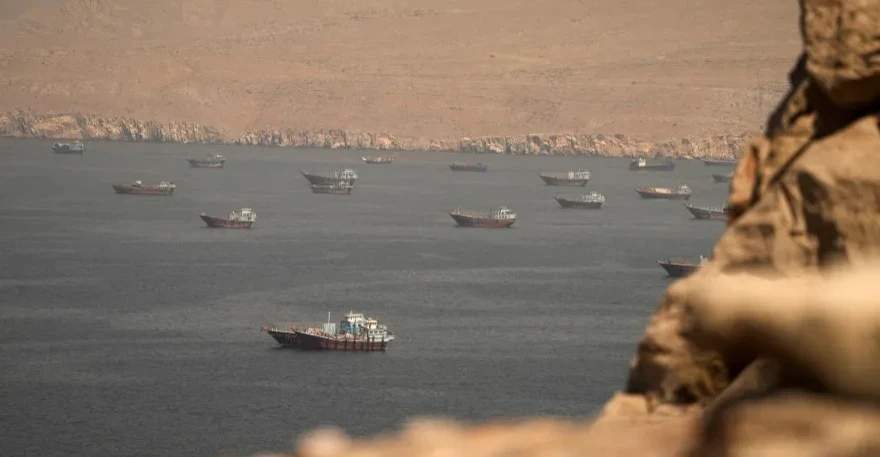
The war began on February 28, 2026, and its effects have spread over the past week to Yemen and the Red Sea, where Iran-aligned Houthi forces have made major territorial gains along Yemen's western coast and around Bab al-Mandeb, the strategic strait linking the Red Sea to the Gulf of Aden and Indian Ocean. The Houthis captured the Red Sea port of Mocha and Perim Island, which sits in the strait.
Iraq Tests Its Sovereignty
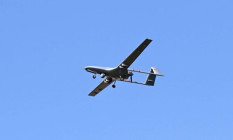
In Iraq, the spillover has become a direct test of Baghdad's ability to keep its territory out of the region's wars. On September 10 and 11, drones launched from Iraqi soil struck two pump stations on Saudi Arabia's East-West pipeline, the line that carries crude from the kingdom's Eastern Province to the Red Sea port of Yanbu and lets it bypass the Strait of Hormuz. Saudi Arabia's foreign ministry said the drones came from Iraq and shut the pipeline as a precaution.
Iraq's government confirmed the attacks originated on its territory and opened an investigation. Prime Minister Ali al-Zaidi removed the commander of Maysan Operations Command and ordered an investigative council into the command after authorities traced the launch site to the southern province bordering Iran. He later dismissed Maysan's police chief and referred provincial security officials for investigation.
Iraqi authorities said they reject any use of the country's land or airspace to attack neighboring states. No group has claimed responsibility for the attacks, and several Iraqi armed factions denied responsibility and offered to take part in the investigation.
The US State Department told Shafaq News that it supports al-Zaidi's efforts to assert state authority and to prevent attacks inside Iraq or launched from its soil.
“The episode tests the government's ability to enforce sovereignty and protect Iraq's ties with its Arab neighbors at a moment when Baghdad is trying to avoid being pulled into the regional confrontation,” Ahmed al-Sharifi, an Iraqi security analyst, said.
Energy Corridors Under Pressure
US officials have reported a sharp recovery in oil flows through Hormuz, although commercial shipping trackers have produced substantially lower estimates. Energy Secretary Chris Wright said about 18 million barrels of crude and refined products passed through the strait on September 15. Independent trackers, however, have recorded far fewer vessel transits, highlighting uncertainty over the actual volume moving through the waterway.
The attack on the East-West line, one of the kingdom's main alternatives to Hormuz, damaged its eighth and ninth pump stations and halted a flow of about four million barrels a day, with reports estimating that full repairs could take several weeks.
Samir Faraj, a retired Egyptian major general and strategic affairs analyst, said widening the war serves no party's interest, and warned that disrupting shipping through Bab al-Mandeb while Hormuz is already unsettled would carry broad economic costs worldwide.
Egyptian and Saudi efforts are focused for now on securing the Red Sea, he added, pointing out that Cairo sees negotiations as “the more suitable path and backs the Saudi approach, particularly while the United States stays out of direct combat against the Houthis.”
Read more: Houthi advance raises stakes from Bab al-Mandeb to Iraq
A Cautious Washington
Washington has kept a hand in managing the crisis while avoiding direct combat. Reuters reported that US officials met Houthi representatives in Muscat to preserve an existing understanding and keep Bab al-Mandeb open to shipping, and that a US military team is helping Saudi forces with intelligence-sharing and planning without joining operations.
Military officials from the United States and Israel met the army chiefs of several Arab states in Germany, according to Axios. The talks covered the war with Iran and regional security cooperation.
Mahdi Azizi, an analyst of Iranian affairs, said the Saudi and Egyptian moves and the Germany meeting do not necessarily mean the region is heading toward all-out war. He expected the escalation to stay within "limited, lightning strikes," arguing that Washington wants quick results and that the November congressional midterm elections make a long war of attrition more costly politically.
Bets on toppling the Iranian government have not paid off, Azizi added, and the United States has turned to other tools, among them sanctions, economic pressure and closer coordination with Arab states.
Henry Cuellar, a Democratic member of the US House of Representatives, said that dealing with Iran requires both pressure and soft power, calling for tighter sanctions alongside continued humanitarian aid to the Iranian people.
Two Tracks
Ghaleb Sarhan, a Lebanese political analyst, said the region is moving along two tracks at once. The first is a geographic spread of the confrontation beyond the direct US-Iran axis, seen in the Saudi-Houthi fighting in Yemen and in the Iraqi pipeline attack; the second is the limited US ability to widen the war under Gulf pressure, the energy crisis, and the coming midterms.
Sarhan said regional and international powers “are trying to avert the worst outcome but cannot fully control the course of the escalation.” He described the standoff as “a test of nerves” between Washington and Tehran, and argued that the most likely path is heightened mutual pressure aimed at improving the terms of an eventual political settlement.
Hazem Ayad, a Jordanian political analyst, said that the confrontation has already widened as the fighting moved into Yemen and Bab al-Mandeb, and Yemen's west coast became part of the battlefield, with effects reaching beyond the states directly involved to regional and international security and the economy.
“The ground situation points to further spread rather than containment,” he said, warning that allowing it to continue could turn a regional conflict into a chronic international one. He also noted political brakes, among them the US midterms and domestic political calculations in both the United States and Israel.
In the coming weeks, three tracks will help set the war's direction: the results of Iraq's investigation into the drone attack, whether the Muscat channel between Washington and the Houthis keeps Bab al-Mandeb open, and how long repairs to the East-West pipeline's pump stations take. These developments will unfold as the United States approaches November's midterm elections, which several analysts interviewed by Shafaq News identified as an important constraint on Washington's appetite for a prolonged regional war.
Read more: Saudi pipeline attack deepens pressure on Al-Zaidi over armed factions
Written and edited by Shafaq News staff.