Following Doha raid: WHO'S NEXT?


Shafaq News
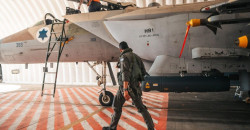
Recent Israeli airstrikes on the Qatari capital, Doha, targeting senior Hamas leaders, have sent shockwaves through the region, raising questions about Israel's next move.
The attack marks an unprecedented escalation, as it struck a country closely allied with the United States and one of the key mediators in negotiations aimed at ending the war in Gaza. Doha has routinely hosted both Hamas leaders and Israeli delegations during indirect talks.
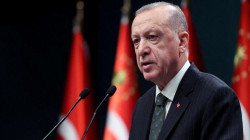
This aggressive expansion of Israeli operations comes on the heels of a stark warning from Israeli Prime Minister Benjamin Netanyahu. Speaking on Wednesday, Netanyahu declared: “To Qatar and every country harboring terrorists: either expel them or hand them over to justice. If you don’t, we will do it ourselves.”
Istanbul In Israel’s Crosshairs?
Political analyst Shwan Zangana told Shafaq News that, based on Netanyahu’s warning, Istanbul is likely the next potential target unless Turkish authorities take preemptive action and expel Hamas officials currently residing in the country.
Zangana said he had initially expected the first Israeli strike to occur in Istanbul, but believes Israel viewed the ongoing negotiations in Doha as a strategic opportunity “to eliminate as many senior Hamas leaders as possible in a single operation.”
He warned that if Israel carries out a similar operation in Turkiye, it could severely strain bilateral ties, which are already under tension.
However, Turkish political analyst Gok Oglu downplayed the likelihood of an Israeli strike on Turkish soil. Speaking to Shafaq News, Oglu cited Turkiye’s NATO membership as a significant deterrent. “Despite statements from Israeli officials, it is unlikely that Israel would launch an attack inside Turkiye,” he added. Still, Ankara has issued strong warnings against such action and has promised retaliation if its territory is targeted.
Strategic Message Beyond Qatar
Iraqi security expert Sarmad al-Bayati told Shafaq News that the airstrike in Doha represents a clear violation of international norms, diplomatic conventions, and national airspace sovereignty. He argued the operation sends a stark message: “The entire region is now under Israeli reach, and it will strike whenever it deems necessary — that is where the real danger lies.”
According to al-Bayati, this requires a united regional response, especially from Saudi Arabia, the Gulf states, Iraq, Jordan, and even Iran. “The threat is real, and Israel continues its operations without facing any effective deterrent,” he concluded.
Could Iraq Be Next?
Security researcher Munqidh Dagher echoed these concerns, asserting that Netanyahu is no longer operating within conventional limits and is likely coordinating closely with the administration of US President Donald Trump.
Speaking to Shafaq News, Dagher argued that Israel may seek to target any location housing Hamas affiliates as part of a broader plan to reshape the Middle East.
Read more: Israel violates Iraq’s space to strike Doha
He also suggested that recent Israeli warnings could also be aimed at Iraq — a country previously targeted by Israeli rhetoric — although there is no confirmed presence of Hamas leadership in the country, only possible sympathizers.
Jordanian political analyst Hazem Ayyad expanded the scope of concern. He told Shafaq News that Israel’s campaign is no longer limited to top-tier Hamas leaders but could extend to secondary and even grassroots activists under the pretext of posing security threats. “Even individuals involved in organizing solidarity efforts, like the Freedom Flotillas to Gaza, may become targets,” Ayyad warned.
He also pointed to a possible shift in Israeli tactics: "Beyond airstrikes, Israel may increasingly rely on Mossad-led death squads to carry out targeted killings, even extending their operations into Europe."
US Assurances Amid Rising Tensions?
Despite these growing fears, Gabriel Sawma, a former advisor to President Trump’s Advisory Council, attempted to calm speculation regarding Iraq. Speaking to Shafaq News, Sawma emphasized that Iraq remains a country of strategic importance to the United States, particularly in maintaining regional stability.
“The Middle East is a critical area for both US security and economic interests,” he said, adding that Iraq plays a key role due to its substantial oil reserves — the fourth-largest confirmed reserves globally.
Sawma concluded by stressing that Washington is invested in ensuring Iraq's stability: “Maintaining balance in Iraq is essential not only for regional peace but also for stabilizing global oil prices, which directly affect the American economy.”
Written and edited by Shafaq News staff.