Failure or feat? A bold assessment of PM Al-Sudani's tenure


Shafaq News
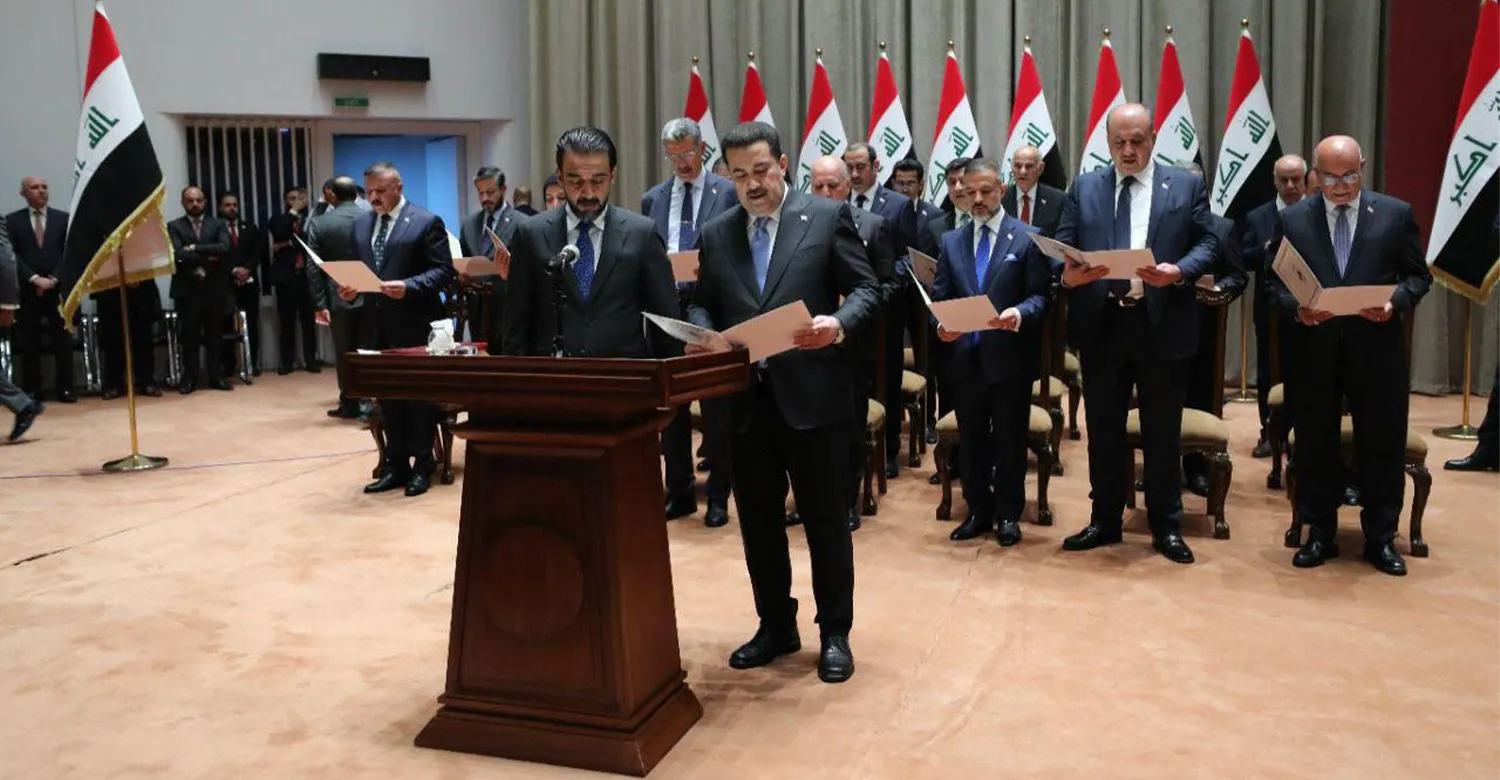
Prime Minister Mohammed Shia al-Sudani approaches Iraq’s November 2025 parliamentary elections carrying both credit and criticism. Nearly three years into his tenure, he has brought a measure of stability and cautious diplomacy to a country long accustomed to instability, yet frustrations persist over corruption, public spending, and slow reform.
Supporters hail him as one of Iraq’s most pragmatic leaders since 2003, steering the country through regional tensions and reviving long-stalled projects. Detractors, however, view his government as burdened by bureaucracy and political compromise, where growth has yet to reach the lives of ordinary Iraqis.
Read more: Baghdad: Ground zero in the battle for Iraq's Parliament
Al-Maliki's Rival
Al-Sudani began his political career in the Islamic Dawa Party, led by former Prime Minister Nouri al-Maliki, before breaking away to form the Al-Furatain Movement in January 2019. His party won one seat — his own — in the 2021 elections.
He rose to the premiership through a compromise backed by both Iran and the United States and was nominated by the Coordination Framework (CF), a predominantly Shiite alliance. Yet divisions within that bloc soon emerged. Figures such as Ammar al-Hakim and his Wisdom Movement (Tayyar al-Hikma) have leaned toward supporting him, while al-Maliki and some Iran-aligned factions like Asaib Ahl al-Haq remain skeptical.
Al-Sudani was also backed by the State Administration Coalition (SAC) — a broader alliance uniting key Shiite, Sunni, and Kurdish forces. He now plans to lead an electoral list in Baghdad that will place him in direct competition with al-Maliki, a race expected to be one of the fiercest within Iraq’s Shiite political camp.
Read more: Iraq's 2025 Elections: A mix of political realignment and fragile stability
Stability Pays
Speaking to Shafaq News, political analyst Ali al-Baydar views the government as successful in achieving numerous goals, particularly in foreign relations and in restoring balance to Iraq’s regional diplomacy, alongside a degree of internal stability.
He observed that the administration “repaired trust between citizens and state institutions and could be among the best since 2003,” noting that the achievements of al-Sudani’s cabinet will pressure any successor to match its performance.
Under al-Sudani, the government oversaw the rehabilitation of more than 1,600 stalled projects across Baghdad and other provinces, ranging from roadworks and electricity upgrades to industrial infrastructure.
It also partially activated operations at the Grand Faw Port, expanded logistical routes, reduced gasoline imports through higher domestic output, and restored railway lines for grain transport — including the reopening of Umm Qasr’s silo after a 14-year hiatus.
Political commentator Mujashaa al-Tamimi credited al-Sudani with maintaining relative political, security, and service stability and for “showing skill in managing internal and regional balances.” Yet he cautioned that breakthroughs in key sectors such as services, corruption, and economic diversification remain limited.
“The administrative and organizational improvements will have little meaning if they don’t translate into tangible improvements in people’s lives,” al-Tamimi remarked, describing the next phase as “a real test of promises — and of any government’s capacity to move from crisis management to institution-building.”
Supporters also highlight al-Sudani’s handling of the June 2025 Iran-Israel conflict, known as the “Twelve-Day War,” as a major accomplishment. While Iraq faced accusations that some factions were preparing for direct involvement, al-Sudani maintained a policy of careful neutrality that kept the conflict from spilling across its borders.
That balancing act, they argue, demonstrated a commitment to keeping Iraq out of neighboring disputes — a principle that delivered relative calm at a time of heightened pressure from competing regional and media forces.
Read more: CF on the brink: Disputes divide Iraqi bloc
Failing Grades
Aqil al-Rudaini, a member of former Prime Minister Haider al-Abadi’s Victory (Al-Nasr) Alliance, acknowledged to shafaq News the administration’s “success in reviving suspended projects, improving infrastructure, investing in gas, and advancing work at the Development Road project,” while also earning regional and international
goodwill.
Still, al-Rudaini did not spare criticism, pointing to “unjustified hiring’’ decisions that strained the budget — adding more than a million public-sector jobs — and weak results in combating corruption and financial violations.
He also underlined that political compromises and aspirations for a second term had “affected performance, leading to unstudied project allocations and privileges,’’ for which the government bears both political and ethical responsibility.
Aqil al-Fatlawi, spokesperson for the State of Law Coalition — also headed by Nouri al-Maliki — was more scathing, arguing that billions were spent without tangible improvement for citizens, while poor planning and traffic congestion persisted.
‘’This administration had already passed on financially problematic projects to the next government,” he warned.
Al-Fatlawi added that many within the Coordination Framework oppose extending al-Sudani’s mandate, citing the government’s “failure to secure Iraq’s water rights, particularly from Turkiye — a lapse that hurt farmers and agricultural output.”
He maintained that the prime minister’s foreign visits were “largely ceremonial,’’ producing few concrete benefits for Iraqis, and concluded that the political, service, and economic record has not met public expectations.
Former lawmaker Razzaq al-Haidari of the Badr Organization, led by Hadi al-Amiri, shared similar doubts, asserting that the government stands between praise and blame, but the on-the-ground reality, especially in the southern provinces, shows near-total infrastructure collapse and unprecedented financial and administrative corruption.
He criticized the absence of parliamentary oversight after the speaker’s post was left vacant for more than a year, arguing that “no government can function efficiently without scrutiny.”
Al-Haidari also pointed to the severe water shortage, which he noted had forced “hundreds of thousands of rural families to migrate to cities,” warning that the absence of a winter agricultural season for the first time in Iraq’s history marked a serious setback threatening food security.
Despite increased agricultural subsidies — including a 50% rise in fertilizer support — Iraq’s water reserves have dropped to their lowest level in 80 years, sharply reducing harvests of grain, vegetables, and fruit.
As Iraq moves toward its November 2025 vote, al-Sudani’s record will face its final test — not in speeches or statistics, but at the ballot box, where voters will determine whether stability and caution outweigh frustration over the pace of change.
Read more: Iraq's Shiite factions: a landscape of division
Written and edited by Shafaq News staff.