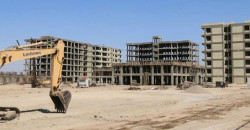
Crushed dreams, rising demand: Iraq’s deepening housing crisis


Shafaq News
Um Ali’s dream of owning a home in Baghdad faded when a long-promised housing project was handed over to a private investor. “There were no real units for people like us,” she says.
With land prices soaring and construction costs far beyond reach, her husband’s salary barely covers rent and daily expenses. “Even if we got a plot, we couldn’t afford to build.”
Her story reflects a growing crisis. Iraq’s housing gap has surpassed 3 million units by the end of 2024, fueled by rapid population growth, rural-to-urban migration, and a backlog of stalled housing projects. Experts warn that if current trends continue, the shortage will become increasingly difficult to reverse.
Official data from Iraq’s Federal Board of Supreme Audit shows that 65% of government housing projects were delayed or abandoned as of 2023. With an annual population growth rate of 2.6%, Iraq needs to build at least 250,000 housing units each year just to keep up.
Abdul-Zahra al-Hindawi, spokesperson for the Ministry of Planning, told Shafaq News that housing remains a top priority in government plans. He pointed to several initiatives, including Iraq’s five-year development strategy (2024–2028), and said 16 new residential cities are either under construction or in preparation.
Still, 4 million people continue to live in informal settlements, al-Hindawi acknowledged, complicating the government’s vision of dignified housing for all.
MP Diaa al-Hindi al-Hasnawi, a member of the Parliamentary Investment and Development Committee, blames years of bureaucratic inertia and unfulfilled promises. “Delayed execution has eroded public trust,” he told Shafaq News, adding that complex procedures continue to hinder residential projects, especially in overcrowded provinces.
According to economist Karim al-Hilu, three main factors are driving the crisis: population growth, rural displacement due to agricultural decline, and the lack of government-backed solutions. He also criticized the misuse of housing complexes, which he says were meant for low-income families but were monopolized by money launderers and corrupt investors.
Al-Hilu urged the government to develop inclusive projects that serve all income levels, while restricting access to those without existing property, and called for stronger rural development to reduce migration pressures on cities.
Economist Ahmad Abedrabbuh, outlined deeper structural issues—he cited the lack of unified legislation for land allocation, an underdeveloped mortgage sector, and the burden of overlapping authorities—up to 12 regulatory bodies involved in a single project.
Abedrabbuh estimated that private sector participation remains below 15% due to limited guarantees and poor infrastructure in second-tier cities. He proposed sweeping reforms: a national housing authority with executive powers, unified licensing procedures, and the issuance of 7% yield-backed housing bonds for citizens and expatriates.
He also recommended allocating state-owned land for joint investment projects, capitalizing a sovereign housing fund with 20% of oil surplus, and launching a “Housing for Professionals” initiative to help teachers, doctors, and engineers purchase affordable homes.
In his view, Iraq’s housing crisis is not just about numbers—it is about fairness. “This is a justice issue,” Abedrabbuh concluded. “Without political will, executive capacity, and legislative support, the next generation will have no path to stable living.”
Written and edited by Shafaq News staff.