A one-way ticket: Iraq's youth bet it all on a migration gamble


Shafaq News
The
detention of twenty-five young Kurdish men from Al-Sulaymaniyah by Libya’s Anti-Illegal
Migration Authority west of Tripoli has once again cast a spotlight on Iraq’s
deepening migration dilemma. The Iraqi embassy in Tripoli confirmed it had
launched urgent procedures to secure their voluntary return in coordination
with Libyan authorities, while the Kurdistan Region’s Department of Foreign Relations explained that
the main challenge in repatriation was the loss of passports, which smugglers
had taken to prevent their return.
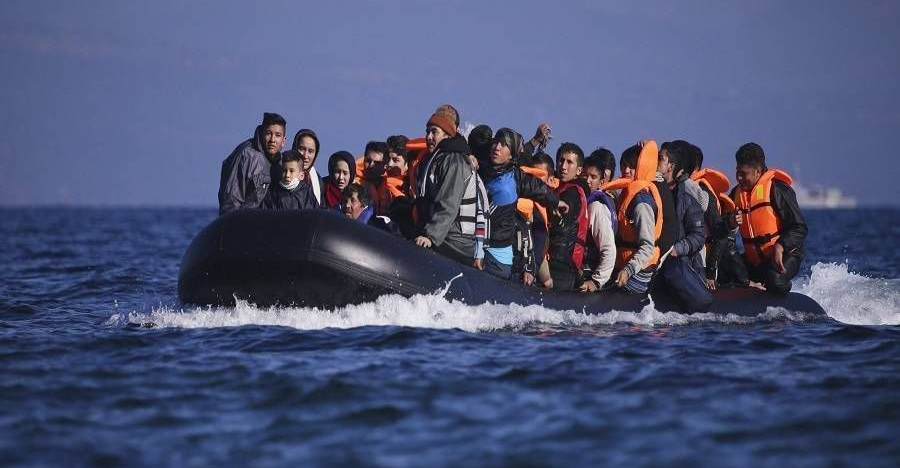
Beyond the consular maneuvering, the case reflects a structural crisis that is drawing Iraq more tightly into the arc of irregular migration spanning Turkiye, Libya, and the Mediterranean.
For Iraqis, the decision to embark on such dangerous journeys is rarely impulsive. Years of unemployment, political deadlock, and collapsing public services have convinced many young people that they have no real future at home.
“Migration has become almost the only option for many young people who lack jobs or stability inside Iraq,” Aras Mohammed, 35, from Al-Sulaymaniyah, told Shafaq News. His account mirrors a broader pattern identified by European and UN agencies: organized smuggling networks stretch from Baghdad and the Kurdistan Region through Turkiye and onward to Greece, Italy, and eventually to destinations such as Germany and the Netherlands.
The costs, he explained, can reach staggering levels—sometimes as high as $130,000—paid in installments, with smugglers providing boats, temporary accommodation, and forged documents. Yet many fall victim to fraud or are simply abandoned along the route.
Adil Khalil, 25, from Kirkuk, described how his own attempt collapsed after paying $50,000 to cross through Turkiye into Greece. The smuggler left his group in the forest without food or shelter. “We stayed for days waiting for help, but no one came. Eventually, I surrendered to the Turkish authorities and returned to Iraq empty-handed. My dreams turned into a nightmare,” he told Shafaq News.
The testimonies echo hard statistical realities. Frontex, the EU’s border agency, recorded just over 239,000 irregular border detections in 2024, down thirty-eight percent from 2023, with the steepest fall on the Central Mediterranean and Western Balkans routes. Yet the EU Asylum Agency still processed nearly one million asylum claims in 2024, underlining that demand for entry to Europe remained strong. Iraqis accounted for some 37,000 applications between January 2023 and June 2024, with Germany, Greece, and the Netherlands at the forefront. Recognition rates at the first instance averaged around forty percent—enough to fuel further departures despite the risks.
Libya’s central role in this corridor remains highly problematic. UNHCR figures show sea arrivals to Italy fell dramatically in 2024—to just over 66,000 compared to more than 157,000 the previous year. But the Libyan coastline remains active: IOM documented more than 20,000 people intercepted or rescued at sea in 2024 alone, while its displacement tracking system recorded more than 867,000 migrants inside Libya by spring 2025.
Inside Iraq, debate has turned to whether the networks facilitating this migration have links to legitimate businesses. Some travel companies are accused of covering for smuggling operations. Yet as Abu Abdullah al-Jumaili, a Baghdad-based travel agency owner, insisted, “Our companies work legally, providing tourism or medical trips. But some individuals exploit the tourism cover to facilitate smuggling, damaging the reputation of the entire sector.”
The consequences extend beyond those who leave, as thousands of Iraqis deported from Europe face daunting reintegration challenges. “We thought we would find stability there, but the laws suddenly changed. We came back empty-handed after losing all our savings,” said 52-year-old Sana’a al-Jaberi, who was expelled from Germany. She recalled the absence of any government support, leaving returnees in conditions almost as dire as those that pushed them to migrate in the first place.
For Abbas al-Ali, a specialist in migration studies, migration is not just an individual adventure; it reflects economic, social, and political crises. Al-Ali stressed that unless Iraq addresses structural drivers—job creation, investment, service delivery, and political stability—youth will continue to see migration as the only horizon.
Based on analyses from the European Union Agency for Asylum (EUAA) and
other sources, journalists, minorities, and individuals accused of
transgressing social codes in Iraq are identified as consistently vulnerable
and seeking asylum abroad. These groups face "severe risks, including violence,
intimidation, and persecution by both state and non-state actors."
In the Kurdistan Region, migration rates have risen noticeably over the past two years. Kamran Shawkat, a young man from Erbil, attributed this primarily to economic hardship but also to growing political disillusionment. “The absence of hope for a stable future pushes youth into taking risks, no matter the dangers. Many see migration as salvation, even knowing the road is filled with prisons—or death,” he said.
The Al-Sulaymaniyah detainees embody a larger reality: a generation that sees no path forward inside Iraq. Unless Baghdad and Erbil can create opportunities at home, Libya’s prisons and Europe’s deportation flights will remain part of the Iraqi migration story.
Written and edited by Shafaq News staff.