UAE withdraws counterterrorism teams from Yemen



Shafaq News– Abu Dhabi
The UAE Ministry of Defense decided on Tuesday to end the remaining deployment of its counterterrorism teams in Yemen, citing recent developments and a comprehensive reassessment of operational requirements.
In a statement referencing a declaration issued earlier the same day by the UAE Ministry of Foreign Affairs, the Defense Ministry reiterated that the United Arab Emirates participated in the Arab Coalition in Yemen starting in 2015 to “support legitimacy, contribute to international counterterrorism efforts, and help restore security and stability in the country.”
The ministry said Emirati forces formally ended their military presence in Yemen in 2019 after completing agreed missions under official frameworks.
“Given recent developments and their potential implications for the safety and effectiveness of counterterrorism missions, the Ministry of Defense has decided to conclude the remaining counterterrorism teams in Yemen of its own will,” the statement said, adding that the move was coordinated with concerned partners to ensure the safety of personnel.
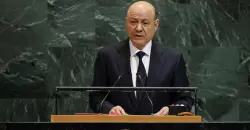
Yemen’s Presidential Leadership Council chief Rashad Al-Alimi on Tuesday revoked a joint defense agreement with the United Arab Emirates, ordering Emirati forces to withdraw from Yemeni territory within 24 hours.
The agreement, formed under the Saudi-led coalition that intervened in 2015 to support Yemen’s internationally recognized government against the Houthis (Ansarallah) movement, had allowed Emirati forces to operate in southern and eastern Yemen on counterterrorism, port security, and support missions in coordination with coalition partners.
In a statement, Al-Alimi framed the decision as a measure to protect civilians, preserve national unity and sovereignty, and address security threats linked to the Houthis' insurgency that began in 2014, while directing the Saudi-backed Dera’ Al-Watan (Nation’s Shield) Forces to assume control of military camps in Hadramout and Al-Mahra.
Separately, Saudi Arabia accused the UAE of backing the Southern Transitional Council (STC)’s moves and endangering Yemen’s stability, with the Saudi Foreign Ministry warning that Emirati pressure on STC units to operate near the kingdom’s southern border poses a direct “threat” to Saudi national security.
Riyadh described the developments as “inconsistent” with coalition principles, calling on Abu Dhabi to comply with the withdrawal demand and end assistance to armed groups outside state control. Southern grievances, it added, should be addressed through inclusive political dialogue involving all Yemeni parties, including the STC.