Syria plans joint industrial zones with neighboring countries


Shafaq News- Damascus
Syria is planning to establish joint industrial and economic zones with neighboring countries to reduce transportation costs, attract investment and deepen regional market integration, Deputy Minister of Economy and Industry Mohammad Yassin Houri told Shafaq News on Thursday.
He said the ministry is developing the legislative and investment framework needed to support the projects, expand domestic manufacturing and facilitate cross-border trade.
Houri noted that Syria's location linking Asia, Europe and the Middle East positions it to become a regional manufacturing and logistics hub.
To support that goal, the ministry is developing industrial cities, upgrading transport infrastructure, ports and border crossings, and linking them with industrial zones to integrate Syrian industries into regional value chains. He identified the food processing, pharmaceutical, textile, engineering, construction materials and chemical sectors as having the greatest potential for cross-border production.
"Different stages of manufacturing could be distributed among neighboring countries based on their comparative advantages," he stressed, adding that the ministry is reviewing existing agreements and considering new ones to strengthen regional trade, investment and industrial cooperation.
Syria currently has four main industrial cities: Adra in the Damascus countryside, Sheikh Najjar in Aleppo, Hasiya in Homs province, and Deir ez-Zor Industrial City, where the government is continuing infrastructure development.
The industrial cities host investments in sectors including food processing, pharmaceuticals, engineering, textiles, and chemicals. They form a central part of the ministry's plans to increase production, attract capital, expand exports, and connect industrial centers to transport networks, ports, and border crossings to strengthen their role in regional supply chains.
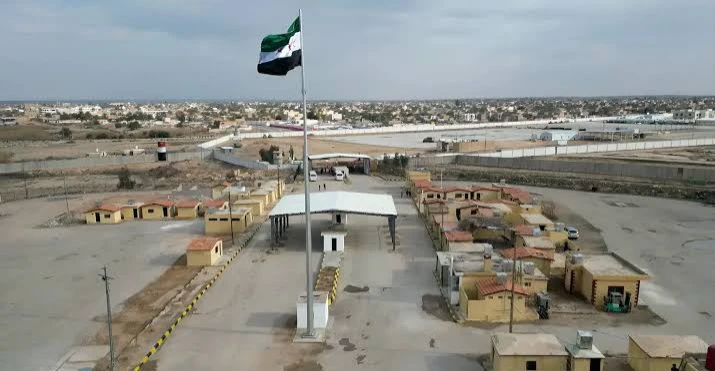
In recent months, Syria has also moved to rehabilitate several border crossings, signed economic memorandums of understanding and agreements with several Arab and regional countries, and launched projects to upgrade industrial cities, ports, and transport networks as part of broader efforts to attract investment, expand production capacity, and boost exports.