HRW: Israel used white phosphorus 23 times in Lebanon


Shafaq News- Beirut
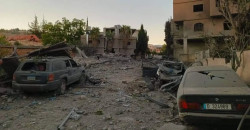
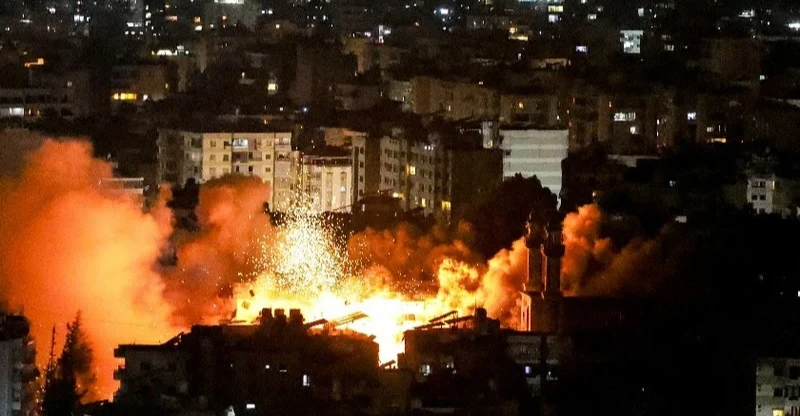
Israeli forces used white phosphorus munitions in at least 23 verified incidents across southern Lebanon between March and May 2026, Human Rights Watch (HRW) and Harvard Law School’s International Human Rights Clinic said in a joint report, calling for stronger international regulation of the weapons.
The 45-page report, Uncontrolled Burn: The Inhumane Effects of White Phosphorus Munitions and the Need for Stronger Law, examines recent uses of the munitions and argues that existing international rules leave a significant legal gap despite their severe incendiary effects.
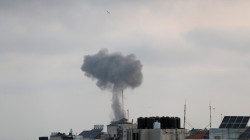
HRW said researchers corroborated open-source material from southern Lebanon, including videos and photographs, and geolocated incidents in areas including Khiam, Arnoun, Yohmor and Zawtar. The report documented 22 incidents involving 33 white phosphorus munitions between March and May and separately confirmed Israeli use over homes in Yohmor on March 3.
White phosphorus ignites when exposed to oxygen and can cause deep burns, respiratory damage and organ failure. Particles left inside wounds can reignite when exposed to air, including during treatment, according to the report.
Bonnie Docherty, HRW’s senior arms adviser and a lecturer on law at Harvard Law School’s International Human Rights Clinic, said the munitions can cause severe and lasting physical, psychological and socioeconomic harm.
The report argues that using airburst white phosphorus munitions over populated areas creates indiscriminate effects because burning material disperses over a wide area and can strike civilians and combatants alike. HRW said such use violates the principle of distinction under international humanitarian law.
White phosphorus munitions are not clearly covered by Protocol III of the 1980 Convention on Certain Conventional Weapons, which regulates incendiary weapons. The protocol covers weapons “primarily designed” to start fires or burn people, while white phosphorus munitions are generally designed for purposes such as smoke screening or illumination.
HRW and the Harvard clinic argue that this distinction leaves weapons with comparable incendiary effects outside the protocol’s specific restrictions.
The report also assesses white phosphorus under the Martens Clause, a principle of international humanitarian law that preserves protections based on established custom, the principles of humanity and the dictates of public conscience when no dedicated treaty governs a specific issue.
The groups argue that the severity of white phosphorus injuries and sustained objections from governments, international organizations, medical professionals and civil society support stronger and more specific regulation. Between 2021 and 2025, at least 27 parties to the convention called for dedicated discussions on incendiary weapons and weapons with incendiary effects, according to the report.
The report also reviews reported white phosphorus use since 2000, including by Israel in Gaza in 2008-2009 and 2023, US-led coalition forces against ISIS in Iraq and Syria in 2017, the Saudi-led coalition in Yemen in 2016, Ethiopian forces in Somalia in 2007, NATO and anti-government forces in Afghanistan between 2005 and 2011, and US forces in Iraq in 2004.