Khanaqin tensions: Why is Iraq’s Article 140 back in focus?


Shafaq News- Khanaqin
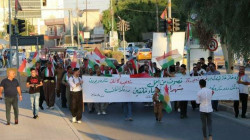
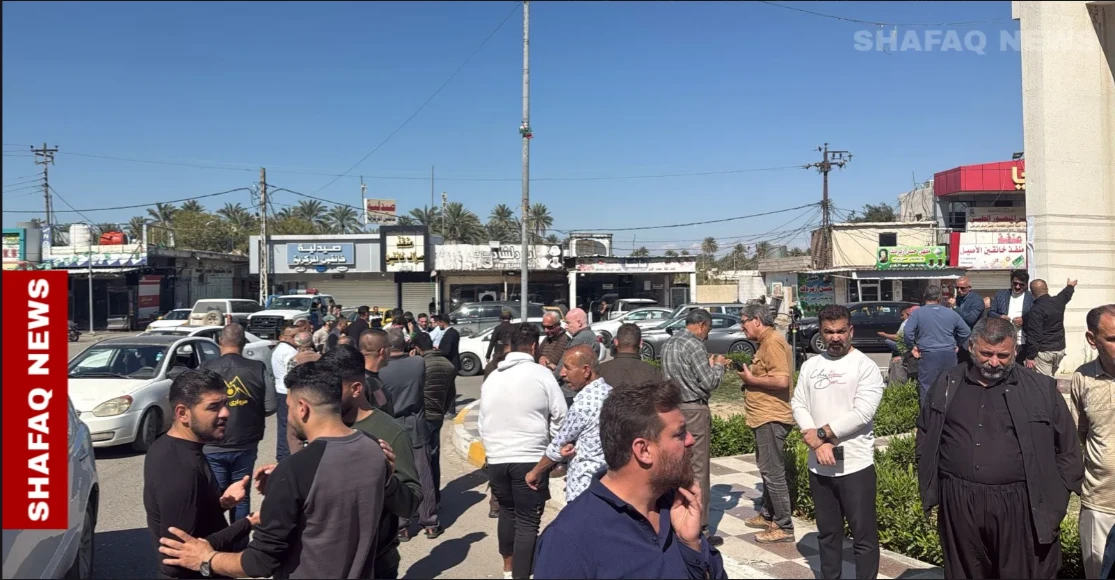
Kurdish parties in Khanaqin, a disputed district between the federal government and the Kurdistan Region (KRI) in eastern Iraq, have called off a planned mass protest and will send a delegation to Baghdad instead, citing concerns for demonstrators' safety, according to a joint statement released on Monday.
The parties said the security arrangements for the gathering, meant for the center of Khanaqin, were insufficient to ensure participants' safety
Behind the decision sits one of Iraq's most intractable territorial disputes. Khanaqin lies in Diyala province, among the areas claimed by both the federal government in Baghdad and the Kurdistan Regional Government (KRG) in Erbil, and its status hinges on Article 140 of the constitution, a long-stalled mechanism for settling those disputed territories. A recent push to redraw the district's administrative boundaries has dragged the question back into the open.
Read more: The borderland bargain: Daily life inside Khanaqin’s quietly shifting frontier
From TV Remarks To Street Tensions
The latest confrontation began with a television interview. Leaders of the Kurdistan Democratic Party (KDP) and the Patriotic Union of Kurdistan (PUK), the KRI’s two dominant parties, spoke of "Arabization" and demographic change in Khanaqin since October 16, 2017 —the day Iraqi federal forces retook the district and other disputed areas from Kurdish Peshmerga fighters after the KRG's independence referendum. They pressed for Article 140 to be carried out.
The remarks drew opposition in neighboring areas. In areas bordering the district, residents and public figures rejected the call and questioned the legal footing of Article 140 itself, and a few demanded that those raising it be prosecuted.
Protest Called Off, An Arrest Hardens The Mood
Kurdish parties met Sunday at a cultural center in Khanaqin and settled on a peaceful demonstration in the city center to demand that Article 140 and related constitutional clauses be enforced, a participant told Shafaq News. Organizers intended to fly the Iraqi and Kurdistan flags side by side and to print slogans in both Arabic and Kurdish, and they insisted the event singled out none of the district's communities. Civil-society activists, meeting separately, agreed on much the same terms.
The demonstration never went ahead. A committee overseeing it called the event off over the risk to participants and resolved to send a delegation to Baghdad to put the area's demands to the president and other senior officials.
Sharper still was the detention of Kamran Ways Murad, a former commander in the Popular Mobilization Forces (PMF), an umbrella of mainly Shiite armed factions under nominal state control. A government source told Shafaq News that a security unit had arrested Murad —better known as Abu Muntadhar al-Dalawi— in Khanaqin under Article 200 of the Penal Code, which covers incitement to "sectarian, racial and nationalist strife."
Accounts of what he said pull in opposite directions. In a video posted online, Murad urged that Khanaqin be treated as an "Iraqi Kurdistani" city and that the rights of every community be protected, framing his remarks as a reply to a Badr Organization figure in the nearby town of Jalawla who had attacked the Kurdish position. The security source, however, said Murad was arrested over videos authorities viewed as incitement against Arabs in the district. Murad's own path has been a winding one: he once ran Badr in Khanaqin, broke with it, later left Asaib Ahl al-Haq, and had recently aligned with a Kurdish party.
Local PUK officials in Diyala said they knew nothing of any warrant for his arrest.
The joint statement did more than endorse the suspension. It demanded the immediate release of everyone held and the cancellation of arrest warrants issued against politicians, activists and young people, calling their involvement peaceful. It also urged Iraq's four top offices —the presidency, the premiership, parliament and the judiciary— along with Kurdish representatives in Baghdad, to take up the area's demands through constitutional channels.
The Longer Dispute
None of this came out of nowhere. Khanaqin shut down in a general strike in February after the federal Planning Ministry moved to raise the Jalawla sub-district to a full district, fold Saadiya into it, and turn Qara Tapa into a separate district, changes that would strip territory from Khanaqin. Kurdish officials and residents branded the plan a breach of Article 140 and an attempt to shrink the district, while Shiite Arab figures in the area saw it as reinforcing their standing in the border zone near Iran. No direct comment from the Jalawla figure or from Arab and Turkmen residents appeared in the reporting reviewed by Shafaq News.
The article sets out three steps to decide the disputed territories' future: undoing the population changes imposed under Saddam Hussein, conducting a census, and holding a referendum in which residents choose between joining the Kurdistan Region and remaining under Baghdad. The timetable was meant to close by the end of 2007, but security and political turmoil derailed it. In 2019, Iraq's Federal Supreme Court ruled that the article stays in force until its requirements are met.
For now, the parties have asked residents to hold off until the delegation finishes its meetings in Baghdad. The Diyala Provincial Council is due to convene Wednesday, September 2, to question the Khanaqin district commissioner about the recent turmoil, a session sought in a memo backed by six council members, according to a document reviewed by Shafaq News.