Water crisis in Iraq’s al-Anbar: Decline in Anah lake levels
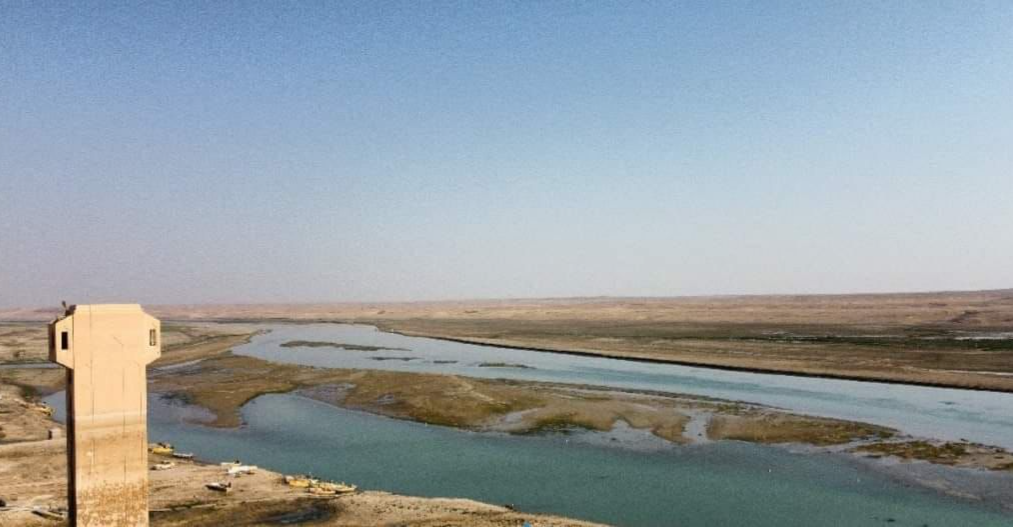


Shafaq News/ A severe water shortage is unfolding in Iraq as Anah Lake, a crucial water reservoir in the western al-Anbar province, faces a significant decline in water levels.
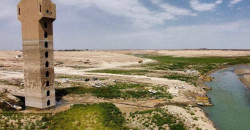
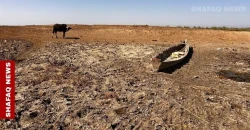
Sameem Salam Al-Fahd, head of the Euphrates Environmental Observatory, highlighted the growing crisis surrounding the lake. Established in 1985 after the completion of the Haditha Dam, Anah Lake has historically relied on water from the Euphrates River, which originates in Syria and Turkiye, as well as seasonal rainfall and natural springs. However, a combination of reduced rainfall, decreased water inflows, and prolonged drought conditions has caused the lake’s depth, traditionally ranging from 15 to 25 meters, to drop dramatically, exacerbating the water shortage in the region.
"The lake’s conical or pyramidal shape causes it to fill quickly but also lose water at a rapid rate," Al-Fahd remarked. This phenomenon has created significant challenges for local fishermen and the region’s water supply systems. In response, the Anah Water Project has installed deep pipelines and pumping platforms to continue delivering drinking water to the residents of Anah and al-Rawa districts.
As the lake continues to dry, some remote villages have turned to water tankers, sourcing water from the lake’s lowest points. This shift has placed additional burdens on residents who rely on the lake’s water for domestic use, agriculture, and livestock.
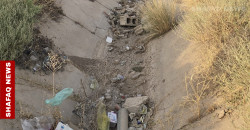
Al-Fahd also pointed out that the remaining water in the lake has become heavily polluted, with high levels of contamination due to evaporation. "This is not just a water issue; it is a matter of water security, social stability, and the environment," he stressed.
The crisis, according to Al-Fahd, stems from poor water management practices in Iraq. He emphasized the lack of a comprehensive strategy that effectively balances agricultural demands with water storage requirements. Furthermore, the rising pollution levels in the Euphrates River are compounding the issue. Al-Fahd referred to these sewage systems as "death pipes" due to their significant role in contaminating the water.
The pollution has sparked health concerns, with some residents reporting skin diseases and other health issues linked to exposure to untreated water. Agriculture has also taken a hit, as crops irrigated with polluted water are sold in local markets, raising alarms about food safety and contributing to the region’s economic difficulties.