US withdrawal opens new phase in Iraq’s political landscape


Shafaq News- Baghdad
The completion of the US-led Coalition’s military withdrawal from Iraq has opened a new phase in the country’s political and security landscape, according to politicians and analysts interviewed by Shafaq News, who differ over whether the departure will strengthen Iraq’s independent decision-making or reshape competition over security, weapons and foreign influence.
The final phase of the withdrawal was completed on September 30, 2026, and Iraq now faces challenges extending beyond the question of a foreign military presence. These include the state’s ability to control weapons, confront ISIS cells, manage relations with Iran, Turkiye, the United States and Arab countries, and preserve an independent political decision-making process.
US Influence Beyond the Military
Malik Aziz Francis, a member of the US Republican Party, said the next phase could involve redefining the US presence in Iraq rather than a complete American withdrawal.
Francis noted that Washington still has tools of influence through diplomatic, security and economic ties, as well as cooperation with Iraqi state institutions.
The shift from a direct military presence to security, diplomatic and economic cooperation could allow the United States to maintain a significant role because of the two countries’ political, security, economic and social ties, as well as varying degrees of influence in Iraq even after the military withdrawal is complete, he said.
Francis also noted that Iranian influence in Iraq remains strong because of the two countries’ political, security, economic and social ties, as well as varying degrees of alignment between Iraqi political and armed groups and Tehran.
A change in the form of the US presence could give Iran-aligned forces greater room to operate, he added, but would not necessarily lead to a wholesale shift in the balance of power.
Relations between Baghdad and Washington will remain an important factor, Francis said, pointing to continued communication and coordination between the two countries despite changes to the nature of the US military presence.
“Iraq’s future would be affected by the course of US-Iranian relations,” Francis said, adding that a sustained political understanding between Washington and Tehran that reduces tensions could ease pressures on Iraqi forces to align themselves with either side.
Read more: Coalition mission ends, factions keep their weapons
Security Challenges
Firas Al-Muslimawi, spokesperson for the Reconstruction and Development Coalition led by former Prime Minister Mohammed Shia Al-Sudani, described the completion of the withdrawal as an indication of improved security conditions in Iraq.
The departure of coalition forces, following the removal of security threats and the Iraqi security forces’ ability to maintain security, is “an indication of Iraq’s health,” he said, adding that it also sends a reassuring message to foreign investors.
Al-Muslimawi said that linking the withdrawal to continued foreign interference does not reflect the way state institutions operate. He argued that Iraq functions through its constitutional institutions and that the departure of foreign forces could have a positive impact on political and economic stability. “Baghdad could help bring Washington and Tehran closer together by drawing on its relations with both sides.”
Read more: Al-Zaidi at 100 days: Iraq's toughest tests still aheadIndependence of Decision-Making
Legal expert Abbas Al-Aqabi played down the possibility that the withdrawal of foreign forces would directly alter the state’s decision-making mechanisms.
He explained that the withdrawal does not affect the legislative process and that Iraqi laws and legislative decisions remain domestic matters not governed by the will of any outside power, whether the United States or others.
Al-Aqabi said that the same applies to the executive branch, and that a foreign military presence is distinct from diplomatic representation and the departure of troops “does not necessarily change the balance of political power inside Iraq.”
He viewed the withdrawal as having “more positives than negatives,” while noting that diplomatic and political relations with other countries would continue through channels other than a military presence.
Read more: Iraq's second US troop withdrawal shifts the test to armed factions
Concerns over Sovereignty
Mukhtar Al-Mousawi, a member of the Iraqi parliament’s Foreign Relations Committee and a lawmaker from the Badr bloc, said Iraqi and Kurdish warnings, as well as concerns raised by the coalition, had preceded the post-withdrawal phase. He argued that the issue extends beyond the military presence itself to the degree of independence in Iraq’s political decision-making.
He criticized “some political forces waiting for direction from abroad,” asking, “Where is the sovereignty Iraq celebrated?”
Independent politician and Arab tribal leader Muzahim Al-Huwait viewed the departure of foreign forces as a restoration of Iraqi sovereignty. He said Iraq is now better positioned to make decisions independently of what he described as “foreign domination” that had affected previous governments.
“The next phase should focus on unifying political forces within the Shiite, Kurdish and Sunni communities and strengthening understanding among Iraq’s different components, which could pave the way for measures to address Iraqis’ hardships.”
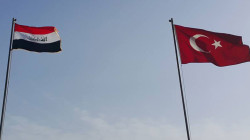
He also called on the government to work toward ending the presence of Turkish forces in Iraq, arguing that the completion of the foreign military withdrawal should be followed by further steps toward restoring Iraqi sovereignty.