Iraqi committee makes rare government visit to Jurf al-Sakhr


Shafaq News- Baghdad
An Iraqi government committee tasked with reviewing the situation in Jurf al-Sakhr made a rare field visit to the area on Tuesday, beginning an assessment that will be submitted to Prime Minister Ali al-Zaidi within 10 days.
The committee, formed by al-Zaidi, includes representatives from the interior, agriculture and justice ministries, the Popular Mobilization Forces (PMF) Commission, intelligence and counterterrorism authorities, and the Babil provincial government.
A source familiar with the visit told Shafaq News that the delegation toured several villages, including al-Saadan, al-Fadhiliyah, al-Jair and al-Uwaisat, to assess security and general conditions and hear requests from residents and farmers.
Read more: Jurf Al-Sakhar: A decade on, Iraq's displaced still barred from return
Some residents sought the return of families who left the area after members were implicated in terrorism cases, including individuals subject to arrest warrants. “Any decision on their return rests solely with the Iraqi judiciary,” the source said.
Farmers, meanwhile, asked authorities to renew expired agricultural land contracts under Iraq’s Agrarian Reform Law No. 17.
Read more: Jurf al-Sakhr and Iraq's push to disarm factions
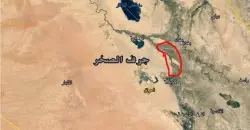
Jurf al-Sakhr, officially renamed Jurf al-Nasr after its recapture from ISIS in 2014, lies about 60 kilometers southwest of Baghdad in northern Babil. Covering around 650 square kilometers, it sits along routes linking Baghdad with Babil, Karbala, Najaf and al-Anbar.
Its farmland, orchards, waterways and drainage canals have historically made the area difficult to secure. Its strategic location also made it a major battleground between ISIS and Iraqi forces.
More than a decade after its recapture, many former residents remain displaced, while PMF factions retain significant influence on the ground.
Over the years, allegations and reports have pointed to weapons depots, military facilities and training sites in the area, including claims that it has been used for missile and drone production. Those claims have contributed to the secrecy and political controversy surrounding Jurf al-Sakhr, although the extent of such activity has not been independently established.
Political and local figures who oppose an unrestricted return of displaced residents argue that security remains the central concern, pointing to the area's history as a militant stronghold and the continued presence of mines and unexploded ordnance.