Iraq calls for dialogue to support stability in Yemen


Shafaq News– Baghdad
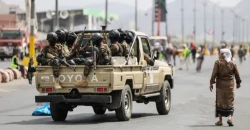
Iraq on Friday urged Yemeni parties to prioritize dialogue and peaceful solutions, expressing hope that regional and international efforts can help restore stability amid rising tensions.
In a statement, the Ministry of Foreign Affairs said it is closely monitoring political and security developments in Yemen, reaffirming Baghdad’s support for preserving the country’s “security and stability” in line with the aspirations of its people.
Sustained dialogue among Yemen’s political forces, the ministry stressed, remains “the most effective” route toward a comprehensive settlement capable of easing humanitarian suffering.
The Iraqi statement followed a decision earlier this week by Yemen’s Presidential Leadership Council chief, Rashad Al-Alimi, to revoke a joint defense agreement with the United Arab Emirates and order Emirati forces to withdraw from Yemeni territory within 24 hours.
The agreement, formed under the Saudi-led coalition that intervened in Yemen in 2015 to support the internationally recognized government against the Houthis (Ansarallah) movement, had allowed Emirati forces to operate in southern and eastern Yemen on counterterrorism, port security, and support missions in coordination with coalition partners.
Al-Alimi framed the move as necessary to protect civilians, safeguard national unity and sovereignty, and address security threats linked to the Houthis’ insurgency that began in 2014. He also directed the Saudi-backed Dera’ Al-Watan (Nation’s Shield) Forces to assume control of military camps in Hadramout and Al-Mahra.
Separately, Saudi Arabia accused the UAE of backing the Southern Transitional Council (STC)’s moves and endangering Yemen’s stability, with the Saudi Foreign Ministry warning that Emirati pressure on STC units to operate near the kingdom’s southern border poses a direct “threat” to Saudi national security.
Riyadh described the developments as “inconsistent” with coalition principles, calling on Abu Dhabi to comply with the withdrawal demand and end assistance to armed groups outside state control. Southern grievances, it added, should be addressed through inclusive political dialogue involving all Yemeni parties, including the STC.
The UAE later announced the end of its remaining counterterrorism deployment in Yemen, citing recent developments and a reassessment of operational requirements. In a statement referencing a declaration by the UAE Ministry of Foreign Affairs, the Defense Ministry said Abu Dhabi joined the Arab Coalition in 2015 to “support [Yemen’s] legitimacy, contribute to international counterterrorism efforts, and help restore security and stability in the country.”
Read more: Middle East 2026: Ceasefires hold, power questions persist across a volatile region