Power grid will decide Middle East’s AI future, US expert warns


Shafaq News – Washington
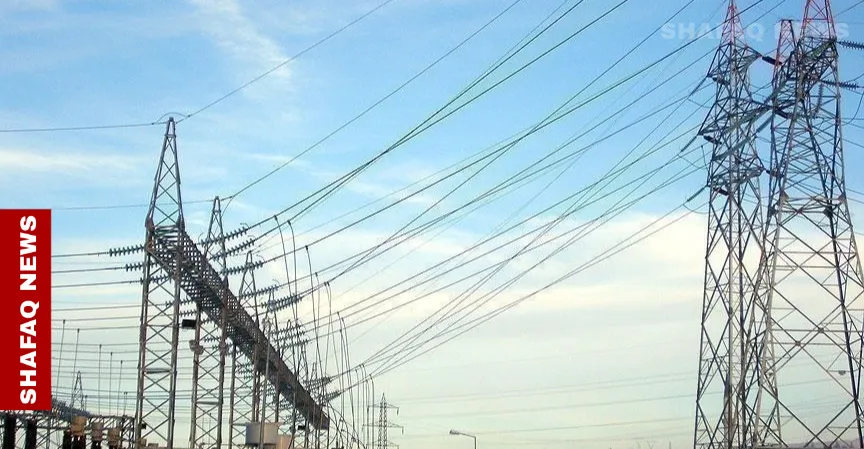
The Middle East’s ability to host advanced artificial-intelligence data centers—especially in Iraq—will depend on the stability of national electricity systems, a requirement many countries still struggle to meet, according to US energy-security expert Paul Sullivan.
Sullivan told Shafaq News on Thursday that AI facilities demand uninterrupted power and rapid load-management capabilities, warning that grids lacking this reliability will not operate these centers properly. He said energy requirements are high across the board: data centers consume large amounts of electricity, much of it generated from natural gas, as seen in the United States where gas supplies up to half of the power feeding major data-center clusters.
Drawing on the US experience, Sullivan described the American grid as the largest machine on Earth, a system shaped by a mix of regulated and deregulated markets and decades of structural change. This model, he said, shows how large-scale data-center expansion can push electricity prices upward and create political challenges—pressures Middle Eastern states must anticipate as they pursue AI investments.
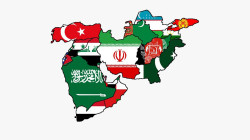
On regional readiness, Sullivan grouped countries by their level of preparedness. He identified the United Arab Emirates and Saudi Arabia as the most capable of scaling AI infrastructure, backed by strong grids and clear national strategies. Turkiye, he noted, is close to being ready.
Egypt, by contrast, faces major constraints driven by rapid population growth, rising power demand, and heavy dependence on public grids—conditions that could spark public anger if electricity prices rise to support data-center loads. North African states such as Libya and Morocco are also eager to enter the AI market but need substantial investment in power capacity, electricity-pricing reforms, and local workforce development.
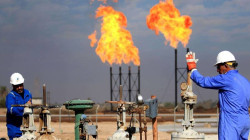
Turning to Iraq, the official highlighted both opportunity and vulnerability. Modern data centers, he explained, could enhance oil-and-gas efficiency by improving pipeline monitoring, field operations, and export logistics, strengthening Iraq’s position in global markets. Yet persistent electricity instability remains a critical barrier. He described the Kurdistan Region as comparatively better suited for early investment due to its relative stability.
Sullivan stressed that developing local talent is essential for applying AI across industry, agriculture, transportation, government services, and education. He also emphasized the importance of international cooperation, pointing to potential support from the United States and Japan in advancing energy efficiency and technological integration.
Because data-center development requires strong intellectual-property protection and complex contractual arrangements, he advised governments to adopt behind-the-meter power generation—dedicated systems that operate independently of national grids—to avoid price spikes and public backlash.
The expert emphasized that AI is a practical tool capable of raising productivity and reducing costs across multiple sectors, citing European examples where excess data-center heat is used to warm homes. In hotter countries such as Egypt, he noted, the priority will be improving the efficiency of cooling systems through smarter electricity use.
Countries delaying investment, Sullivan warned, risk losing ground as others advance. The UAE and Saudi Arabia know what they are doing and have the resources, he added, while Iraq, Egypt, and Morocco have the potential but must strengthen infrastructure, train their populations, and modernize electricity markets to join this future.
For Shafaq News, Mostafa Hashem, Washington, D.C.