Gold rush on the Euphrates: Raqqa residents chase a riverbed mirage


Shafaq News – Raqqa
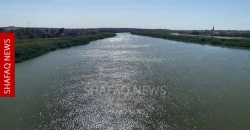
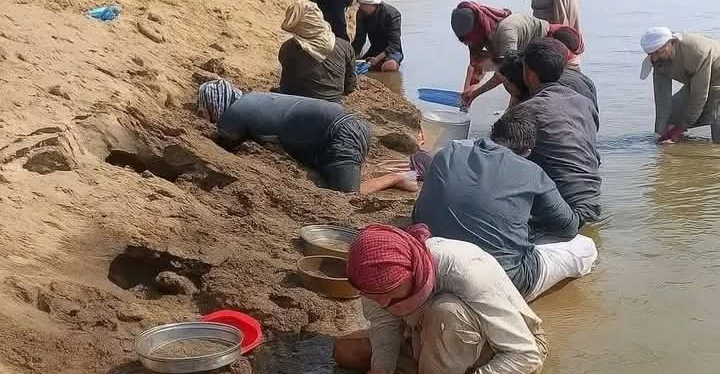
In a scene reminiscent of a gold rush, dozens of residents in Syria’s Raqqa countryside have converged on the banks of the Euphrates River, feverishly digging through the soil in hopes of uncovering raw gold. The sudden surge began two days ago, triggered by the appearance of glimmering earthen mounds on recently exposed riverbed terrain—a result of the Euphrates’ ongoing retreat.
What began as scattered curiosity has rapidly evolved into a chaotic, self-organized excavation. Makeshift camps now dot the riverbank, with prospectors setting up tents and digging around the clock using basic tools and shovels.
The growing activity has sparked a local micro-economy: prices for used prospecting gear have spiked, and informal brokers have emerged in nearby villages to capitalize on the newfound demand.
The area remains devoid of any official regulation or safety oversight. No governmental or local authority has intervened or issued a statement, despite the rising number of participants and the potential environmental and safety risks.
Geological engineer Khaled al-Shammari, speaking to Shafaq News, urged caution, explaining that while mineral sediments are not uncommon along the Euphrates—due to its passage through mineral-rich regions—the mere visual appearance of shiny soil is insufficient to confirm the presence of gold. “Only detailed geological analysis can determine whether such deposits contain gold or other valuable minerals,” he noted.
Yet the scientific uncertainty has done little to stem the enthusiasm. For many in Raqqa, the event has taken on both economic and spiritual dimensions.
The frenzy has revived widespread discussion of a well-known hadith attributed to the Prophet Muhammad: “The Hour will not come until the Euphrates uncovers a mountain of gold, over which people will fight.” Islamic scholar Asaad al-Hamdani, in comments to Shafaq News, confirmed the hadith’s authenticity within Sunni tradition but warned against rushing to interpret current events as literal signs of the apocalypse. “Such narrations require deep scholarly understanding, especially when applied to unfolding events,” he said.
The Euphrates River—flowing through Turkiye, Syria, and Iraq—has long been central to life in the region, sustaining agriculture, trade, and settlement since ancient Mesopotamian times. In recent years, however, its declining water levels have raised alarms across the region, fueling disputes over Turkish dam construction, cross-border water rights, and worsening drought conditions.
Whether the soil there truly holds treasure remains to be seen, but hope continues to drive the spades deeper into the Euphrates’ fading bed.